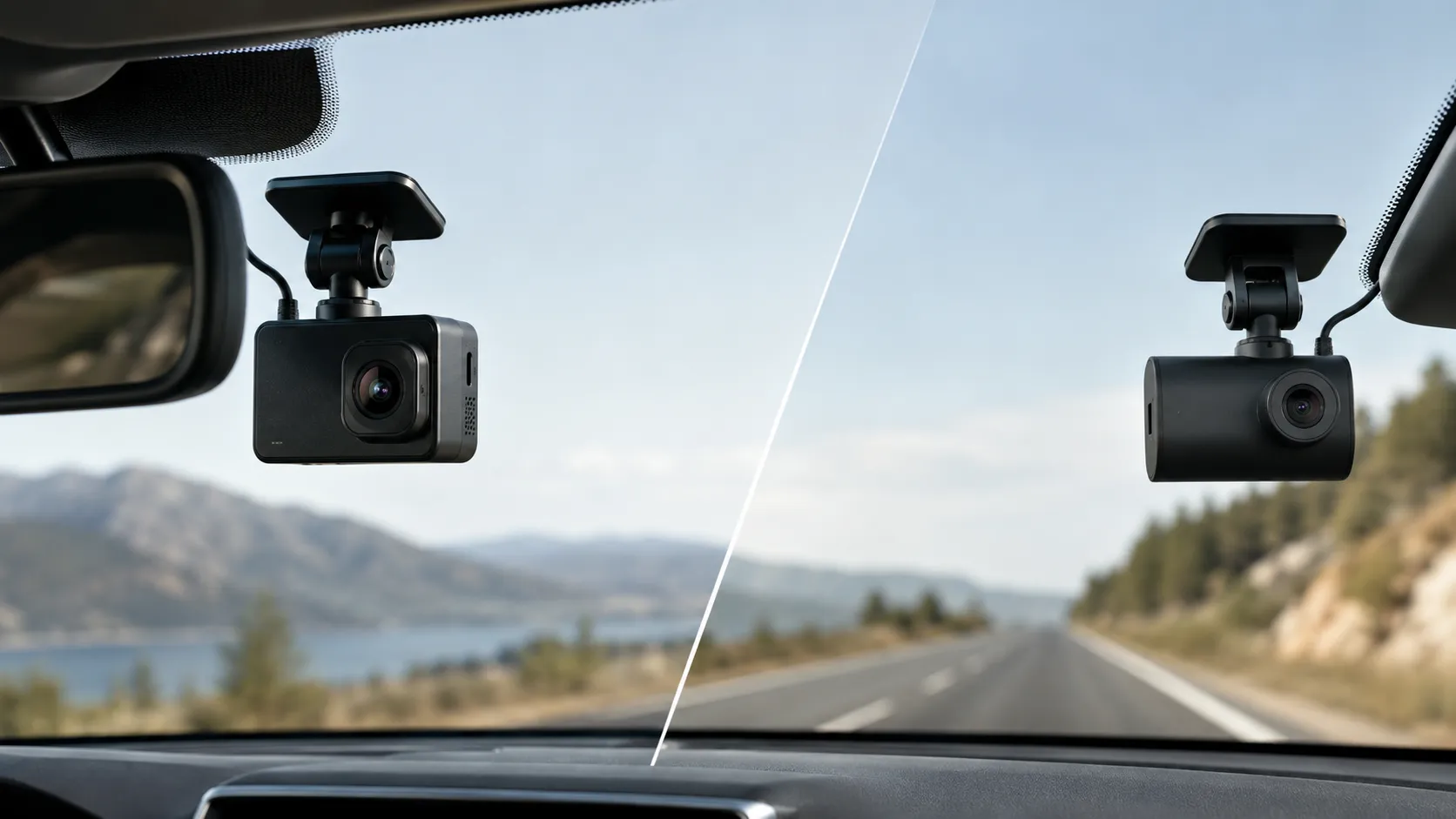
Weego Lithium Jump Starter: Reliable Power for Emergency Starts

A lithium jump starter can help restart a car when the battery is too weak to crank the engine. Unlike traditional jumper cables, it does not need another vehicle, making it useful for roadside emergencies, travel, and everyday driving.
Weego lithium jump starters come in several sizes and power levels for cars, trucks, motorcycles, and other vehicles. The most important buying factors are peak current, battery capacity, clamp quality, size, safety features, and compatibility with your vehicle’s engine. We also consider charging options, storage life, built-in lights, and how easy each model is to use.
We compared Weego lithium jump starters and similar models to find the options that provide reliable starting power without adding unnecessary bulk.
Best Weego Lithium Jump Starters
We reviewed the top Weego lithium jump starters to identify the best options for different vehicle and roadside needs. Our list highlights key features, power levels, and practical details to help us choose the right model.
Weego 44s Jump Starter

We recommend the Weego 44s for drivers who want a compact jump starter that works without another vehicle.
Pros
- Strong enough for many cars, SUVs, motorcycles, and smaller diesel engines
- Simple safety features help prevent connection mistakes
- Compact case keeps the unit and cables organized
Cons
- The included charging setup may feel slow
- It may not suit larger diesel engines
- We still need to check its charge before long trips
We found the Weego 44s easy to store in a glove box or center console. Its small size made it less intrusive than traditional jumper cables, while the included Smarty Clamps kept the setup organized.
Using it takes three basic steps: connect the clamps, attach them to the battery, and start the vehicle. The anti-spark and reverse-polarity protection added confidence when we connected the clamps, especially in a dark parking area.
The unit delivered enough power for everyday cars and can support engines up to 7 liters of gas or 3.5 liters of diesel. Its USB and USB-C ports also let us recharge small devices, which adds value during roadside problems.
We liked the protective case and the pack’s resistance to water, dust, and dirt. Still, we would inspect the charge before a road trip and recharge it after use. Overall, the Weego 44s offers a practical balance of power, safety, and portability.
Weego 70 Jump Starter

We recommend the Weego 70 for drivers who want a powerful, simple jump starter that can stay in the vehicle for months.
Pros
- Strong starting power for many cars, trucks, boats, and other 12-volt vehicles
- Clear safety features make self-starting less stressful
- Compact design, flashlight, and device-charging support add useful extras
Cons
- Its USB charging may stop before a phone reaches a full charge
- The unit feels heavier than smaller emergency packs
- We still need to check and recharge it from time to time
We found the Weego 70 easy to use when a vehicle battery needs help. The Smarty Clamps and step-by-step process reduce guesswork, while reverse-polarity and anti-spark protection provide extra reassurance.
The pack fits well in a trunk or storage compartment without taking up much room. Its flashlight helps in dark conditions, and the included bag keeps the clamps and charging cable together.
The Weego 70 can hold a charge for months, but we would still inspect it before long trips or cold-weather seasons. It also works as a power bank, though the USB port may shut off during slower phone charging.
Weego 120 Jump Starter
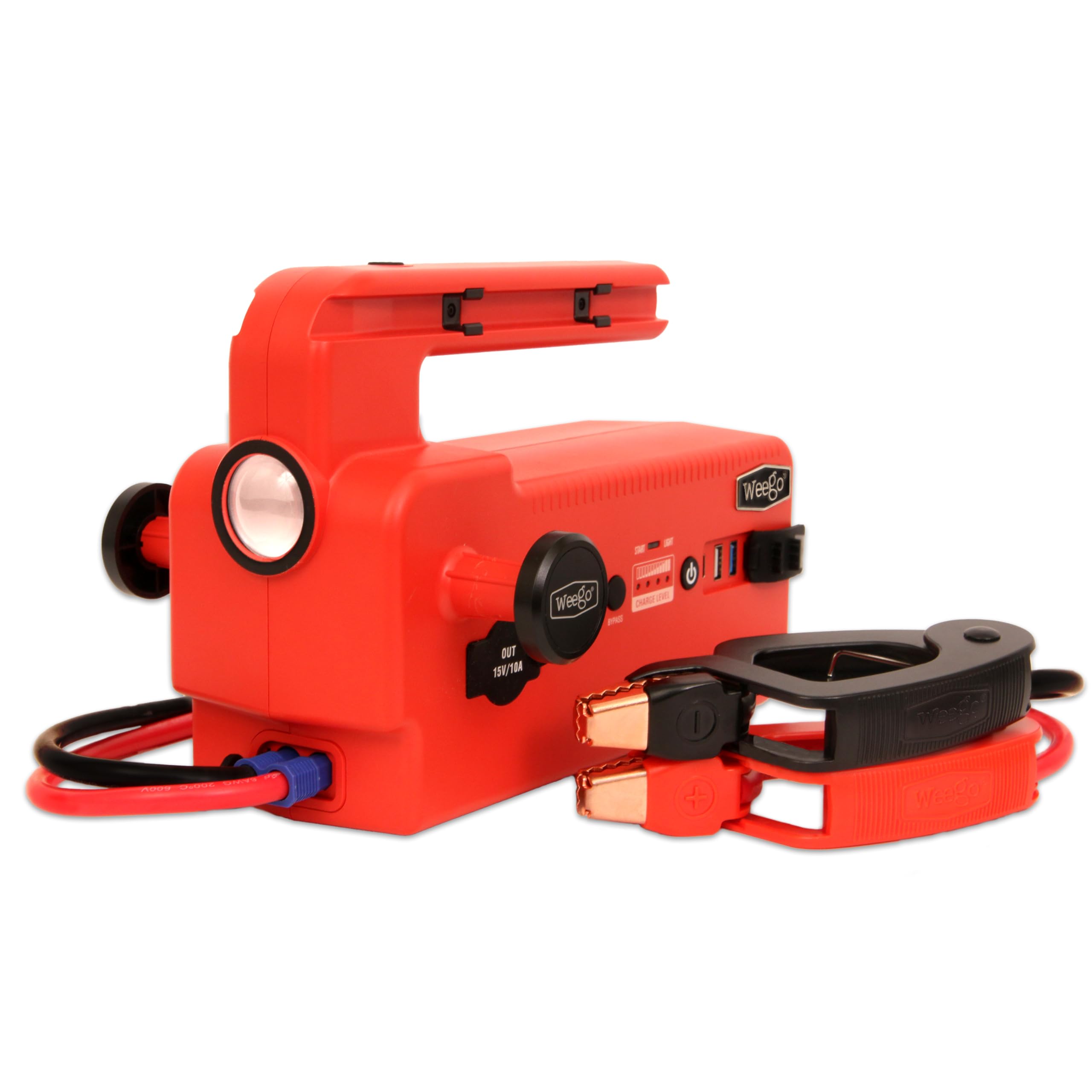
We recommend the Weego 120 for drivers who want a powerful, self-contained jump starter for cars, trucks, boats, and larger vehicles.
Pros
- Strong output for many gas engines and large diesel engines
- Safety features help prevent incorrect connections
- Includes charging cables, clamps, chargers, and a carry bag
Cons
- Its 5.5-pound weight feels heavy for regular car use
- Some users reported charging or startup failures
- The short clamp cables may limit placement
We found the Weego 120 easy to set up. The Smarty Clamps and step-by-step guidance made the process less stressful, especially when working without another vehicle nearby. Its bright flashlight also helped when checking connections in low light.
The unit feels sturdy and built for outdoor use. It can power phones and other devices through its USB port, which adds value during road trips or emergencies. We also liked that it can hold a charge for months between uses.
Size and weight remain the main drawbacks. This jump starter takes up more trunk space than smaller models, and its short cables can make awkward battery positions harder to reach.
User feedback is generally positive, but several buyers reported units that would not charge or start a vehicle. We would test the Weego 120 soon after purchase and keep the warranty information, despite its useful safety features and strong power rating.
Weego 44s Jump Starter Bundle
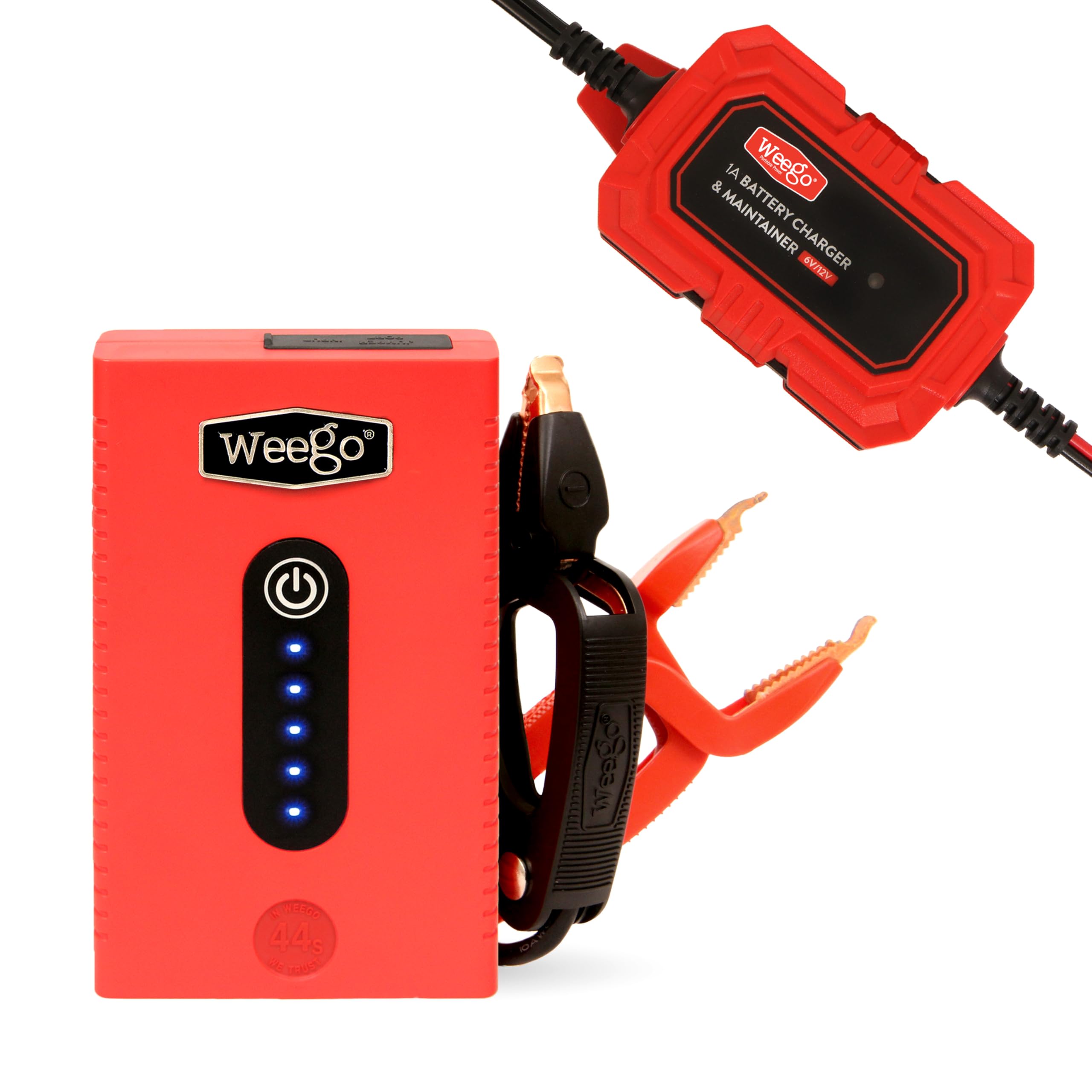
We recommend this bundle for drivers who want a compact jump starter plus a charger to help maintain their vehicle battery.
Pros
- Strong starting power for many cars and motorcycles
- Safety features help prevent sparks and incorrect connections
- Includes a useful trickle charger for battery maintenance
Cons
- The bundle costs more than a jump starter alone
- The charger adds another item to store and manage
- One customer rating provides limited buying evidence
We found the Weego 44s easy to carry and handle during setup. Its clamps open wide enough for common battery posts, while the tapered tips help in tighter spaces. Anti-spark and reverse-polarity protection add reassurance when we connect the unit under pressure.
The included trickle charger makes this more than an emergency tool. We can use it to help keep a vehicle battery ready between drives, which suits seasonal cars, motorcycles, and vehicles that sit unused.
Storage should be simple because the jump starter weighs less than a pound and the charger remains compact. Still, buyers who only need occasional emergency starts may prefer a less expensive jump starter without the added charger.
We also value Weego’s lifetime support and satisfaction guarantee. However, the product has only one listed customer rating, so we should treat the rating as limited feedback rather than strong proof of long-term performance.
Aproca Weego 44s Storage Case

We should buy this case if we want a simple way to protect and organize a Weego 44s jump starter in the car.
Pros
- Fits the Weego 44s and its basic accessories well
- Hard EVA shell helps guard against bumps and scratches
- Mesh pocket, handle, and smooth zipper improve everyday use
Cons
- The case does not include the jump starter or accessories
- Its single compartment limits how much we can organize
- It adds another item to carry separately
After using it in the car, we found the case useful for keeping the Weego 44s from rolling around with other gear. The hard outer shell gives the jump starter more protection during travel and storage.
The mesh pocket holds small cables or related items, while the handle makes the case easy to move. The zipper opened and closed smoothly during use, which made access quick.
We should note that this is an empty case only. It fits the Weego 44s, but buyers who need space for several larger accessories may find the single compartment limiting.
Buying Guide
We should match the jump starter’s peak current to the vehicle’s engine size and type. Larger gasoline engines and diesel engines often need more starting power. We should check the vehicle manual and the manufacturer’s specifications before buying.
Battery capacity affects how many jump starts we may get between charges. A higher capacity can help during travel or emergencies, but it may also increase the unit’s size and weight.
| Feature | What we should check |
|---|---|
| Peak current | Supports our engine size and fuel type |
| Battery capacity | Provides enough reserve power for our needs |
| Safety protection | Includes reverse-polarity, short-circuit, and overload protection |
| Cable quality | Uses strong clamps and cables with enough length |
| Charging ports | Supports the devices we may need to charge |
| Size and weight | Fits our vehicle and storage space |
| Included case | Keeps the unit and cables organized |
We should look for clear battery-level indicators and simple controls. A built-in light can help with roadside tasks, especially at night.
Before purchase, we should confirm the charging method, operating temperature range, warranty, and storage instructions. We should also check whether the unit requires regular charging while stored.
Editor’s picks
We recommend choosing a Weego lithium jump starter based on your vehicle type, engine size, and extra features. Battery capacity, peak current, cable length, and safety protections affect how easy the unit is to use.
| Pick | Best for | What we value |
|---|---|---|
| Weego 44s | Most drivers | A practical balance of power, size, and price |
| Weego 66s | Larger vehicles | More starting power for trucks, SUVs, and larger engines |
| Weego 70 | Frequent travel | A higher-capacity design with useful backup power |
| Weego 22s | Compact cars | A smaller option for standard gasoline engines |
We would select the 44s for many everyday drivers because it offers a useful middle ground without taking up much storage space. It also suits people who want a jump starter for emergencies rather than daily use.
Drivers with larger engines should consider a model with higher output, such as the 66s or 70. Before buying, we should confirm the model’s gasoline and diesel limits and check that its cables can reach the battery terminals.
We also value built-in safety features, including reverse-polarity alerts, short-circuit protection, and overcharge protection. A jump starter with a clear charge indicator and a durable case remains easier to store and use when needed.
Frequently asked questions
What is a Weego lithium jump starter?
Weego lithium jump starters are portable battery packs that can start a vehicle with a weak or dead 12-volt battery. Models vary in starting power, size, and included features.
How do we use one?
We turn off the vehicle, connect the red clamp to the positive battery terminal, and connect the black clamp to the negative terminal or a suitable ground point. We then turn on the jump starter and start the vehicle. We follow the model’s manual for exact steps.
Can we use it on any vehicle?
No. We choose a model rated for our vehicle’s engine size and fuel type. We check the product specifications before using it on cars, trucks, motorcycles, boats, or other vehicles.
How do we charge and store it?
We fully charge the unit before the first use and recharge it after each jump. We store it in a cool, dry place and check its charge level every few months.
Can it charge phones and other devices?
Many Weego models include USB ports for charging phones, tablets, and similar devices. We check the model’s ports and output ratings before connecting a device.
What safety steps should we follow?
We keep the clamps from touching each other, confirm the connections, and stop if the cables become hot or the unit shows an error. We never use a damaged battery pack, cable, or clamp.
Conclusion
We find the Weego lithium jump starter useful for drivers who want portable emergency power. Its compact design makes it easier to store in a glove box or trunk than traditional jumper cables and a large battery pack.
We should check the model’s starting capacity before buying. Different Weego units support different engine sizes and vehicle types, so we need to match the device with our car, truck, motorcycle, or other vehicle.
Regular charging and proper storage help keep the unit ready for use. We should also follow the safety instructions, inspect the clamps and cables, and avoid using a damaged battery pack.
For drivers who value convenience and want a backup starting tool, a Weego lithium jump starter can serve as a practical part of an emergency kit.