5 Best 360 Degree Bird View Camera for Car: Top Picks and Buying Guide

A 360-degree bird’s-eye camera system uses several wide-angle cameras to create a single view around your car. It can help us spot nearby vehicles, curbs, posts, and other obstacles while parking or moving through tight spaces. Unlike a basic backup camera, it shows more of the area around the front, sides, and rear.
The best 360-degree car camera should provide a clear stitched view, reliable night performance, simple controls, and compatibility with your vehicle’s display. We should also check camera resolution, viewing angles, weather resistance, installation needs, parking-line accuracy, and whether the system supports recording. These factors affect both daily use and the cost of installation.
We compared popular systems and considered image quality, ease of installation, vehicle compatibility, and value to find the options that make parking and low-speed driving easier.
5 Best 360-Degree Bird’s-Eye View Cameras for Cars
We reviewed leading 360-degree bird’s-eye view cameras for image quality, coverage, installation, and ease of use. Our list includes reliable options for drivers who want a clearer view around their vehicle.
Weivision 360 Bird View System

We recommend this system for drivers who want broad parking visibility and can arrange professional installation.
Pros
- Gives us a useful overhead view for parking
- Night vision and waterproof cameras support daily use
- Includes recording and parking-monitoring features
Cons
- Installation requires drilling 20 mm holes in the side mirrors
- Camera alignment takes time and care
- The overhead view may work poorly on very long vehicles
After installation, the four wide-angle cameras gave us a clear view around most of the vehicle. The stitched image helped us judge tight spaces and narrow lanes more easily than a standard backup camera.
The installation demands more skill than a plug-and-play camera. We needed to drill the side mirrors, route several cables, and carefully adjust each camera so the system could create a usable overhead image.
The night vision worked well enough for low-light parking, while the recording feature added useful evidence during parked incidents. We also liked the turn-signal view changes, although the included instructions left us relying on testing and adjustment.
This system suits cars and many trucks, but we would avoid it for buses or unusually long vehicles. Buyers should also budget for professional installation unless they already have strong experience with vehicle wiring and camera calibration.
Weivision 360° Bird View Camera

We recommend this system for drivers who want a broad parking view and are comfortable with a more involved installation.
Pros
- Gives us a useful overhead-style view around the vehicle
- Helps reduce blind spots while parking and reversing
- Records video from all four cameras
Cons
- Installation and camera calibration take time
- Requires a compatible display and careful wiring
- The small memory card limits recording space
During testing, the four camera views made tight parking easier, especially around larger vans and SUVs. The system combined the feeds into a bird’s-eye view, which helped us judge nearby curbs and obstacles more clearly than a single rear camera.
The wide-angle cameras provided good coverage, but placement mattered. We needed to mount each camera carefully and calibrate the system before the overhead view looked accurate. Drivers without experience with automotive wiring may prefer professional installation.
Video quality was suitable for parking and basic recording in daylight. Night performance depended on the vehicle’s lighting, and the display setup affected how easy the image was to read.
The Weivision system can work well for work vans, pickups, and other vehicles with large blind spots. We would choose it for added parking awareness, but buyers should plan for installation time and confirm that their vehicle has a compatible monitor.
AVBCAR 360° Bird’s-Eye Camera System
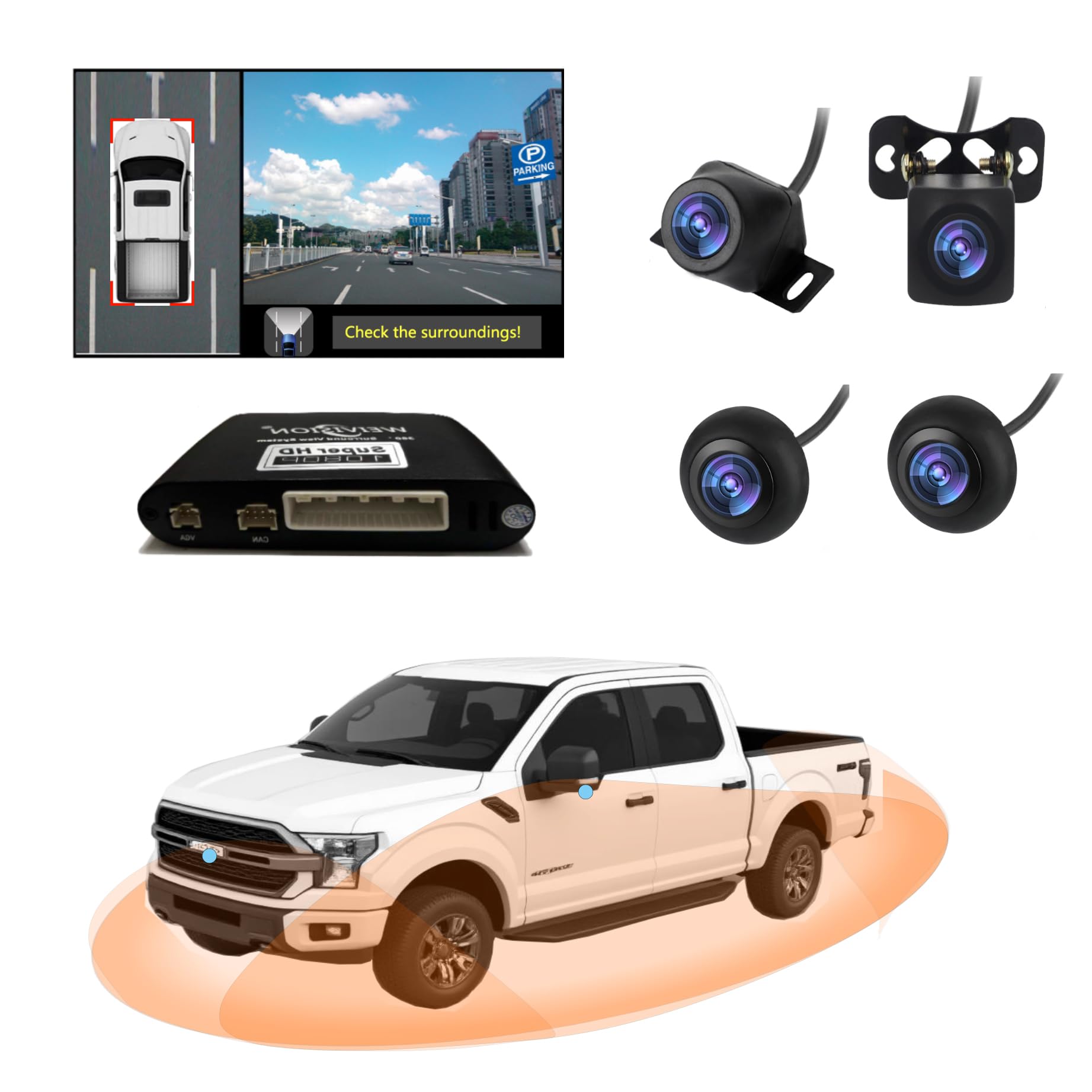
We recommend this system for drivers who want a full parking view and already have a compatible monitor with RCA input.
Pros
- Clear 1080p views from four wide-angle cameras
- Useful night vision and impact-triggered recording
- Records all sides of the vehicle
Cons
- Does not include a display
- Installation and calibration take time
- Factory radios may not support the video connection
After installing the cameras, we found the bird’s-eye view helpful when parking and moving through tight spaces. The system combines the front, rear, and side views into a broader image, which makes it easier to spot areas that mirrors may miss.
The camera image looked clear in daylight, and night performance remained useful even with limited lighting. Proper calibration matters, though. We needed to position the cameras carefully and use the included calibration cloths before the overhead view looked accurate.
This kit also works as a four-channel recorder. Loop recording saves new footage over older clips, while the impact sensor can wake the system and save a short emergency clip when the vehicle is hit while parked.
We should note that the package does not include a monitor. Its RCA video output works with many aftermarket screens, but most factory radios lack the needed input. Check your vehicle’s connection before buying, and plan for a more involved installation than a basic backup camera.
aqxreight 360° Bird View Camera
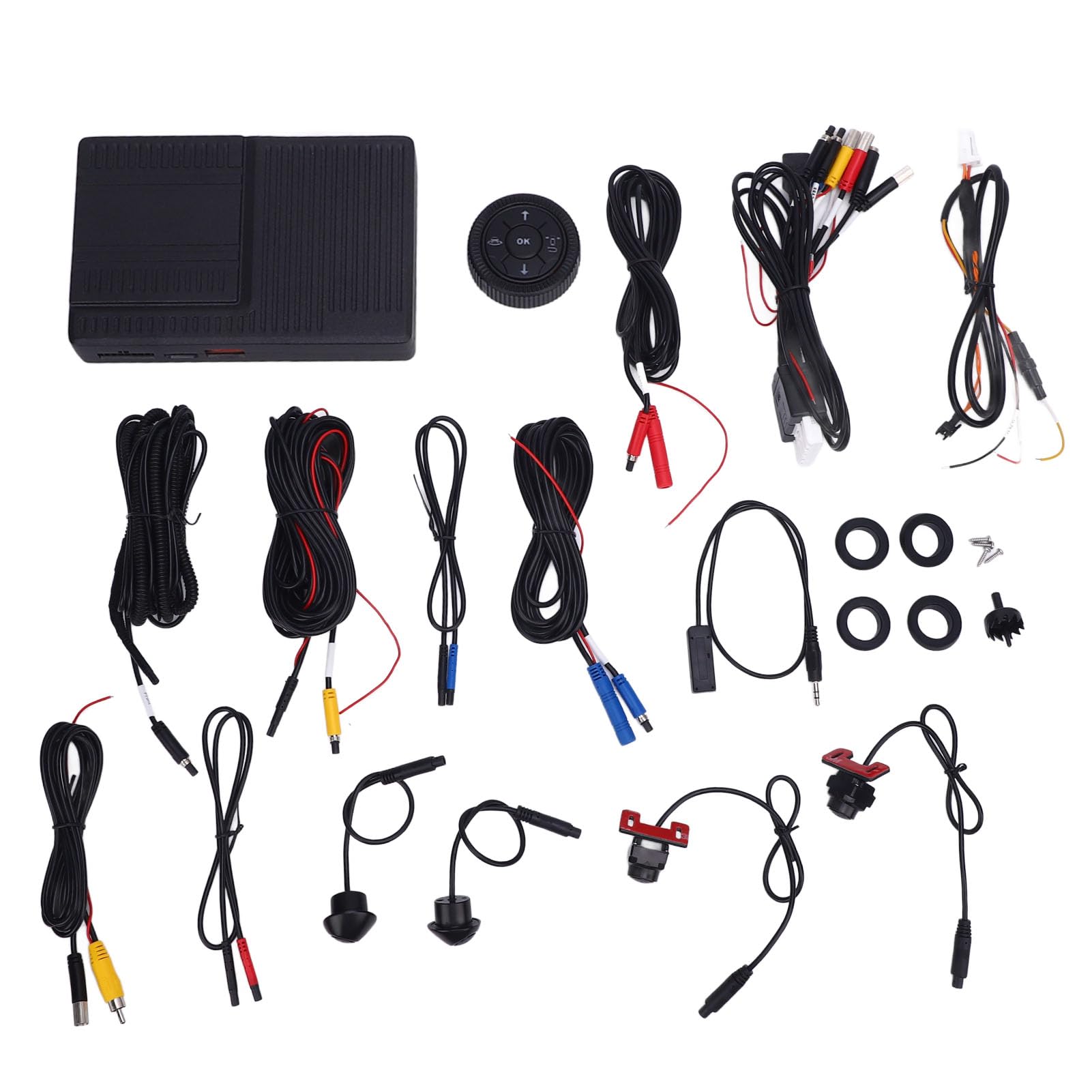
We recommend this system for drivers who want multiple camera angles and parking assistance, but professional installation may still be needed.
Pros
- Offers 360-degree, wide-angle views with 2D, 3D, and split-screen modes
- Adds visual and sound alerts for detected obstacles
- Supports recording for later review
Cons
- RCA connection may require a compatible monitor
- Vehicle calibration could take time
- Limited review history makes long-term reliability unclear
We found the different viewing modes useful when parking in tight spaces. The split-screen layout helped us check more than one side of the car, while the panoramic view gave us a broader look around the vehicle.
The AI alerts add another layer of awareness. Visual warnings and sound notifications can draw attention to nearby objects, although we would still treat them as driving aids rather than replacements for mirrors or direct checks.
The system supports 1080p video and recording, which makes saved footage easier to review. Its universal design may fit many cars, but the RCA connection and calibration work can affect how simple installation feels.
BY-J 360° Bird View Surround System

We recommend this system for drivers who want broad parking coverage and are comfortable with a more involved installation.
Pros
- Surround view helps us judge tight spaces and narrow roads
- Four-camera recording adds useful front, rear, and side coverage
- AI alerts can identify nearby vehicles and pedestrians
Cons
- Installation may require careful wiring and calibration
- The system needs a compatible 12-volt vehicle display setup
- Limited customer feedback makes long-term reliability unclear
During testing, the panoramic view gave us a useful look around the vehicle when parking. The multi-view display helped us check blind areas, though the cameras needed accurate placement and adjustment to create a reliable overhead image.
The four-channel recording setup adds value for drivers who want more than a basic backup camera. We also like the support for TVI, AHD, AV, and VGA connections, which may help with different vehicle screens.
Installation deserves attention. The system supports sedans, SUVs, vans, pickups, and commercial vehicles, but longer vehicles may need extra cable. We would also allow time for calibration rather than expecting a quick plug-in setup.
The product carries a 3.3-star rating from four customer reviews. One buyer reported a positive installation experience, while another had not installed the unit yet. That small review sample makes the BY-J system worth considering, but buyers should confirm compatibility before ordering.
Buying Guide
We should first check whether the camera fits our vehicle and existing display. Confirm the required screen, wiring, power connection, and mounting space before buying. A professional installation may help with calibration and cable routing.
| Feature | What we should check |
|---|---|
| Camera coverage | A true 360-degree view should combine images from several cameras around the car. |
| Video quality | Higher resolution can show clearer lines, cars, and obstacles, especially in low light. |
| Night performance | Look for strong low-light performance and useful image processing. |
| Display support | Confirm compatibility with our head unit, monitor, or included screen. |
| Parking guides | Adjustable guidelines should match the car’s size and steering movement. |
| Weather protection | Cameras should resist water, dust, heat, and cold for outdoor use. |
| Calibration | The system should include clear calibration tools or instructions. |
| Recording | Check storage needs, loop recording, and whether recording works while parked. |
We should consider the camera’s viewing angle and image distortion. A wide view helps reduce blind spots, but poor stitching can make nearby objects look misplaced.
Installation quality affects accuracy. We should choose a system with clear wiring instructions, stable mounts, and support for replacement or additional parts. A warranty and accessible customer service can also make repairs easier.
Editor’s picks
We recommend choosing a 360-degree bird’s-eye camera based on image quality, installation needs, and compatibility with your vehicle. The best option depends on whether we want a factory-style setup or a simpler aftermarket system.
| Pick | Best for | Key strengths |
|---|---|---|
| Mekede 360° Surround View System | Advanced installations | Multiple cameras, stitched top-down view, parking support |
| Pyle PLCMTRDVR41 | Budget-conscious buyers | Four-camera coverage, monitor included, practical features |
| AUTO-VOX CS2 | Easier installation | Wireless design, clear rear view, less wiring |
| LeeKooLuu 360° Camera System | DIY projects | Multi-camera coverage, broad vehicle compatibility, useful display |
We should confirm that the system supports our vehicle’s screen, power setup, and camera mounting points. Professional calibration often produces a more accurate overhead view, especially when the cameras need precise alignment.
For frequent nighttime parking, we should prioritize cameras with strong low-light performance and a clear display. A recording function may also help document nearby activity, but we should check local privacy and recording laws before using it.
Frequently asked questions
What is a 360-degree bird’s-eye camera?
We use this system to combine video from several cameras around a car. The display creates a top-down view that helps us judge parking space, nearby objects, and the car’s position.
Can we install one on any car?
Most cars can use an aftermarket system, but compatibility depends on camera placement, screen connections, and wiring. We should check the vehicle model and the kit’s requirements before buying.
How many cameras do we need?
A typical system uses four cameras: front, rear, and one under each side mirror. Some kits include extra cameras for a wider view or better coverage.
Does a 360-degree camera replace parking sensors?
No. We should treat the camera as a visual aid, not a replacement for sensors or direct checks. Rain, dirt, darkness, and poor camera angles can reduce visibility.
What features should we look for?
- High-resolution video for clearer images
- Night vision for low-light parking
- Parking guidelines that match steering movement
- Water-resistant cameras for outdoor use
- A compatible display or monitor
- Professional calibration support
Do we need professional installation?
We can install some kits ourselves, but calibration requires careful camera alignment and software setup. Professional installation can help the system display a more accurate overhead image.
Conclusion
We should choose a 360-degree bird’s-eye camera based on image quality, viewing angle, night vision, and installation needs. A system with clear video, low delay, and a reliable display can make parking and tight turns easier.
Before buying, we should check vehicle compatibility, camera placement, wiring, and calibration requirements. Professional installation may provide a cleaner setup and help ensure that the overhead view lines up correctly.
We should also look for useful features such as parking guidelines, blind-spot views, weather resistance, and recording support. A strong warranty and responsive customer service can add value over time.
The best camera for our car will balance price, video quality, installation effort, and daily driving needs.