A continuous beep is your jump starter’s protection circuit refusing to deliver power because it detected an unsafe condition such as reverse polarity, a loose clamp, or a low internal charge. Stop the attempt, correct the fault, and test the unit on a known-good battery before replacing anything.
When a jump starter beeps continuously after you clamp it to a dead vehicle battery, the unit is refusing to deliver power because its safety system detected a problem. That beep is protection, and this guide explains what each alarm means, how to fix it, and when to stop before you cause real damage.
Key Takeaways
Alarm meaning: A continuous beep is a protection circuit refusing to deliver current — never force.
Common causes: Reverse polarity, loose clamps, low internal charge, over-temperature, and 12V/24V mismatch.
First action: Disconnect, cool down, recharge fully, and retest on a known-good battery before faulting the.
Vehicle-side faults: Corroded terminals, bad grounds, an old battery, or a failing alternator can cause repeat.
Safety limit: Stop at once if the battery is swollen, leaking, or smoking, and return the.
Why Your Jump Starter Beeps Continuously: The Short Answer
A continuous beep is a protection alarm. The internal controller has detected an unsafe condition and deliberately blocked power to the clamps. The most common triggers are reverse polarity, a loose connection, a low internal charge, an overheated unit, or a voltage mismatch with the vehicle.
Reverse Polarity, Loose Clamps, and No-Load Detection
Reversing the clamps is the most common cause. Touch the red clamp to the negative terminal, or the black clamp to the positive terminal, and the unit detects reversed voltage, beeps, and blocks output until the clamps are swapped. Nearly all current consumer jump starters include this reverse-polarity protection.
Loose clamps produce a similar alarm because the jump starter reads the battery through the clamp connection. If the jaws only make partial contact, or the circuit sees an open connection, the unit assumes the setup is unsafe. Many smart units also refuse to energize the clamps until they sense a battery between them, which prevents sparks when the clamps touch bare metal.
Low Internal Battery, Over-Temperature, and Over-Voltage Alarms
When the jump starter’s own battery is too low to deliver a full cranking discharge, the unit beeps instead of attempting a weak start. Lithium units are especially conservative here, because drawing high current from a nearly empty pack can damage the cells. The fix is simply a full recharge.
Over-temperature protection works the way it does in a smartphone: a hot unit beeps and blocks output until it cools. This often happens after the unit sat in direct sunlight, in a hot trunk, or after several failed start attempts. Over-voltage alarms are less common but can appear when a 12V unit touches a 24V system or a charging system that is surging.
Driver Impact and First 30 Seconds: What to Do Before Touching the Vehicle
The beep is designed to interrupt a risky action, so stop the attempt as soon as it sounds. Disengage both clamps, inspect the jaws for damage, and confirm each clamp is on the correct terminal. If the unit has an override or “force start” option, do not use it: bypassing a protection alarm can cause arcing, battery venting, or permanent damage to the electronics.
Safe Connection and Voltage Compatibility for a Beeping Jump Starter
Connecting the clamps correctly and matching voltage stops the beeping.
12V vs. 24V Systems and Lithium Jump Starter Ratings
Consumer jump starters are built for 12V automotive systems. Clamping a 12V unit onto a 24V vehicle typically triggers a beep and a refused output, which is the unit protecting itself. Some premium units advertise dual support, but that rating applies only to the specific models listed by the manufacturer. Check your vehicle’s system voltage before connecting anything.
Correct Clamp Order, Vehicle Battery Condition, and When to Stop
Connection order matters. Most manuals direct you to connect the red clamp to the positive terminal first, then the black clamp to the negative terminal or an unpainted engine ground as specified. That sequence keeps the final connection away from the battery’s vent gas. A battery that has sat for weeks may also be so deeply discharged that the jump starter reads a false load — the beep can be accurate because the battery cannot accept the charge.
Diagnostic Limits: What a Jump Starter Cannot Tell You
A jump starter is a power source, not a diagnostic tool. The beep tells you it will not deliver current, but it cannot identify a bad alternator, a dying battery, or a starter drawing excess current. If the vehicle starts and dies right after, suspect the charging system; if the engine cranks slowly even with a healthy jump starter, suspect the starter or the battery. Those conclusions require voltage and load testing, not just the unit’s tone.
Beep Patterns and Model-Specific Causes
Continuous, Repeating, and Chirp Codes on Smart Clamps
Manufacturers use different tones for different faults. Some units emit one continuous beep for reverse polarity, a repeating beep for low internal charge, and short chirps for over-temperature. These patterns vary by model and by which clamp connects first, so there is no universal code. The only reliable way to decode the alarm is the troubleshooting chart in your manual or the manufacturer’s support page.
App-Connected Models: Firmware, Permissions, Subscriptions, Cloud Retention, and Account Security
Some newer jump starters pair with a smartphone app for charge monitoring and firmware updates. If the unit beeps but the app shows no error, the fault may be reported only on the unit itself, or the firmware may need an update. Before connecting an app to your vehicle, review the permissions it requests, whether an update is required, and how the manufacturer stores or shares location and vehicle data.
Lead-Acid vs. Lithium Jump Starter Differences
Lead-acid jump starters are heavier and usually cheaper per amp, but their alarms behave differently. When a lead-acid unit beeps, it usually means the internal battery is truly depleted. Lithium units are smaller and more portable but enforce stricter temperature limits — a lithium unit left in a hot car may beep until it cools even at full charge. The real-world trade-offs between the two chemistries are covered in our comparison of lithium vs lead-acid jump starters if this issue is pushing you toward a replacement.
Step-by-Step Troubleshooting and Reset Procedure<
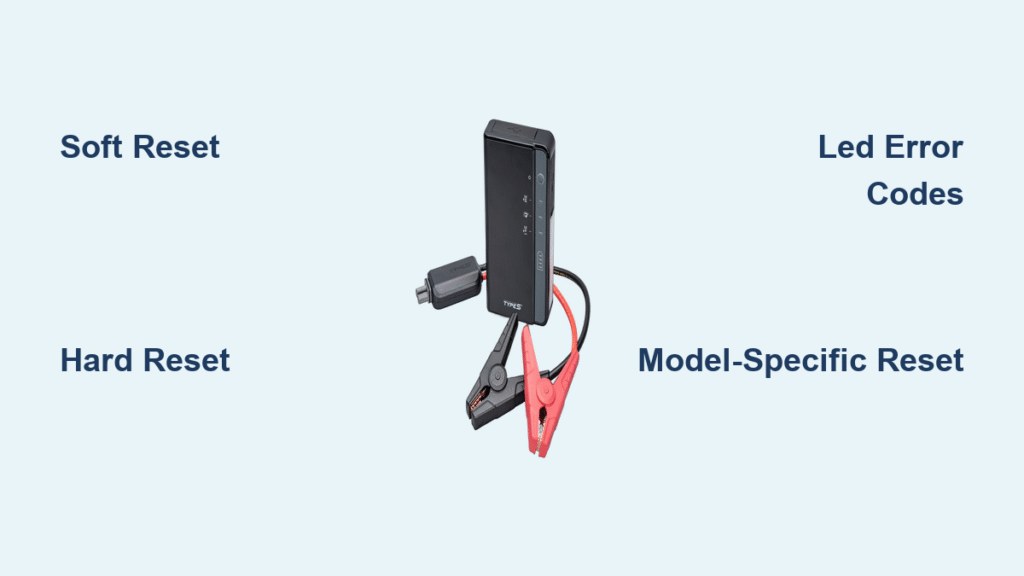
Troubleshooting and resetting the jump starter to stop the continuous beeping.
/h2>
Disconnect, Cool Down, Recharge, and Retest
Start with the simplest fix. Disconnect both clamps, move the unit to a cool, dry place, and let it sit for 15 to 30 minutes if it feels warm. Check the unit’s own charge indicator; if it is low, recharge it fully and retest. While you wait, inspect the clamp jaws for corrosion and the cable for nicks or exposed copper — a broken cable can trigger the same alarm as a real electrical fault.
Test on a Known-Good Battery and Check Cable Continuity
To determine whether the fault is in the unit or the vehicle, connect the jump starter to a known-good battery from another vehicle. If it still beeps, the problem is the unit, the clamp, or the cable. If it works, the issue is on the vehicle side. A digital multimeter at the battery can then give you a resting voltage reading, which separates a deeply discharged battery from a broken one — though a full load test is still the definitive check.
Maintenance Habits That Prevent Repeat Beeping
Most jump starter alarms are avoidable. Recharge the unit every two to three months even if you never use it, because lithium packs self-discharge over time. Store it in the passenger cabin rather than the trunk during extreme temperatures, wipe the clamp jaws after each use, and inspect the cable before each season. If you prefer to keep the unit topped off continuously, our guide on leaving a jump starter plugged in explains the trade-offs before you build a permanent charging habit.
Vehicle-Side Problems That Keep the Alarm Going
Corroded Terminals, Bad Grounds, and Parasitic Draw
Even a jump starter that passes the known-good-battery test can beep on a vehicle with corroded terminals. Heavy corrosion creates a high-resistance connection the unit reads as a fault. A bad engine ground does the same by giving the current an inconsistent return path. A parasitic draw — a glovebox light left on or a failing module — will drain a fresh battery and set up a cycle of failed attempts and repeat beeping.
Battery Age, Alternator, and Starter Issues
The vehicle battery itself may be at the end of its service life. Standard flooded lead-acid batteries generally last three to five years, but heat and short trips shorten that window. If the alternator is not charging properly, the jump starter may clamp onto a battery that looks fine but cannot hold a charge. A worn starter motor can also draw more current than expected, collapsing voltage and tripping the jump starter’s protection circuit mid-start.
When to Stop Jump-Starting and Call a Mechanic
If the jump starter beeps consistently on every connection, stop after two or three attempts. Repeated cranking against a damaged battery can harm the starter and alternator. Call a mechanic if the engine still cranks slowly with a fresh unit, if the battery shows visible damage or odor, or if the vehicle dies again shortly after a successful start.
Repair, Replace, or Return? Ownership Costs and Warranty
Replacement Clamps, Batteries, and Warranty Support
When the unit itself is at fault, check the warranty before buying anything. Many manufacturers replace units with a faulty circuit board, and some sell replacement clamp kits for a broken jaw or cable. If the internal battery has lost capacity after years of use, replacement may cost more than a new unit — compare the warranty term and shipping cost against the unit’s age. Our guide to the most reliable jump starter brands can also help you pick a replacement with a better service track record.
Signs the Jump Starter Is Unsafe to Keep Using
Stop using the unit if the case is swollen or cracked, if a clamp is charred or melted, if the cable insulation is broken, or if the unit hisses or crackles while charging. Do not disassemble it to inspect the battery, and never connect a visibly damaged unit to a vehicle. Check the model number against the manufacturer’s recall page and the NHTSA database, since some lithium jump starters have been recalled over heating and fire risk.
U.S. Disposal and Legal Notes for Lithium Jump Starter Batteries
Lithium jump starters contain rechargeable lithium-ion cells that should not go into regular household trash. Federal guidance advises treating damaged or swollen lithium batteries as hazardous waste, and many states require recycling through a battery stewardship program or a household hazardous waste collection event. Contact your local solid waste district or a retail battery drop-off point before disposal. Never crush, puncture, or incinerate the battery to remove it.
Alternatives Compared: Jump Starter, Power Bank, or Jumper Cables
Same Criteria Side by Side: Power, Safety, Portability, and Cost
If a beeping unit is making you reconsider your roadside kit, the three options trade off power, safety, portability, and cost differently. A jump starter delivers cranking current and works alone. Jumper cables are cheaper and nearly maintenance-free but require a second running vehicle and a careful hookup. A USB power bank is the most portable and cheapest, but it will not start an engine at all.
Option
Best for
Owner consideration
Driver consideration
Jump starter
Solo drivers who need a self-contained rescue
Higher upfront cost and a charge needed every 60–90 days
Battery-dependent performance in very cold weather
Jumper cables
Households with a second working vehicle
Lowest cost and near-zero maintenance
Requires a helper vehicle, correct clamp order, and safe positioning
USB power bank
Charging personal electronics on the go
Low cost and useful every day
Cannot crank an engine; not a battery-replacement tool
Best Fit for Daily Drivers, Winter Climates, and Older Vehicles
For a daily driver in a mild climate, a compact lithium jump starter is the strongest fit because it can ride in the cabin all year. In very cold regions, choose a unit whose manufacturer documents a cold-temperature operating range, since budget lithium packs lose cranking force when frozen; some drivers keep a lead-acid unit as a backup in winter. For an older vehicle with a weak charging system, jumper cables plus a helper car keep the electronics out of the equation entirely.
Limitations and Compatibility Before You Buy
Before any purchase, confirm the vehicle’s system voltage, the engine’s cold-cranking amperage needs, the physical size of the unit, and the condition of the battery it will jump. A unit that beeps in the store because it has sat on the shelf may simply be discharged. Read the included manual for the alarm chart and warranty terms, and verify whether a companion app requires a subscription. Our complete guide on how to choose a jump starter organizes every decision criterion in one place.
Next Steps After the Beeping Stops
Battery Voltage Checks, Load Testing, and Mechanic Referral
Once the engine starts, do not treat the beep as resolved. Drive for at least 20 minutes so the alternator can recharge the battery, then check the resting voltage with a multimeter after the vehicle has sat for several hours. A reading near or below 12.4V indicates the battery is not holding its charge and needs professional load testing. If the beep returns within a few days, the root cause is likely the battery, the alternator, or a parasitic draw — not the jump starter.
Ethan Carter’s 2026 Pre-Trip Checklist for Your Next Jump-Start Attempt
Before you rely on a jump starter on the road, run through this five-point checklist:
Charge the internal battery before every long trip — low charge is the number-one cause of a beeping unit.
Inspect the clamps and cable for corrosion, cracks, or exposed copper.
Confirm the vehicle’s system voltage matches the jump starter’s rating.
Clean both battery terminals and look for a swollen battery case.
Read the manual’s alarm chart and keep the safe connection order visible.
Final Verdict
Best for: Drivers who want to know when a beep is a simple fix — recharge the unit, clean the clamps, or correct the connection — and when it is a genuine safety warning.
Think twice if: The case is swollen, a clamp is melted, or the unit still beeps on a known-good battery — stop using it and contact the manufacturer or a recycling program.
Next step: Recharge the unit, test it on a known-good battery, and if the beep only appears on your vehicle, have the battery and charging system load-tested.
Frequently Asked Questions
The most likely causes are a low internal charge, a loose clamp, corrosion on the terminal, or an over-temperature condition. Disconnect the unit, let it cool, recharge it fully, and retest on a known-good battery to separate a unit fault from a vehicle fault.
Reverse-polarity protection produces a beep the moment a clamp touches the wrong terminal. Swap the red clamp to the positive terminal and the black clamp to the negative terminal, and most units will stop beeping and allow the jump start.
Yes. When the internal battery is too low to deliver cranking current, the unit beeps and blocks output rather than attempting a weak start. Recharge the jump starter completely and retry.
Recharge it every two to three months because lithium packs self-discharge over time. A jump starter stored in a hot trunk loses charge faster, so shorter intervals make sense in summer.
No — a standard 12V unit will beep and refuse to output when connected to a 24V system. Only units specifically rated for 12V/24V dual operation can be used on both, so verify the rating before connecting.
Stop immediately and do not attempt the jump start. A swollen battery case indicates internal damage and possible venting; move away, avoid sparks, and have the vehicle evaluated by a professional.
Hi, I'm Ethan Carter, and I've spent over a decade testing automotive electronics, dash cams, and interior accessories. I created TopBestCar.com to help car owners cut through marketing hype and find gear that actually performs for their exact make and model — backed by hands-on testing, spec comparisons, and real owner feedback.