Your jump starter’s charge display can read full while the unit still fails to crank the engine due to bad clamps, a battery too far gone, or insufficient peak amps. Work through the connection, battery, and vehicle-side checks in this guide before replacing anything.
Dealing with a jump starter fully charged but won’t start car is frustrating, but the unit’s charge display is rarely the real problem. The fault usually sits somewhere between the clamps, the vehicle battery, and the starter motor — and most of the causes are simple to identify with the right checks.
Before you buy another jump starter or call for a tow, work through the steps in this guide. Most take less than ten minutes and require nothing more than a multimeter and a careful look at the clamps and terminals.
Key Takeaways
Connection first: Corroded or loose clamps cause more failed jump starts than any other issue.
Battery limits: A battery below about 10.5V or with sulfation may not accept a jump at.
Peak amps matter: Match the jump starter’s rating to your engine size, climate, and oil viscosity.
Vehicle faults: Starter, alternator, and immobilizer failures can mimic a dead battery.
Maintenance: Recharge the jump starter every 3–6 months and store it in a cool, dry.
Why a Fully Charged Jump Starter Still Won’t Start Your Car (The Short Answer)
A jump starter is a portable power source, not a repair tool. A full charge display only tells you that the unit’s internal battery is topped up — not that it can successfully crank your engine. The jump starter still has to deliver enough current through the clamps, into a battery that can accept the charge, and onward to a starter motor that’s actually working.
If any link in that chain fails, the engine won’t turn over. The good news is that the cause is usually straightforward to find.
The 5 Most Common Culprits: Bad Connections, Dead-Flat Batteries, Weak Peak Amps, Faulty Clamps, and Vehicle-Side Failures
1. Bad connections. Corroded terminals, loose clamps, or reversed polarity prevent current from flowing even when the jump starter is full.
2. Dead-flat or damaged battery. A battery with an internal short, severe sulfation, or voltage below roughly 10.5 volts may not accept the jump starter’s current at all.
3. Weak peak amps. The jump starter’s peak current rating may be too low for your engine size, especially in cold weather or with thick oil.
4. Faulty clamps or cables. Damaged cables, broken internal wires, or worn clamp teeth can interrupt the circuit.
5. Vehicle-side failures. A failed starter motor, ignition switch, immobilizer, or alternator can mimic a dead battery even when the jump starter is working perfectly.
Work through these in order, starting with the simplest and safest checks.
Start With the Connection: Clamp Placement, Polarity, and Cable Condition
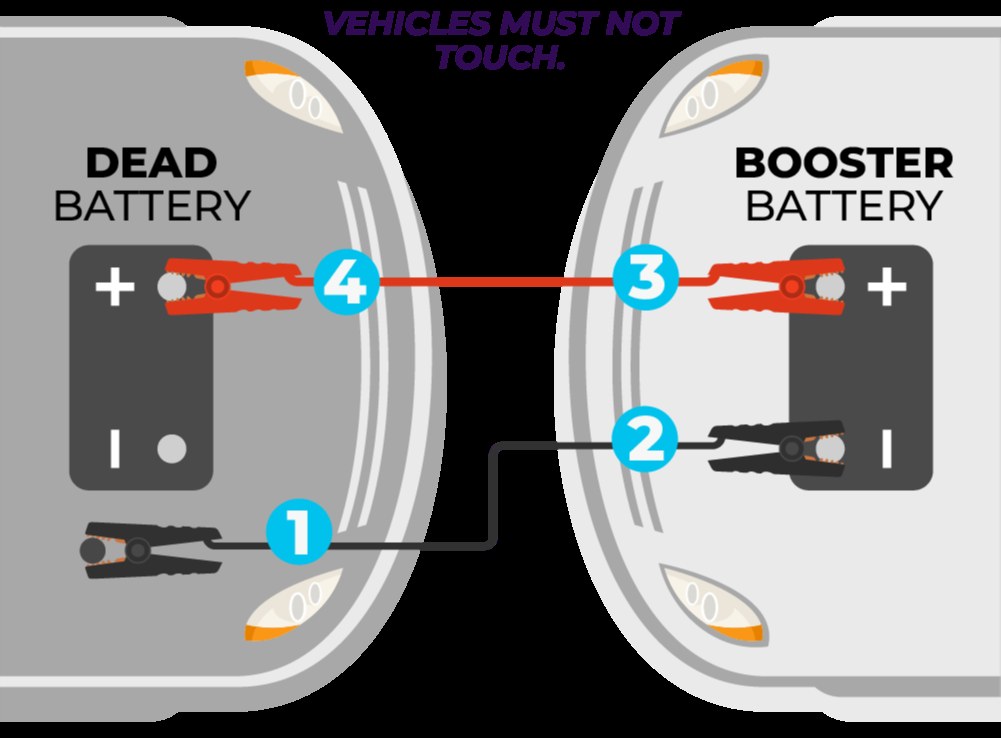
Correct clamp placement and clean cables ensure proper connection for jump starting.
Connection problems cause more failed jump starts than any other issue. A fully charged jump starter can’t help if the clamps aren’t making solid metal-to-metal contact.
Correct Connection Order for 12V and 24V Systems
For a standard 12V vehicle, connect the red clamp to the positive battery terminal first, then connect the black clamp to a clean, unpainted metal ground point on the engine block or chassis. This reduces the risk of sparks near the battery and follows the procedure in most vehicle owner’s manuals.
For 24V trucks and commercial vehicles, the process is different. Never assume a 12V jump starter can handle a 24V system — check both the vehicle manual and the jump starter’s specifications before connecting anything.
Why Corroded or Loose Clamps Kill an Otherwise Perfect Jump Start
Battery terminal corrosion acts as an insulator, blocking current even when the clamp appears to be attached. Loose clamps are just as problematic: if you can wiggle the clamp by hand, the connection isn’t solid enough for the hundreds of amps a starter motor needs.
Clean the terminals with a wire brush, then tighten the clamps so they grip firmly. If the terminals are heavily corroded or damaged, stop and have the battery inspected.
How to Test the Clamps and Cables for Hidden Damage
Clamp damage isn’t always visible. A cable can look fine on the outside while the internal wire is broken or corroded. Check the full length of both cables for cuts, melted insulation, or exposed wire.
You can also test the clamps with a multimeter set to continuity mode. Touch one probe to the clamp and the other to the corresponding connector on the jump starter. If there’s no continuity, the cable or connector is damaged.
Is the Car Battery Too Far Gone? Voltage, Sulfation, and Internal Shorts
Even a new jump starter can’t revive a physically damaged battery. The vehicle battery is the middleman between the jump starter and the starter motor, and it must be capable of accepting the current.
What a Multimeter Tells You About Battery Voltage Before You Jump
Measure the battery’s resting voltage before connecting the jump starter:
12.6V or higher: The battery is reasonably charged; the problem is likely elsewhere. 12.2V to 12.5V: Partially discharged but may accept a jump. Below 12.0V: Deeply discharged; may need a charger rather than a jump starter. Below 10.5V: Possible shorted cell or severe sulfation; may not accept a jump at all.
These numbers apply to standard flooded lead-acid batteries. AGM and lithium batteries have slightly different voltage curves, so check your battery’s specifications.
Why a Completely Dead or Sulfated Battery Won’t Accept a Jump
When a lead-acid battery sits deeply discharged for weeks, sulfate crystals form on the plates. This condition, called sulfation, reduces the battery’s ability to accept and hold a charge. A jump starter delivers a short burst of current — it’s not designed to slowly recharge a sulfated battery the way a battery charger can.
An internal short, often caused by damaged plates or excessive vibration, can also make a battery appear dead even when current is flowing into it. If the battery is more than four or five years old and won’t hold a charge after a jump, replacement is usually the practical answer. For more on this, see our guide on what to do when your jump pack won’t revive a dead battery.
When to Stop Trying: Diagnostic Limits of a Jump Starter
A jump starter isn’t a diagnostic tool. It can’t tell you whether the battery has a bad cell, whether the alternator is charging, or whether the starter motor is drawing too much current. If the engine doesn’t crank at all and the clamps are clean and tight, stop attempting repeated jumps — each failed attempt drains the jump starter and stresses the vehicle’s electrical system.
Peak Current vs. Cranking Amps: Does Your Jump Starter Have Enough Power?<
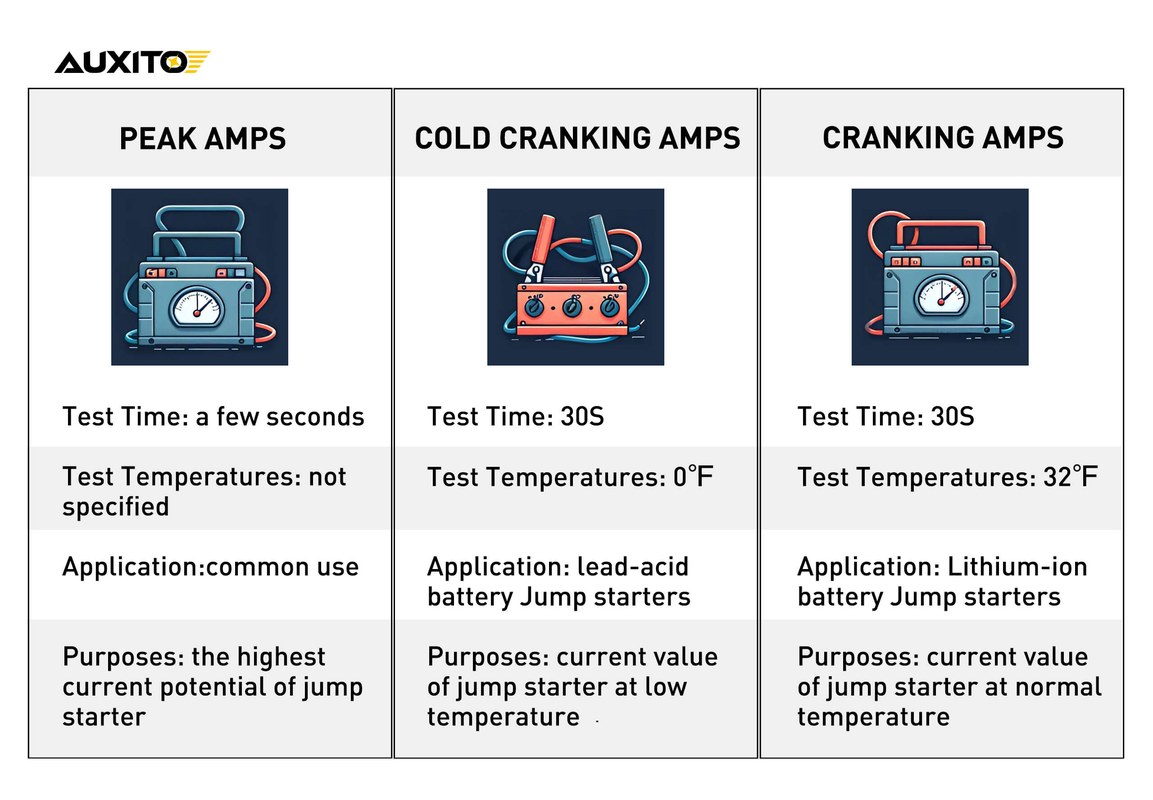
Cranking amps show sustained power delivery, while peak current measures brief bursts.
/h2>
Manufacturers advertise peak amps, but that number doesn’t tell the whole story. Peak amps represent the maximum current the unit can deliver in a very short burst under ideal conditions — not the sustained current your starter motor actually needs.
Matching Peak Amps to Engine Size, Temperature, and Oil Viscosity
A small four-cylinder engine may start with a jump starter rated around 400 to 600 peak amps. A larger V6 or V8 may need 1000 peak amps or more, and a diesel engine in cold weather can require far more. Cold temperatures thicken engine oil and slow the chemical reactions inside the battery, so a unit that works in July may struggle in January.
Why a “Fully Charged” Display Can Mislead You on Peak Output
The charge indicator on a jump starter measures the voltage of its internal battery, not its ability to deliver current under load. A unit that’s been stored in a hot garage for months may show a full charge, but its internal cells may have aged or lost capacity. When you connect it to a car, the voltage can sag under load, and the unit may shut down before the engine cranks.
Vehicle-Side Problems That Mimic a Dead Battery
Sometimes the jump starter and the battery are both fine, but the vehicle has a separate fault that looks like a dead battery. These failures can be frustrating because they often appear suddenly.
Starter Motor, Ignition Switch, and Immobilizer Faults
A failing starter motor may draw excessive current, produce a single loud click, or spin slowly without engaging the flywheel. An ignition switch problem can prevent power from reaching the starter at all. And on many modern vehicles, the immobilizer system will block the starter if it doesn’t recognize the key or fob — even with a fully charged battery and a working jump starter.
If the dashboard lights come on brightly and the engine still won’t crank, the problem is likely not the battery. That’s a strong sign you’re dealing with a starter, ignition, or immobilizer fault.
Parasitic Draw: Why the Car Starts, Then Dies Immediately
A parasitic draw is an electrical load that continues draining the battery after the vehicle is turned off. Common culprits include interior lights, trunk lights, glove box lights, and faulty modules that fail to “sleep.” If the car starts with a jump but dies as soon as you remove the clamps, the alternator may not be charging, or the battery may be too weak to sustain the engine’s electrical load.
Alternator Failure and Why the Battery Isn’t Recharging
If the car runs while the jump starter is connected but stalls immediately when you disconnect it, the alternator is a prime suspect. A failed alternator won’t recharge the battery, so the engine runs on battery power alone until it dies. You can test this with a multimeter: with the engine running, the voltage across the battery terminals should read about 13.5V to 14.5V. If it stays near 12.6V, the alternator isn’t charging.
Jump Starter Health: Age, Storage, and Internal BMS Protection
Jump starters don’t last forever. The lithium-ion cells inside degrade over time, and the way you store the unit has a big impact on how long it stays useful.
Why the Internal Battery Management System Can Block a Jump
Most modern jump starters include a battery management system (BMS) that monitors cell voltage, temperature, and current. The BMS is designed to protect the unit from damage, but it can also block a jump in certain conditions: if the cells are too cold, too hot, or unbalanced, or if the unit detects reverse polarity, it may refuse to deliver power even when the display shows a full charge.
If your jump starter worked last month but won’t output power now, check the manual for error indicators. Some units flash a specific LED pattern or show a code to explain why the output is blocked.
Storage Temperature, Charge Cycles, and Long-Term Maintenance
Lithium-ion cells degrade fastest when stored in extreme heat or at very low states of charge. Storing a jump starter in a hot car trunk all summer can significantly shorten its life. Most manufacturers recommend recharging the unit every three to six months, even if you haven’t used it.
If you’re shopping for a replacement, our guide to the most reliable jump starter brands can help you compare build quality and warranty support.
Safety, Compatibility, and Know When to Call a Professional
Jump starters are generally safe when used correctly, but they can cause injury or damage when mismatched with the wrong vehicle or connected improperly.
Safe Connection Practices and Polarity Protection Features
Always confirm the polarity before connecting the clamps: red is positive, black is negative. Many jump starters include reverse polarity protection, which prevents damage if you accidentally connect the clamps backward — but not all do. Check your owner’s manual to know which protections your unit has.
Do
Connect the red clamp to the positive terminal first
Connect the black clamp to a clean, unpainted ground point
Confirm the jump starter’s voltage matches the vehicle system
Follow the jump starter and vehicle owner’s manuals
Don’t
Connect to a frozen, cracked, or leaking battery
Let the clamps touch each other while powered on
Use a 12V jump starter on a 24V system
Keep cranking if the engine doesn’t start after a few attempts
Voltage Compatibility: 12V Cars, 24V Trucks, and Hybrid Systems
Most passenger cars and light trucks in the US use 12V electrical systems. Heavy-duty trucks, some commercial vehicles, and military vehicles may use 24V systems. A 12V jump starter connected to a 24V system can be damaged or create a safety hazard. Hybrid and electric vehicles have high-voltage battery packs and complex electronics; jump starting them requires following the vehicle manufacturer’s specific procedures, which often differ from conventional cars.
When a Jump Starter Won’t Save You: Towing, Diagnostics, and Next Steps
If you’ve checked the connections, verified the battery voltage, confirmed the jump starter is healthy, and the engine still won’t crank, it’s time to stop guessing. A roadside professional can test the battery, alternator, and starter on the spot. If the vehicle needs a tow, your insurance or roadside assistance plan may cover it.
Next Steps: Test the Battery, Alternator, and Starter Like a Pro
Once the car is running — or you’ve decided to stop attempting jumps — a few simple tests can tell you which component actually failed.
Using a Multimeter vs. a Load Tester for a Definitive Diagnosis
A multimeter measures voltage but can’t simulate the heavy load a starter motor places on the battery. A load tester applies a controlled load and measures how the voltage holds up under stress — that’s the test that reveals a weak battery more reliably. Many auto parts stores offer free battery and charging system testing, which is the fastest way to get a definitive answer.
Recommended Tools
Digital multimeterBattery load testerWire brush / terminal cleanerSafety glasses and gloves
If you’re trying to decide whether to invest in a traditional charger or a new jump starter, our comparison of jump starters vs. battery chargers can help you choose the right tool for your situation.
Should You Replace the Battery or the Jump Starter? Cost and Value Considerations
If the battery fails a load test, replacement is usually the right move. A typical 12V car battery costs roughly $100 to $250 depending on the type and vehicle, and installation is often included or available for a small fee. If the jump starter itself is old, won’t hold a charge, or lacks the peak amps your engine needs, replacing it may be the better investment.
Consider the total cost of ownership: a good jump starter can last five years or more with proper storage and maintenance, making it a worthwhile investment for anyone who wants to avoid waiting for roadside assistance in cold weather.
Final Verdict
Best for: Drivers who want to diagnose a failed jump start quickly, safely, and without paying for unnecessary repairs.
Think twice if: The vehicle battery is old, the jump starter is aging, or the engine shows signs of a starter or alternator fault — these require professional diagnosis, not another jump attempt.
Next step: Test the battery with a multimeter, inspect the clamps and terminals, and if the battery is more than four years old, have it load-tested at a local auto parts store.
Frequently Asked Questions
The charge display only reflects the jump starter’s internal battery voltage, not its ability to deliver current under load. Common causes include corroded clamps, a deeply discharged vehicle battery, insufficient peak amps, or a vehicle-side fault like a failed starter.
Sometimes, but a battery below about 10.5 volts or one with severe sulfation may not accept the jump starter’s current. If the battery is more than four or five years old, a load test at an auto parts store is the most reliable way to know if replacement is needed.
A small four-cylinder may start with 400 to 600 peak amps, while larger engines and diesels in cold weather may need 1000 or more. Check the jump starter’s specifications against your vehicle’s engine size and typical winter temperatures.
No. A 12V jump starter must only be used on 12V systems. Heavy-duty trucks may use 24V systems, and hybrids and EVs have high-voltage components that require the manufacturer’s specific procedure. Read both manuals before connecting anything.
Most manufacturers recommend recharging every three to six months, even if the unit hasn’t been used. Storing it in a cool, dry place and keeping the charge level above about 50 percent helps the lithium cells last longer.
Stop after a few failed attempts if the clamps are clean and tight, the battery voltage is reasonable, and the engine still won’t crank. A roadside professional can test the battery, alternator, and starter on the spot, and towing may be covered by your insurance or roadside assistance plan.
Hi, I'm Ethan Carter, and I've spent over a decade testing automotive electronics, dash cams, and interior accessories. I created TopBestCar.com to help car owners cut through marketing hype and find gear that actually performs for their exact make and model — backed by hands-on testing, spec comparisons, and real owner feedback.