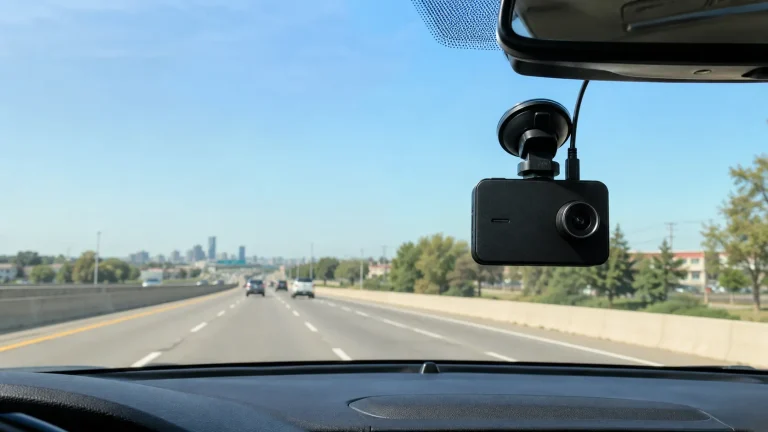
Does Car Insurance Go Down If You Have a Dash Cam?

Usually, car insurance does not automatically go down just because you install a dash cam. Most personal auto insurers in the USA do not offer a standard dash cam discount. However, useful footage may help prove fault, support an insurance claim, and reduce disputes after a crash. Some commercial or telematics-based programs may offer savings under specific rules.
I am Ethan Carter, and I focus on practical car safety and automotive electronics. Drivers often ask me whether buying a dash cam will lower their monthly premium. The honest answer is that the camera may protect you financially, but direct insurance discounts are still uncommon.
Ask your insurance company about its dash cam policy before buying a camera for a discount. Get any promised discount, approved-device rule, or data-sharing requirement in writing.
Do Insurance Companies Give Dash Cam Discounts?
Most personal car insurance companies do not advertise a direct discount for owning a standard dash cam. Progressive, for example, says it does not offer a dash cam discount, although recorded footage may provide useful evidence during a claim. :contentReference[oaicite:0]{index=0}
The National Association of Insurance Commissioners lists common savings for safe driving, low mileage, anti-theft devices, driver training, policy bundling, and vehicle safety equipment. It also explains that discount availability can vary by insurance company and state. :contentReference[oaicite:1]{index=1}
Before choosing a camera, review our car electronics guide for practical information about dash cams and other vehicle technology.
Why a Dash Cam May Still Help With Insurance
A dash cam may not reduce the price shown on your policy today. Its value often appears after a collision, parking incident, vandalism event, or disputed claim.
Clear footage may show which vehicle changed lanes, whether a traffic light was red or green, how the impact happened, and whether another driver left the scene. Progressive notes that dash cam footage may help explain an accident and support a driver who was not at fault. :contentReference[oaicite:2]{index=2}
A dash cam does not guarantee that an insurer will decide in your favor. Video can also show your speed, lane position, distraction, or unsafe action. Never edit, hide, or misrepresent footage when making a claim.
Use a dash cam as an evidence tool, not as a replacement for defensive driving. The NHTSA distracted-driving guidance explains why drivers must keep their attention on the road instead of adjusting devices while driving.
The greatest financial benefit may not be a small policy discount. Reliable footage can help establish what happened, shorten a disagreement, and protect your driving record when another person is responsible. The value depends on whether the video is clear, complete, correctly dated, and safely stored.
How Dash Cam Footage Works During an Insurance Claim
A dash cam normally records short video clips onto a microSD card. Loop recording replaces older unlocked files when the card becomes full. A G-sensor may protect a file when the camera detects a hard impact.
After a crash, stop in a safe place and follow normal emergency steps. Check for injuries, contact emergency services when needed, exchange information, and report the event according to your policy requirements.
Do not sit in traffic trying to review the camera. Save the footage only when it is safe. You may also want basic emergency items from our safety gear guide.
How to Ask Your Insurer About a Dash Cam Discount
Ask whether the company offers a discount for a personal dash cam, connected camera, anti-theft system, or approved safety device.
Explain whether it records only the front, records front and rear, includes GPS, offers parking mode, or connects to a fleet or telematics service.
Find out whether you must buy an approved device, share driving data, keep the camera connected, or enroll in a separate program.
Insurance rates and discounts vary by state. Ask whether the offer applies to your location, vehicle type, and policy.
Ask for the discount amount, start date, renewal rules, privacy terms, and any reason the savings could be removed.
Do not switch insurers for one discount alone. Compare the same coverage limits, deductibles, exclusions, and customer service.
Most standard dash cams can work with many cars, SUVs, trucks, hybrids, and electric vehicles. Insurance-program compatibility is separate from physical installation compatibility.
- Personal vehicles using a standard 12-volt or approved USB power source
- Electric and hybrid vehicles with a suitable accessory power connection
- Leased vehicles using a removable installation approved by the lease terms
- Commercial vehicles enrolled in an insurer-approved fleet program
- Vehicles using a supported hardwire kit with low-voltage protection
Easy Installation
A basic plug-in front camera is often easy to install. Mount it high on the windshield without blocking the driver’s view.
Moderate Installation
Front-and-rear systems and parking-mode hardwiring take more time. Professional help may be safer when cables must pass near trim panels or airbags.
Dash Cam Discount vs Telematics Discount
| Feature | Standard Dash Cam | Telematics Program | Connected Fleet Camera |
|---|---|---|---|
| Main purpose | Records video | Measures driving behavior | Records and shares fleet data |
| Direct personal policy discount | ✗ Uncommon | ✓ May apply | Usually commercial |
| May record a collision | ✓ | ✗ Not always | ✓ |
| May track braking and mileage | ✗ | ✓ | ✓ |
| May affect renewal pricing | Usually not directly | ✓ | ✓ |
| Data-sharing requirement | Usually no | Usually yes | Usually yes |
Usage-based insurance programs may collect information such as mileage, time of day, rapid acceleration, hard braking, hard cornering, and other driving data. Depending on the insurer and state, that information may affect premiums. :contentReference[oaicite:3]{index=3}
Commercial programs can work differently. For example, GEICO has described a commercial fleet program that can use approved dash cams or other connected equipment and may provide participation savings. That does not mean the same discount is available on a normal personal auto policy. :contentReference[oaicite:4]{index=4}
Questions to Ask Before Enrolling
| Question | Why It Matters | What to Confirm |
|---|---|---|
| Is this a dash cam discount or telematics discount? | The programs collect different information | Whether video, driving data, or both are shared |
| Does the program apply in my state? | Insurance rules and offers vary | State eligibility and policy requirements |
| Can my rate increase? | Some driving programs may affect renewal pricing | Discount, surcharge, and cancellation rules |
| Who owns the device? | Some program devices may need to be returned | Ownership, replacement, and return terms |
| How long is data stored? | Video and driving data may be sensitive | Storage, access, sharing, and deletion policies |
| What happens if the device disconnects? | Participation savings may depend on continued use | Setup deadlines and connection requirements |
| Will ordinary footage help with claims? | Claim procedures vary by insurer | File format, submission process, and original-file rules |
Dash Cam Features That Matter for Insurance Evidence
A standard dash cam and an insurer’s telematics device are not the same. A dash cam mainly saves video. Telematics may record mileage, speed patterns, braking, acceleration, driving times, and other information used by the program.
How to Preserve Dash Cam Footage After a Crash
Important footage can disappear when loop recording replaces old files. Save the clip as soon as it is safe.
- Move to a safe location and handle injuries first.
- Do not remove the camera while standing in moving traffic.
- Press the camera’s emergency-save button when available.
- Turn off the vehicle only after confirming the event file is protected.
- Copy the original file to a phone, computer, or secure storage location.
- Keep the full clip, including the time before and after the impact.
- Do not add filters, captions, or edits to the original file.
- Ask your insurer how it wants the video submitted.
- Ask your insurer about discounts before buying
- Keep written details of any program offer
- Compare equal coverage when shopping for insurance
- Test your camera and memory card regularly
- Preserve the original video after an incident
- Review privacy and data-sharing terms
- Do not assume every insurer offers a discount
- Do not confuse a dash cam with telematics
- Do not mount the camera where it blocks your view
- Do not change settings while driving
- Do not edit evidence before submitting it
- Do not choose a policy based on one discount alone
Telematics programs may measure how far you drive, when you drive, and how often you brake or accelerate sharply. A normal dash cam usually does not send this information to your insurer unless it is part of a connected program. :contentReference[oaicite:5]{index=5}
Can a Dash Cam Stop Your Premium From Increasing?
A dash cam cannot promise that your rate will stay the same. Insurers consider many factors, including your driving record, claims history, location, vehicle, mileage, coverage, and state rating rules. :contentReference[oaicite:6]{index=6}
However, useful footage may help when fault is disputed. If it supports that another driver caused the collision, it may protect you from an incorrect version of events. The insurer will still review the full claim, policy, police information, statements, damage, and available evidence.
Other Ways to Lower Car Insurance Costs
If your insurer does not offer a dash cam discount, ask about other savings. Common possibilities include safe-driver discounts, policy bundling, low-mileage programs, driver training, anti-theft devices, vehicle safety equipment, and higher deductibles.
Only raise a deductible when you can afford the extra out-of-pocket cost after a claim. The NAIC recommends comparing quotes and checking that each insurer is offering the same type and amount of coverage. :contentReference[oaicite:7]{index=7}
For broader vehicle ownership guidance, visit our complete car safety guide.
A dash cam may provide clear evidence, help explain a crash, record a hit-and-run, support a parking claim, and protect a careful driver from a false account.
Direct personal-policy discounts are uncommon. Footage may reveal your own mistakes, and connected programs may collect private driving data or apply special participation rules.
A Dash Cam Usually Helps With Evidence, Not Premium Price
Car insurance normally does not go down just because you own a dash cam. Still, a reliable camera may provide valuable evidence after a collision or parking incident. Ask your insurer about current state-specific discounts, telematics programs, approved devices, privacy terms, and claim procedures before making a decision.
Frequently Asked Questions
Does car insurance go down if you have a dash cam?
Usually not. Most personal auto insurers do not offer an automatic dash cam discount. Ask your company because offers can vary by insurer and state.
Which insurance companies give dash cam discounts?
Standard personal-policy dash cam discounts are uncommon in the USA. Some commercial fleet or connected telematics programs may offer savings under specific conditions.
Can dash cam footage help an insurance claim?
Yes. Clear footage may help show how a crash happened or which driver was responsible. The insurer will still review all available evidence.
Can dash cam footage be used against me?
Yes. Video may show unsafe speed, distraction, poor lane position, or another action that affects the claim. Preserve and submit footage honestly.
Is a dash cam the same as a telematics device?
No. A dash cam mainly records video. Telematics usually measures driving behavior such as mileage, braking, acceleration, and driving time.
Will a front and rear dash cam lower insurance more?
Not usually. Extra coverage may provide better evidence, but it does not normally create a larger personal auto insurance discount.
Should I tell my insurance company that I have a dash cam?
You can ask whether it affects discounts or claims. Also ask how the insurer wants original footage saved and submitted after an incident.
Can a telematics program lower my insurance rate?
It may. Savings depend on the insurer, state, program rules, and recorded driving behavior. Review whether poor results can affect renewal pricing.
Conclusion
Does car insurance go down if you have a dash cam? For most personal drivers, the answer is no. Installing a normal camera does not automatically change the premium.
I still consider a reliable dash cam a useful safety investment. It may capture the details needed to explain a crash, challenge a false claim, or identify a vehicle that leaves the scene.
Before buying, call your insurer. Ask about discounts, telematics, connected-camera programs, state eligibility, privacy rules, and claim procedures. Then choose a dependable camera, install it safely, use a high-endurance memory card, and test the recordings often.