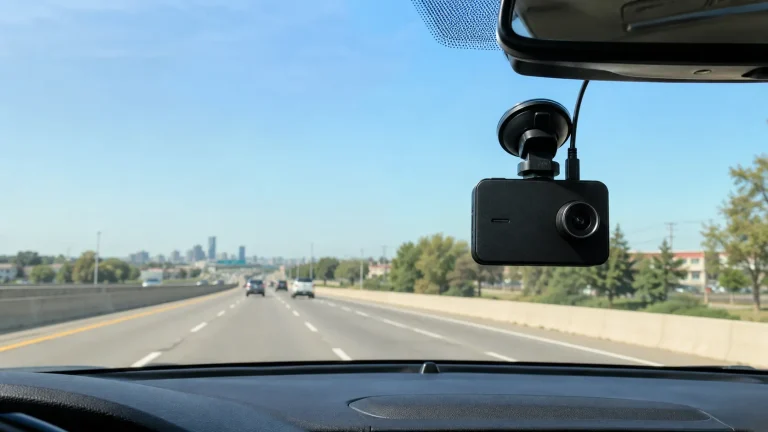
What Should You Know Before Buying a Dash Cam?

Before buying a dash cam, check its video quality, night recording, field of view, storage support, parking mode, power source, heat resistance, installation needs, and compatibility with your vehicle. A reliable dash cam should capture readable details without distracting you or interfering with your car’s safety systems.
My name is Ethan Carter, and I have spent years working with car safety electronics. I have seen drivers buy cameras that looked impressive online but failed when they were needed most. Some produced blurry license plates. Others stopped recording in summer heat or drained the car battery overnight.
A dash cam is not just another car accessory. It can become your independent witness after a crash, road-rage incident, parking-lot collision, or insurance dispute. Choosing carefully now may save you stress, money, and uncertainty later.
Do not choose a dash cam by resolution alone. Clear license plates, reliable loop recording, stable power, heat resistance, and correct placement are usually more important than a large “4K” label on the box.
Why Buying the Right Dash Cam Matters
A good dash cam continuously records the road while you drive. When its memory card becomes full, it normally records over the oldest unlocked files. This is called loop recording.
If the camera detects a strong impact, its G-sensor may lock the current video so it is not immediately overwritten. You can then review or save the footage for an insurance claim, police report, or personal record.
The problem is that not every camera performs these jobs reliably. A weak dash cam may miss important details because of glare, darkness, poor focus, a damaged memory card, or an unstable power connection.
That is why I recommend treating the purchase as a safety decision rather than a simple electronics purchase. You can explore more device categories in our car electronics guide.
Never mount a dash cam where it blocks your view, covers an advanced driver-assistance camera, or interferes with a curtain airbag. Poor placement can turn a safety product into a driving hazard.
The Most Important Dash Cam Features
Video Resolution and Real Image Quality
Resolution tells you how many pixels the camera records, but it does not guarantee clear evidence. A high-resolution camera with a weak image sensor or poor processing may still produce soft license plates and heavy glare.
For most drivers, 1440p provides a useful balance between detail and file size. A well-designed 4K dash cam can record more detail, especially during daylight, but it also creates larger files and may need a faster memory card.
Look beyond the resolution number. Sensor quality, lens quality, bitrate, high dynamic range, exposure control, and image processing all affect whether a plate remains readable after motion, glare, or sudden lighting changes.
Night Vision and HDR
Night driving is one of the hardest tests for a dash cam. Headlights, streetlights, dark roads, rain, and reflective license plates create difficult lighting conditions.
High dynamic range, often called HDR, can help balance bright and dark parts of the image. It may reduce overexposed plates and improve the view of darker road areas.
However, no normal dash cam can create perfect detail in complete darkness. Product pages that promise flawless night vision should be viewed carefully.
Field of View
A wider field of view captures more of the road. This can help show vehicles entering from side streets, nearby lanes, or parking spaces.
However, extremely wide lenses may make distant objects appear smaller. For many drivers, a field of view between about 130 and 160 degrees offers a practical balance.
Front, Rear, or Cabin Recording
A front-only dash cam records what happens ahead of your vehicle. It is often the easiest and least expensive setup.
A front-and-rear system adds a second camera for traffic behind you. This can help after rear-end crashes, parking incidents, and disputes about lane changes.
A three-channel system may also record the cabin. It can be useful for rideshare drivers, delivery drivers, driving instructors, and families who want a wider record of an incident.
Multi-camera systems provide more viewing angles, better incident context, and improved protection during rear impacts or passenger-related disputes.
Additional cameras increase cost, installation time, storage use, wire routing, and power demand. Rear-window tint may also affect rear video quality.
How a Dash Cam Records and Saves Evidence
Most dash cams receive power when the vehicle starts. The camera begins recording automatically and saves short video segments to a microSD card.
The files may be divided into one-, three-, or five-minute clips. Short clips are easier for the camera to manage and may reduce the risk of losing a long recording if a file becomes damaged.
When the card fills up, loop recording replaces old, unlocked footage. Impact files and manually protected files may be stored separately.
A dash cam usually does not provide unlimited storage. Important footage should be copied to a phone, computer, or external drive as soon as possible because locked folders can also become full.
What the G-Sensor Does
The G-sensor detects sudden movement, braking, or impact. When triggered, it can protect the current recording from normal loop deletion.
Do not set the sensitivity too high. Potholes and speed bumps may lock many unnecessary clips, which can fill the protected file area.
Why GPS Can Be Useful
Built-in or external GPS can record speed, location, route, time, and direction. This data may help explain where an incident happened and how the vehicle was moving.
Some drivers prefer not to record speed data. Check whether the camera allows the speed display or GPS logging to be disabled.
Step-by-Step: How to Choose the Right Dash Cam
Choose front-only, front-and-rear, or three-channel recording based on your daily driving, parking risks, passengers, and insurance concerns.
Find a position that does not block your view, cover an OEM sensor, or place the camera in an area restricted by local law.
Use a 12-volt outlet for simple installation or a compatible hardwire kit when you need parking recording and cleaner cable routing.
Check the maximum card capacity and buy a high-endurance microSD card from a trusted seller.
Look for moving license plates, night roads, rain, bright sunlight, tunnels, and parking footage rather than relying only on still product images.
Confirm cable length, rear-camera routing, fuse access, airbag locations, adhesive placement, and whether professional installation is safer.
Vehicle Compatibility and Installation
Most universal dash cams work in common 12-volt passenger vehicles, but the mounting position, power connection, rear-camera cable, and parking-mode setup may differ.
- Passenger cars and compact vehicles
- SUVs and crossovers
- Pickup trucks
- Vans and rideshare vehicles
- Hybrid and electric vehicles with compatible power systems
- Fleet vehicles with approved installation policies
Moderate Installation
A basic front camera powered through a 12-volt socket is usually simple to install. A front-and-rear system requires more cable routing, especially through hatchbacks, tailgates, or large SUVs.
Hardwiring adds another level of difficulty. It requires the correct fuse locations, fuse taps, grounding point, power mode, and low-voltage protection.
For installation tools, trim-removal items, or electrical testing equipment, see our tools and garage gear.
Dash Cam Type Comparison
| Feature | Front-Only | Front and Rear | Three-Channel |
|---|---|---|---|
| Records the road ahead | ✓ | ✓ | ✓ |
| Records rear impacts | ✗ | ✓ | ✓ |
| Records the cabin | ✗ | ✗ | ✓ |
| Simple cable routing | ✓ | ✗ | ✗ |
| Lower storage use | ✓ | ✗ | ✗ |
| Best for rideshare use | ✗ | ✗ | ✓ |
Safety Features Checklist
What to Know About Parking Mode
Parking mode allows the camera to record while the vehicle is parked. Depending on the model, it may use impact detection, motion detection, low-bitrate recording, or time-lapse recording.
This feature is useful when someone hits your parked car, damages a door, or approaches the vehicle. However, parking mode needs a safe and stable power source.
Hardwire Kits and Low-Voltage Cutoff
A hardwire kit normally connects the dash cam to the vehicle’s fuse box. One circuit may provide constant power, while another detects when the ignition is on.
A proper low-voltage cutoff turns the camera off before the car battery becomes too weak. Some kits allow you to select the voltage limit or maximum parking time.
A poorly configured hardwire kit can discharge a weak or aging battery. This risk may increase during cold weather, long parking periods, or frequent short trips.
Drivers who leave vehicles parked for long periods may prefer a dedicated dash cam battery pack installed according to the manufacturer’s instructions.
Memory Cards: The Part Many Buyers Forget
The memory card is one of the hardest-working parts of a dash cam system. It is constantly writing, deleting, and replacing files.
A normal card designed mainly for photos may fail early under continuous recording. Use a high-endurance card that is approved by the camera manufacturer.
Also confirm the supported capacity. Some cameras accept 128GB cards, while newer systems may support 256GB, 512GB, or more.
Format the memory card inside the dash cam when recommended. Check recordings regularly and replace the card if the camera reports write errors, missing files, restarts, or repeated formatting requests.
Common Dash Cam Problems and Solutions
| Common Problem | Likely Cause | Practical Solution |
|---|---|---|
| Camera stops recording | Damaged or incompatible memory card | Use an approved high-endurance card and format it correctly |
| Blurry license plates | Motion, poor focus, glare, or weak image processing | Clean the lens, adjust exposure, enable HDR, and review real footage |
| Camera falls from windshield | Dirty glass, weak adhesive, or extreme heat | Clean the mounting area and use the correct replacement adhesive pad |
| Vehicle battery becomes weak | Parking mode lacks proper low-voltage protection | Adjust the cutoff setting or use a suitable battery pack |
| Rear camera looks dark | Window tint, poor position, or dirty glass | Clean the window and test the camera location before final mounting |
| Camera restarts repeatedly | Unstable power adapter, cable, or card | Test the approved power cable and replace the memory card if needed |
Dash Cam Features by Budget Level
| Budget Level | Features to Expect | Best For |
|---|---|---|
| Entry Level | 1080p or 1440p front recording, loop recording, basic G-sensor | Drivers who need simple road evidence |
| Mid-Range | Better sensors, HDR, Wi-Fi, GPS, improved night recording | Daily commuters and family vehicles |
| Premium | 4K front recording, rear camera, advanced parking mode, stronger app support | High-mileage drivers and vehicles parked in busy areas |
| Professional or Fleet | Multiple channels, cloud options, remote alerts, secure file management | Rideshare, commercial, delivery, and fleet use |
Capacitor vs Battery Dash Cams
Many quality dash cams use a supercapacitor instead of a traditional internal lithium battery. The capacitor normally provides enough power to close the current file safely when external power stops.
Supercapacitor models are often preferred in hot climates because they are designed to handle temperature changes better than small internal batteries.
Do not expect a capacitor-powered camera to record for a long time after it is unplugged. The vehicle power source still runs the camera during normal use.
A dash cam may appear to work normally even when its memory card is no longer saving usable files. That is why I recommend playing several recent recordings every month instead of only checking the live screen.
Wi-Fi, Apps, Screens, and Cloud Features
Wi-Fi allows your phone to connect directly to the camera. You can change settings, review clips, and download important footage without removing the memory card.
A built-in screen makes it easier to aim the camera and check its status. Screenless models can be smaller and less noticeable but depend more heavily on the mobile app.
Cloud features may provide remote alerts, location information, or uploaded clips. These services often require an internet connection, mobile hotspot, data plan, or subscription.
Legal and Privacy Considerations in the USA
Dash cam rules can vary by state. Windshield mounting, audio recording, passenger privacy, and public sharing may be treated differently depending on where you drive.
Before installation, check your state’s windshield obstruction rules. The camera should remain outside your main viewing area and should not cover required stickers or vehicle sensors.
Audio recording deserves special attention. Some states require consent from every person involved in a recorded conversation. Rideshare drivers should clearly understand local consent and passenger-notice requirements.
You can review current driving safety guidance from the National Highway Traffic Safety Administration. Drivers can also use the NHTSA recall lookup service to check whether a vehicle has an open safety recall.
For broader roadside preparation, visit our safety gear guide.
Dash Cam Do’s and Don’ts
- Mount the camera high and close to the center of the windshield when legally permitted.
- Clean the windshield and camera lens before installation.
- Use a manufacturer-approved high-endurance memory card.
- Check footage every month.
- Set the correct date, time, and time zone.
- Save important files immediately after an incident.
- Keep cables away from airbags, pedals, and controls.
- Do not block your view or cover an OEM safety camera.
- Do not rely only on advertised resolution.
- Do not use an unprotected parking-mode power connection.
- Do not assume the memory card will last forever.
- Do not post incident footage publicly without considering privacy.
- Do not remove or edit the original evidence file.
- Do not hide installation wires across airbag deployment areas.
How to Test a New Dash Cam
After installation, start the vehicle and confirm that the camera powers on automatically. Look for a recording symbol, status light, or voice message.
Drive during daylight and at night. Include city roads, darker streets, traffic lights, and vehicles moving in nearby lanes.
Then remove the memory card or connect through the app. Play the files on a larger screen and check the following points:
- Can you read nearby license plates during normal movement?
- Does the video remain stable over rough roads?
- Is the windshield reflection too strong?
- Is the hood taking up too much of the frame?
- Does the rear camera show the full lane behind you?
- Are the date and time correct?
- Does the microphone setting match your privacy choice?
- Can you find and save an emergency file quickly?
What Should You Know Before Buying a Dash Cam? Final Buying Priorities
Start with reliability. The camera should power on, record automatically, save files correctly, and warn you when something is wrong.
Next, focus on useful image quality. Choose a model with strong daylight detail, controlled night exposure, HDR, and a field of view that does not make important objects too small.
Then check the full ownership cost. Include the memory card, rear-camera cable, hardwire kit, fuse taps, professional installation, cloud subscription, and possible replacement adhesive.
Finally, think about your real risk. A parked city vehicle may benefit from advanced parking mode. A rideshare driver may need cabin recording. A family commuter may prefer a simple front-and-rear system with strong reliability.
Choose Evidence Quality and Reliability Over Marketing Claims
The best dash cam is the one that records automatically, survives your climate, captures useful details, fits your vehicle, and stores footage safely. For most drivers, a quality front-and-rear system with HDR, a supercapacitor, parking-mode support, and a high-endurance memory card offers the strongest balance of protection and value.
Our Top Pick: Premium Front-and-Rear Protection
For drivers who want strong video detail, rear coverage, parking options, and modern connectivity, the VIOFO A229 Pro series is a practical product family to compare. Confirm the exact package, camera channels, memory card requirements, and hardwire accessories before ordering.
Frequently Asked Questions
Is 1080p good enough for a dash cam?
1080p can record basic road events, but 1440p or quality 4K video usually provides better detail. Sensor quality and image processing still matter more than resolution alone.
Should I buy a front-only or front-and-rear dash cam?
A front-only camera is simpler and cheaper. A front-and-rear system provides more evidence during rear impacts, parking incidents, and lane-change disputes.
Can a dash cam drain my car battery?
Yes, especially during parking mode. Use a compatible hardwire kit with low-voltage cutoff or a properly installed dash cam battery pack.
How much memory does a dash cam need?
Many drivers use 128GB or 256GB high-endurance cards. Higher-resolution and multi-camera systems need more storage. Always check the camera’s maximum supported capacity.
Do dash cams record when the car is off?
Only when parking mode has a suitable power source. This may require a hardwire kit, dedicated battery pack, or power outlet that remains active.
Where should a dash cam be mounted?
Mount it high on the windshield, usually near the rearview mirror, without blocking your view, covering an OEM sensor, or violating state mounting rules.
Are dash cams legal in every US state?
Dash cams are generally allowed, but windshield placement and audio recording rules vary. Check current laws in your state before installation and recording conversations.
How often should I replace the memory card?
There is no single replacement schedule. Inspect recordings monthly and replace the card when errors, missing files, restarts, or repeated formatting problems appear.
Conclusion
Understanding what you should know before buying a dash cam can prevent an expensive mistake. Do not select a camera only because it has the highest resolution, the most features, or the lowest price.
Choose a model that matches your vehicle, driving habits, parking conditions, climate, privacy needs, and installation ability. Add a high-endurance memory card and test the full system during the day and at night.
I also recommend saving emergency files immediately and keeping the original recording unchanged. A few minutes of regular maintenance can help ensure that your camera is ready when a stressful road incident happens.
Do not wait until after a collision to discover that your camera was not recording. Check your windshield space, choose the correct camera type, order the required accessories, and test everything before your next long drive.
Compact Alternative: Simple Everyday Recording
Drivers who want a smaller and less noticeable camera can compare the Garmin Dash Cam Mini series. It is designed for simple front recording and compact installation, although buyers should review app requirements, parking accessories, and included storage before choosing it.