Your jump starter is bad when it swells, leaks, won’t hold a charge, or can’t deliver enough current to crank the engine. Run the five checks in this guide before you need it on the side of the road.
Knowing how to tell if portable jump starter is bad is a skill every driver should have before the engine refuses to crank on a cold morning. Your jump starter may sit in the trunk for months, but when you finally need it, a failing unit turns a two-minute rescue into a long wait for a tow.
Key Takeaways
Physical damage: Swelling, cracks, leaks, or heavy corrosion mean stop using the unit immediately.
Charge retention: A healthy unit holds a charge for months; rapid self-discharge signals failing cells.
Voltage limits: A multimeter helps, but voltage alone won’t catch a battery that collapses under load.
Load test: Only test on a vehicle after passing visual and charge checks, and match 12V.
Replacement: Retire units with any safety warning and recycle lithium batteries through a certified drop-off.
How to Tell If Portable Jump Starter Is Bad: The Quick Answer
A portable jump starter is bad when it shows visible damage such as swelling, cracks, or corrosion; when it no longer holds a charge for a reasonable period; when voltage readings fall below the manufacturer’s specification; or when it cannot deliver enough current to crank the engine during a load test. Age, extreme temperatures, and repeated deep discharges all accelerate the decline.
Work through the five checks below in order. The first three take about five minutes and require no tools beyond your eyes and a multimeter. The fourth check involves your vehicle and should only be attempted when the unit passes the first three.
Step 1: Inspect the Case, Clamps, and Cables for Visible Damage
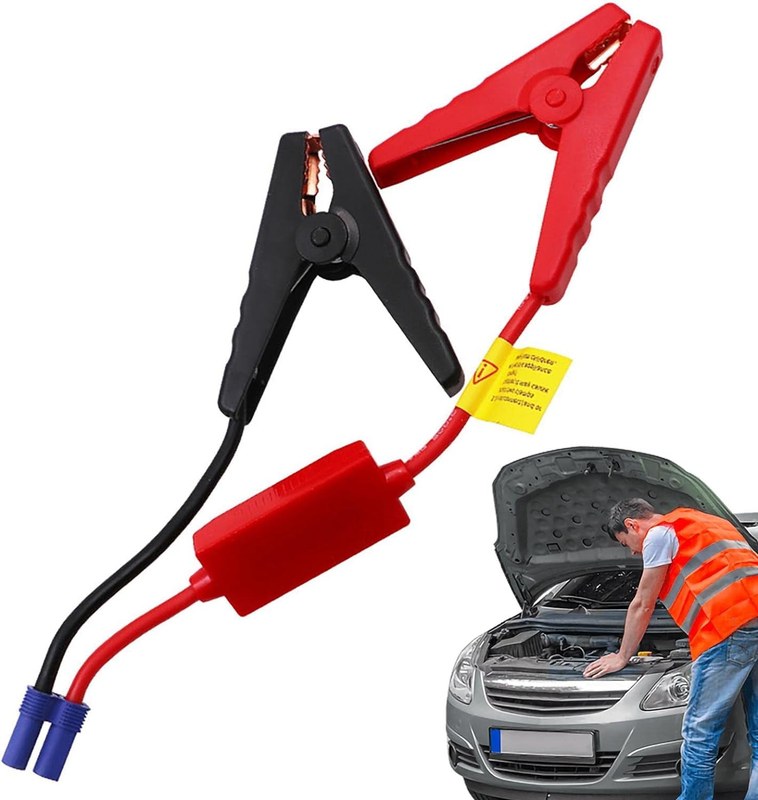
Check the jump starter’s case, clamps, and cables for cracks, corrosion, or fraying.
Start with the most obvious evidence. Physical damage is the fastest way to identify a failing unit, and it is also the most dangerous condition to ignore.
Swelling, Cracks, and Leaks: The Red Flags You Can’t Ignore
Run your hand across the plastic case and look at it from the sides. A healthy lithium jump starter has a flat, firm case. If the case feels puffy, looks swollen, or has any bulging panel, the internal cells may be releasing gas, a condition that can lead to a fire. Do not charge a swollen unit and do not connect it to a vehicle.
Cracks in the casing, especially near the clamps or output ports, can expose live terminals to moisture and metal. Leaks are even more serious. Any dampness, oily residue, or unusual smell around the case means the battery has ruptured internally. Once a lithium cell leaks, the unit is beyond repair.
Corroded Terminals and Frayed Cables: Hidden Failure Points
Open the clamp covers and inspect the copper jaws. Green or white crust on the terminals indicates corrosion that raises electrical resistance and reduces the current reaching your battery. A light cleaning with a wire brush may restore good contact, but heavy corrosion that has pitted the metal means the clamps should be replaced.
Flex the cables along their full length and look for cuts, melted spots, or exposed wire. Frayed insulation near the clamp handles is a common failure point because that is where the cable bends most. A damaged cable can short-circuit against the engine block or chassis, and a short at jump-starter currents can weld metal and start a fire.
Step 2: Check If It Holds a Charge Over Time
A jump starter that cannot hold a charge is useless even if it looks perfect. This check tells you how much stored energy the unit actually keeps.
How Long a Healthy Jump Starter Should Stay Ready
Most modern lithium jump starters lose only a small percentage of their charge per month when stored at normal room temperature. A healthy unit that is fully charged should still have enough power to start a typical car after three to six months of storage. Lead-acid jump boxes lose charge faster and may need a top-up every four to six weeks.
If your unit drops from full to empty in a week or two with no use, the internal cells have lost capacity. If it dies overnight, the battery is likely near the end of its life, and even a fresh charge will not restore its ability to hold energy.
Charging Behavior: Slow, Fast, or No Charge
Plug the unit into its wall charger and watch what happens. A healthy lithium jump starter charges in the time stated in the manual, usually a few hours, and the charge indicator climbs steadily. Warning signs include:
Charging completes in a few minutes even from a fully drained state, which suggests the battery is not accepting a real charge.
Charging takes far longer than the manual states, which may indicate a failing charger or degraded cells.
The charge level does not increase at all, or the unit gets hot while charging.
If the unit’s manual warns against leaving it plugged in permanently, follow that instruction. Whether it is safe to leave a jump starter plugged in depends on the model and its charging circuit, so check your manual before changing your storage routine.
A unit that will not charge at all is bad, even if the case looks new. Compare its behavior with the manual’s troubleshooting section before you decide.
Step 3: Measure Voltage with a Multimeter and Read the Battery Condition<
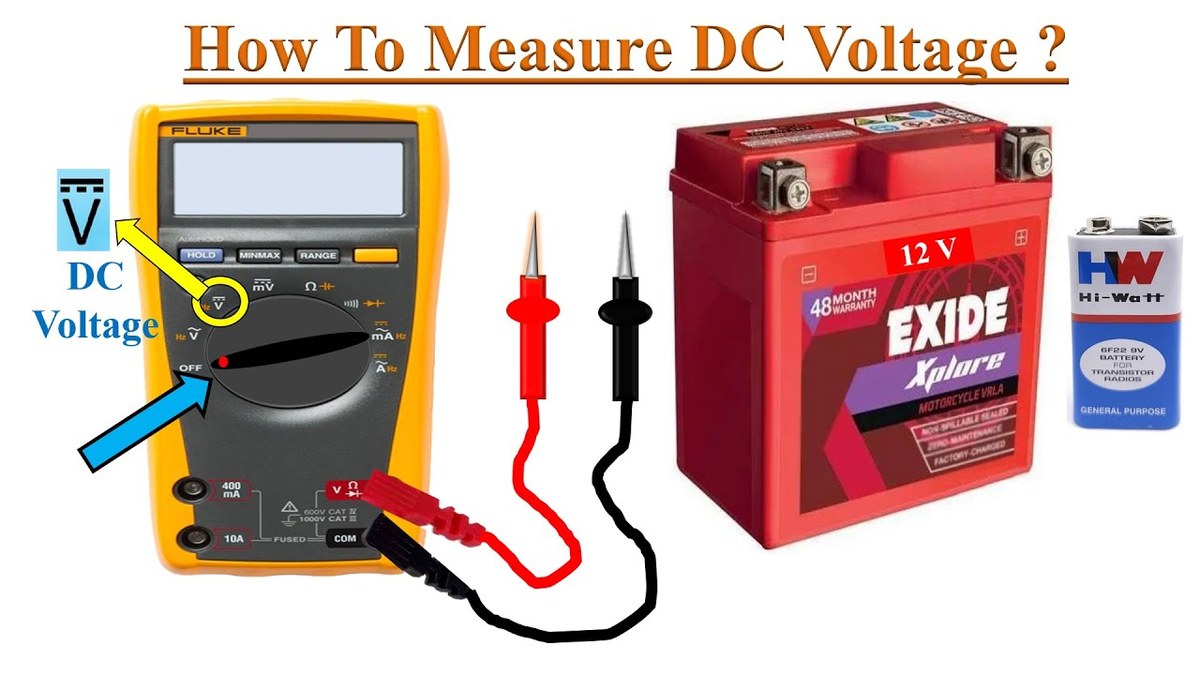
A multimeter measures the portable jump starter’s battery voltage to assess its health.
/h2>
A multimeter gives you a more precise picture than the unit’s own indicator lights. Set the meter to DC volts and touch the probes to the unit’s output terminals or battery clamps.
What a Healthy Voltage Reading Looks Like on a 12V Unit
For a 12V lead-acid jump box, a fully charged resting voltage should be around 12.6 to 12.8 volts. Below 12.4 volts means the battery is only partially charged, and below 12.0 volts suggests significant discharge or damage. For lithium jump starters, the internal cell voltage depends on the chemistry, so check the manual for the expected reading at the output terminals.
Many lithium units have a separate USB output and a 12V output. Measuring the 12V output only tells you that the converter circuit is working; it does not directly measure the health of the internal lithium cells. If the unit has a digital display, compare its reported percentage with the multimeter reading. A large mismatch can indicate a faulty display or a failing battery.
Diagnostic Limits: Why Voltage Alone Isn’t Enough
Voltage is a snapshot, not a full health report. A battery can show a healthy resting voltage and still collapse under load when its internal resistance has risen. That is why the load test in Step 4 matters. A unit that has been sitting dead for months may show a misleadingly low voltage that recovers after charging, or it may be permanently damaged.
If your unit shows zero volts at the clamps, check whether the unit has a power switch that must be turned on. Some models require the unit to be on before the clamps receive power. If the unit is on, fully charged, and still reads zero, the internal battery may be completely discharged or dead. For more help diagnosing a unit that will not respond, see our guide on dealing with a jump pack with a dead battery.
Step 4: Run a Safe Load Test on Your Vehicle
This is the most realistic check. It connects the jump starter to a vehicle and verifies that the unit can deliver cranking current under real conditions. Only do this after the unit passes Steps 1 through 3.
The Correct Connection Sequence (Positive First, Then Negative)
Follow the same sequence you would use with jumper cables:
Do
Turn off the ignition and all accessories before connecting.
Connect the red clamp to the positive battery terminal first.
Connect the black clamp to a clean, unpainted metal ground point or the negative terminal, as the manual directs.
Start the vehicle within a few seconds of connecting.
Remove the black clamp first, then the red clamp, after the engine runs.
Don’t
Don’t connect the black clamp to the negative terminal if the manual specifically warns against it on your vehicle.
Don’t let the clamps touch each other while connected.
Don’t attempt this if the unit failed any earlier check.
Don’t count a weak crank that still starts the engine as a pass; that is a sign of a failing battery.
If the engine cranks normally and starts, the jump starter is doing its job. If the engine cranks slowly, the jump starter may be weak, or the vehicle’s battery may be too deeply discharged for the jump starter’s output. The number of amps needed to jump start a car varies by engine size, temperature, and battery condition, so a unit that works on a four-cylinder commuter may struggle on a large truck.
12V vs 24V Compatibility and Interpreting Voltage Drop
Confirm that the jump starter matches your vehicle’s electrical system. Most passenger cars, light trucks, and SUVs sold in the US use 12V systems. Some heavy-duty trucks, commercial vehicles, and certain diesel engines use 24V systems. Connecting a 12V jump starter to a 24V vehicle can damage the jump starter, and connecting a 24V unit to a 12V vehicle can damage the vehicle’s electronics.
Vehicle Compatibility
Check: Verify your vehicle’s nominal system voltage in the owner’s manual or under the hood. Limitations: A jump starter rated only for 12V must not be used on 24V systems, and some diesel trucks require much higher cranking current than a compact jump starter can provide.
During the load test, watch the voltage on the unit’s display if it has one. A healthy unit should hold voltage above roughly 11 volts while cranking a 12V engine. If the voltage sags dramatically during cranking, the internal cells cannot deliver current fast enough. That unit may start a warm engine today but fail you on a cold morning.
Step 5: Factor In Age, Cycle Count, and Temperature History
Sometimes a jump starter is not visibly damaged and still passes a load test, but it is old enough that you should replace it before it fails you.
Typical Lifespan and When Recalibration Helps
Lithium jump starters generally last three to five years with normal use, but the calendar is only part of the story. What matters more is how many charge cycles the battery has been through and how deeply it has been discharged. A unit used weekly for years will wear out faster than one used a few times a year.
Some units have a recalibration or reset function described in the manual. If your unit’s charge indicator seems inaccurate, follow the manual’s recalibration steps. If the manual does not describe one, do not attempt your own calibration procedure, as you can damage the battery management system.
How Extreme Heat and Cold Damage Internal Cells
Heat is the bigger enemy. Leaving a jump starter in a closed car during summer can push internal temperatures well above the safe range for lithium cells, accelerating capacity loss and increasing the risk of swelling. Cold weather does not permanently damage most lithium cells the way heat does, but it temporarily reduces their ability to deliver current. A unit that is already weak will fail sooner in freezing temperatures.
If you stored the unit in a hot garage all summer, test it before you need it. If you carry it in a vehicle, consider whether the cabin or trunk stays cooler than the dashboard.
Safety: When to Stop Using a Suspect Jump Starter
Some problems are not worth diagnosing. If you see any of the following, stop using the unit immediately: swelling, leaking, hissing, excessive heat during charging, or a damaged case that exposes the cells.
Thermal Runaway Risks and Swollen Battery Dangers
A swollen lithium cell is a warning that the internal structure has failed and the cell may be generating heat faster than it can dissipate it. In the worst case, this leads to thermal runaway, a self-sustaining reaction that can produce flames and toxic smoke. This is not a DIY repair situation.
Why You Shouldn’t Use a Failing Unit as a Power Bank
It is tempting to repurpose a weak jump starter as a USB power bank for your phone. Do not do this. A unit with internal cell damage can fail while charging a phone just as easily as while cranking an engine. The lower current draw does not make a damaged battery safe. Retire the unit and replace it.
Disposal and Replacement: Your Next Steps
Once you have confirmed the jump starter is bad, the job is not done until it is disposed of properly and replaced with a unit you can trust.
Safe Disposal and Recycling Laws for Lithium Batteries
Lithium batteries are regulated waste in many US states. Do not put a jump starter in your household trash or standard recycling bin. Many auto parts stores, big-box retailers, and local hazardous-waste collection events accept lithium batteries for recycling. Some states require retailers to accept them, and some municipalities have specific drop-off locations. Check with your local waste authority or use a service such as Call2Recycle to find a drop-off point near you.
What to Look for in a Replacement Jump Starter
When you replace the unit, match the new one to your vehicle and your habits. Consider the engine size and the minimum cranking current the manufacturer recommends. Think about whether you need USB-C fast charging, a built-in air compressor, or a display that shows battery percentage. Also check the warranty, and read the terms to see what is covered.
If you are starting fresh, our guide on how to choose a jump starter walks through the key decisions, including power ratings, battery chemistry, and safety features.
Final Verdict
Best for: Drivers who want a reliable roadside rescue tool and are willing to spend five minutes checking it twice a year.
Think twice if: You are unwilling to replace a unit that shows swelling, fails a load test, or cannot hold a charge; these are not optional repairs.
Next step: Run the five checks this weekend, and if the unit passes, set a reminder to retest it in six months.
Frequently Asked Questions
Check the case, clamps, and charge level every two to three months, and run a full load test at least twice a year. More frequent checks make sense if the unit is stored in a hot vehicle or used regularly.
No. Swelling means the internal lithium cells have failed and the unit is unsafe. Do not attempt to open or repair it; dispose of it through a certified battery recycling program.
Most lithium jump starters last three to five years with normal use, but lifespan depends on charge cycles, storage temperature, and how deeply the battery is discharged. A unit that fails a load test should be replaced regardless of age.
No. A 12V jump starter is designed for 12V electrical systems. Using it on a 24V system can damage the jump starter and the vehicle. Check your vehicle’s system voltage in the owner’s manual.
It depends on the model and its charging circuit. Some units stop charging automatically; others can overcharge and damage the battery. Follow the manual’s storage and charging instructions.
Do not put it in household trash. Take it to a retailer or collection site that accepts lithium batteries, or contact your local hazardous-waste program. Rules vary by state and municipality.
Hi, I'm Ethan Carter, and I've spent over a decade testing automotive electronics, dash cams, and interior accessories. I created TopBestCar.com to help car owners cut through marketing hype and find gear that actually performs for their exact make and model — backed by hands-on testing, spec comparisons, and real owner feedback.