Is Dash Cam Footage Admissible in Court? US Guide

Is dash cam footage admissible? Often, yes, but admission is not automatic. The person offering it usually must show that the video is relevant, authentic, and a fair record of the event. A judge may also review editing, missing context, audio laws, hearsay, and how the original file was preserved.
Dash cam footage may support an insurance claim, civil case, or criminal investigation. Its value is strongest when you keep the original file and can explain how it was recorded. The main limit is that every court applies its own evidence rules and facts.
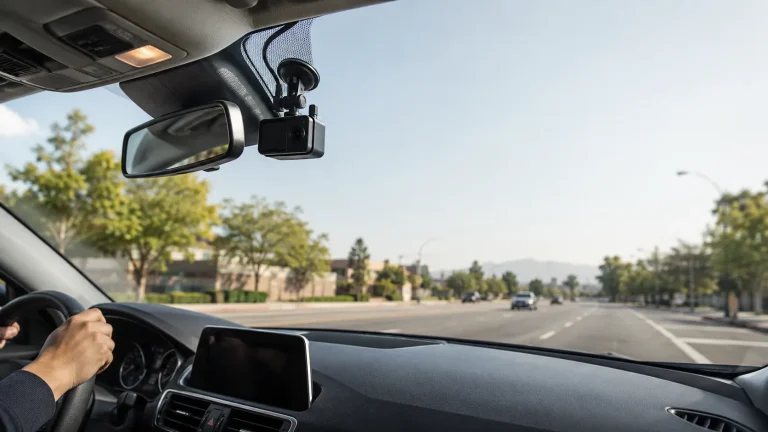
A dash cam can show road position, traffic lights, vehicle movement, weather, and the order of events. It may also capture voices, GPS data, speed data, or activity inside the cabin.
Those details can be useful. They can also create legal or privacy questions. Footage that helps one part of your case may show something unfavorable in another part.
This article gives general US information, not legal advice. State evidence rules and local court procedures can differ. For related camera and installation topics, visit our car electronics guide.
What Makes Dash Cam Footage Admissible?
Courts do not admit a video simply because it exists. The party offering it must satisfy the evidence rules that apply to the case.
Federal rules provide a useful framework. State courts may use similar ideas but can have different wording, standards, and procedures.
| Issue | What the Court May Ask | Helpful Owner Action |
|---|---|---|
| Relevance | Does it help prove a disputed fact? | Keep the full event |
| Authenticity | Is it what you claim? | Explain the camera and file |
| Integrity | Was the footage changed? | Preserve the original |
| Audio | Are recorded statements allowed? | Check state law |
| Fairness | Could it confuse or mislead? | Provide proper context |
| Handling | Who stored or copied it? | Document each transfer |
The Footage Must Be Relevant
Relevant evidence makes an important fact more or less likely. A video of the collision, traffic signal, or vehicle path may meet this test.
A long recording from hours before the event may add little. A judge may also limit footage that wastes time, confuses the issue, or creates unfair prejudice.
Federal Rules of Evidence 401 through 403 cover relevance and its limits. They appear in the official Federal Rules of Evidence.
The Video Must Be Authenticated
Authentication means showing that the video is what you claim it is. Federal Rule of Evidence 901 requires enough proof to support that finding.
A driver, passenger, investigator, installer, or other witness may explain:
- Where the dash cam was mounted
- Whether it was working normally
- When and where the event happened
- How the file was saved or copied
- Whether the video fairly shows the event
- Whether any changes were made
Some cases may need technical evidence about the camera, file, metadata, or recording process. Metadata is information stored with a file, such as its creation date, format, or device details.
Do You Need the Original File?
Keep the original dash cam file whenever possible. Do not edit, crop, rename, filter, compress, or overwrite it.
Federal Rule of Evidence 1002 generally requires an original recording to prove its content unless another rule or federal law provides otherwise. Rule 1003 says a duplicate may be admitted like the original unless authenticity is genuinely disputed or admitting it would be unfair.
This does not mean every copied file is rejected. It means the original provides the cleanest starting point if someone claims the copy was changed.
What Counts as the Original?
For digital footage, the original may be the file created by the dash cam. The memory card may also contain related files, folder details, and system data.
Create at least one backup copy. Work from the copy while keeping the original unchanged. Store the original card or file in a safe place.
If police, an insurer, or an attorney asks for the recording, ask what format they need. Keep your own protected copy unless law enforcement takes the device or storage card under legal authority.
Can Edited Footage Still Be Used?
An edited clip is not always useless, but it may face more questions. A short clip can remove events that happened before or after the visible impact.
Common changes include:
- Trimming the beginning or end
- Adding arrows, text, or captions
- Blurring faces or license plates
- Changing playback speed
- Improving brightness or sound
- Exporting through a phone app
Keep the untouched original beside every edited version. Label the edited file clearly. Write down what was changed and why.
Do not enhance a file and then present it as the original. If a clearer copy is needed, an attorney or digital-evidence professional can advise on a safer process.
Does Dash Cam Audio Create Problems?
Video and audio may face different legal questions. A road image may show public events, while cabin audio may capture a private conversation.
Federal hearsay rules apply to statements made by people. A silent video image is not the same as a spoken statement. However, voices recorded inside or outside the vehicle may raise hearsay issues.
A statement may still be allowed for a reason other than proving that its words were true. It may also fit an exclusion or exception. The result depends on why the statement is offered and which rules apply.
California provides one strict example. Its law generally restricts recording a confidential communication without every party’s consent. It also states that evidence obtained in violation of that section is generally inadmissible, subject to listed exceptions. Review the current text of California Penal Code section 632.
Do not assume California’s rule applies nationwide. Check the law in the state where the recording occurred and where the case is being handled.
How to Preserve Footage After an Incident
Act soon because loop recording may overwrite the oldest files. Stay safe first. Do not handle the camera while driving or while standing in an unsafe traffic area.
Use the camera’s save or lock function only when safely parked. Follow the manufacturer’s instructions.
Turn off the camera or remove the card only when it is safe and the manual permits it.
Save the clip to secure storage. Include the minutes before and after the main event.
Use a separate copy for viewing, email, insurance uploads, or basic playback.
Record the date, location, camera model, file name, and each person who received a copy.
Contact an attorney before editing or publishing footage tied to a serious injury, arrest, lawsuit, or disputed claim.
NIST explains that digital evidence presents special preservation problems. It stresses reliable storage and a record of how evidence is handled. Review its digital-evidence preservation guidance.
Add these checks to your normal routine. Our car care guide covers other simple vehicle maintenance tasks.
What Can Weaken the Footage?
Clear video can still be challenged. The court may limit or reject it when important questions are not answered.
- Keep the original file and card.
- Save the full sequence around the event.
- Document every copy and transfer.
- Disclose any edits or enhancements.
- Check state audio-recording law.
- Delete footage after a dispute begins.
- Post the only copy on social media.
- Change the original file.
- Hide footage that hurts your position.
- Claim the camera proves more than it shows.
Problems may include a blocked view, missing frames, an incorrect clock, unclear identity, poor night footage, missing audio, damaged storage, or a gap in file handling.
A wrong timestamp does not always prove that the whole video is false. However, you may need other evidence to explain the correct time. This could include phone records, a police report, GPS data, witnesses, or nearby security video.
Can the Footage Hurt Your Case?
Yes. A dash cam records your actions as well as another driver’s actions. It may show your speed, following distance, traffic signal, phone use, lane position, words, or conduct after the event.
Do not delete unfavorable footage once you know that a claim, lawsuit, or investigation may follow. Destruction can create a separate evidence problem. Ask an attorney how to preserve and disclose the recording.
Keep the camera outside your clear view and away from vehicle sensors. Our safety gear guide covers other equipment that can support safer roadside decisions.
How Footage May Be Used
Admissibility is a court decision. Before a case reaches court, footage may be reviewed in several settings.
| Setting | Possible Use | Important Limit |
|---|---|---|
| Police report | Document an incident | Investigators assess context |
| Insurance claim | Review damage or movement | Policy and facts still matter |
| Civil case | Support or dispute liability | Evidence rules apply |
| Criminal case | Show acts or statements | Constitutional rules may apply |
| Traffic hearing | Show road or signal conditions | Local procedure may differ |
| Private dispute | Help explain what happened | Not yet a court ruling |
An insurer accepting a clip does not guarantee that a judge will admit it later. The court makes a separate decision under the applicable evidence rules.
Before You Share the Footage
- Save the complete original file immediately.
- Keep several secure backup copies.
- Preserve the original memory card when practical.
- Record the camera model and mounting position.
- Write down the correct date, time, and location.
- Keep the minutes before and after the incident.
- Do not edit or enhance the original.
- Check audio-consent and privacy rules.
- Limit public posting during an active dispute.
- Ask an attorney about serious or contested cases.
- Best for: Supporting a clear account of a crash, road event, traffic dispute, or vehicle incident.
- Think twice if: The file was edited, recorded unlawfully, stripped of context, or poorly preserved.
- Next step: Protect the full original file, document how it was handled, and check the rules for the court and state involved.
Frequently Asked Questions
No, admissibility is not automatic in every court. The judge applies the evidence rules for that jurisdiction and case. The footage may need to be relevant, authenticated, lawfully recorded, complete enough to be fair, and preserved in a reliable form.
You may authenticate it through a witness who can explain the camera, event, file, and handling process. Supporting details may include the mounting location, date, road scene, file information, GPS data, and confirmation that the video fairly shows what occurred.
Yes, a reliable copy may be admitted, depending on the applicable rules. Federal rules generally allow duplicates unless authenticity is genuinely disputed or using the copy would be unfair. Keeping the untouched original makes it easier to answer those concerns.
It may be, but editing can create questions about accuracy and missing context. Keep the untouched original and disclose every change. A court may want the full recording, especially when a short clip leaves out events before or after the incident.
It can create added legal issues. State consent laws may restrict recording confidential conversations, and spoken statements may face hearsay rules. The result depends on where the recording occurred, what was captured, and why the audio is being offered.
An incorrect timestamp may weaken the footage, but it does not always make the video unusable. Other evidence may help establish the correct time. Preserve the original and write down the clock error instead of changing the file or its metadata.
Ask what format the insurer needs and keep a protected backup first. A copy may be enough for an initial claim review. Do not give away your only copy. For a serious dispute, ask an attorney before transferring the original card.
Yes, the footage may show your actions as well as another driver’s actions. It can reveal speed, signals, lane position, statements, or distractions. Do not destroy unfavorable footage after a claim or investigation becomes likely. Seek legal advice about preservation.
Conclusion
Dash cam footage is often admissible, but a judge makes the final decision. The strongest footage is relevant, authentic, complete, lawfully recorded, and carefully preserved.
Owners should protect the original file and track every copy. Drivers should keep the camera safely mounted and avoid using it while moving.
The main limitation is that a video does not explain every fact by itself. Save the full recording, check current state law, and get legal advice when injuries, criminal charges, or a serious dispute are involved.