What Should You Know Before Buying a Dash Cam?

If you are asking what should you know before buying a dash cam, start with recording quality, storage, power, mounting, privacy, and support. Choose a camera that fits your vehicle and daily driving. It should record reliably without blocking your view, distracting you, or creating hidden ownership costs.
A dash cam can help document road incidents, parking damage, and unusual events. Most drivers benefit from a simple, reliable front camera. The main limits are poor footage, unsafe placement, storage-card wear, privacy concerns, and parking features that may need extra wiring.
Dash cams look simple, but the feature lists can be confusing. A high resolution number alone does not tell you whether a camera will capture useful footage.
For most US car owners, reliability matters more than a long list of alerts. The camera should start with the car, save files correctly, and remain easy to use.
You can explore related cameras, power accessories, and vehicle devices in our car electronics guide.
Decide What You Need the Camera to Do
Start with your main reason for buying. This keeps you from paying for features you may never use.
- Daily driving: A front-facing camera may be enough.
- Rear impact coverage: Consider a front-and-rear system.
- Rideshare use: A cabin camera may help document the interior.
- Parking concerns: Look for a supported parking-recording mode.
- Travel records: GPS may add location and speed data.
12 Checks to Make Before Buying
Use the following checks to compare models. Confirm each detail on the manufacturer’s current product page or manual.
| Feature | What to Check | Why It Matters |
|---|---|---|
| Video quality | Real day and night samples | Shows usable detail |
| Camera coverage | Front, rear, or cabin views | Matches your main risk |
| Storage | Supported card type and size | Prevents recording problems |
| Power | Socket, USB, or hardwire kit | Affects installation |
| Parking mode | Power and cutoff requirements | May protect the battery |
| Support | App, firmware, warranty, returns | Affects long-term use |
1. Look Beyond the Resolution Number
Common dash cams may be sold as Full HD, 2K, or 4K models. A higher resolution can show more detail, but it may also create larger files.
Check sample footage from the exact model. Look at moving cars, signs, shadows, bright headlights, rain, and low-light roads. Marketing images may not show normal recording quality.
2. Check Day and Night Performance
A camera may look clear during the day but struggle at night. Look for balanced exposure, readable road detail, and controlled glare from headlights.
Terms such as high dynamic range describe how a camera handles bright and dark areas. The name alone does not prove that the feature works well.
3. Choose the Right Field of View
A wider view can capture more lanes and side activity. However, an extremely wide image may make distant objects appear smaller.
Choose a view that covers the road without showing too much dashboard, roof lining, or interior trim.
4. Decide How Many Cameras You Need
A front camera records what happens ahead. A rear camera can record impacts or events behind the vehicle. A cabin camera faces the passengers and may be useful for rideshare drivers.
More cameras also mean more cables, larger files, and more installation work. Confirm whether every camera records at the same time and at what quality.
5. Check the Storage Requirements
Most dash cams record short video files and overwrite the oldest unlocked files when the card becomes full. Confirm the supported memory-card type, speed rating, and maximum capacity.
Some manufacturers recommend high-endurance cards because dash cams write data repeatedly. Use only cards that meet the camera maker’s current instructions.
6. Understand Parking Mode
Parking mode may record movement, impacts, time-lapse footage, or buffered video while the car is parked. The exact behavior varies by model.
Many parking features need constant power. That may require a hardwire kit, a dedicated battery pack, or another manufacturer-approved power source.
Check whether the system has low-voltage protection. This feature is designed to stop drawing power before the vehicle battery becomes too weak, but its settings and effectiveness depend on the product and installation.
7. Check How the Camera Gets Power
The simplest cameras plug into a vehicle power socket or supported USB port. This setup is easier to remove but may leave a visible cable.
Hardwiring can create a cleaner installation and support parking recording. It also requires access to the vehicle’s electrical system. Some vehicles need special adapters or professional installation.
8. Consider Heat and Cold
A dash cam stays close to the windshield, where temperatures can become harsh. Check the manufacturer’s stated operating and storage temperature ranges.
Also check whether the model uses an internal battery or a capacitor. Do not assume either design will suit your climate without reviewing the official specifications.
9. Review the App Before Buying
Some cameras use an app for setup, live viewing, downloads, updates, and settings. Check recent app support, phone compatibility, required permissions, and whether an account is needed.
A slow or unsupported app can make a good camera frustrating to own. Make sure basic recording still works in a useful way if the app is unavailable.
10. Check GPS and Audio Controls
GPS may add speed, location, route, or time data to recordings. Audio recording may capture voices inside the vehicle.
Both features create privacy concerns. Check whether they can be disabled and whether the setting remains off after the camera restarts.
11. Review the Mount and Camera Size
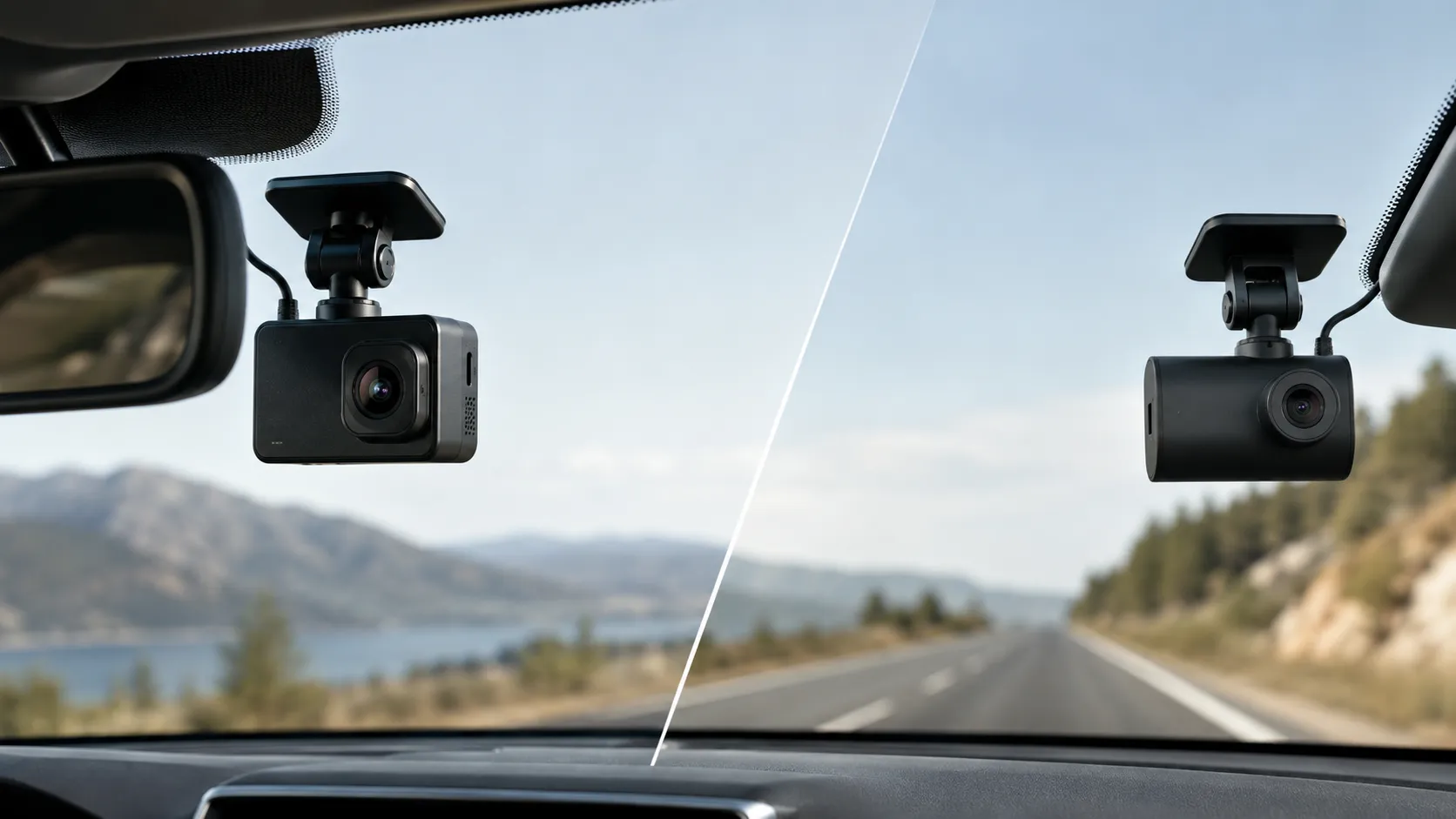
A small camera can be easier to place behind the mirror. A screen may make setup easier but can add size and light inside the cabin.
Adhesive mounts are often compact. Suction mounts may be easier to move, but their grip can vary. Confirm whether replacement pads or mounts are available.
12. Check Support, Updates, and Warranty Terms
Read the current warranty, return policy, firmware history, and support instructions before buying. Check who provides support when a product is sold through a marketplace.
Do not rely only on a retailer listing. Important limits may appear only in the manufacturer’s manual or warranty page.
Check Vehicle Compatibility
Check: Confirm the vehicle voltage, power-port behavior, windshield shape, mirror area, rear-window design, cable length, phone requirements, and hardwire-kit compatibility. Limitations: Do not assume one kit fits every make, model, trim, hybrid, or electric vehicle.
Look around the mirror and windshield before ordering. Some vehicles have factory cameras, rain sensors, antennas, heating elements, or advanced driver-assistance sensors near the mounting area.
For a rear camera, check whether the cable can reach through the roof lining or floor trim. Hatchbacks, trucks, convertibles, and vehicles with moving rear glass may need a different installation plan.
Mount It Without Blocking Your View
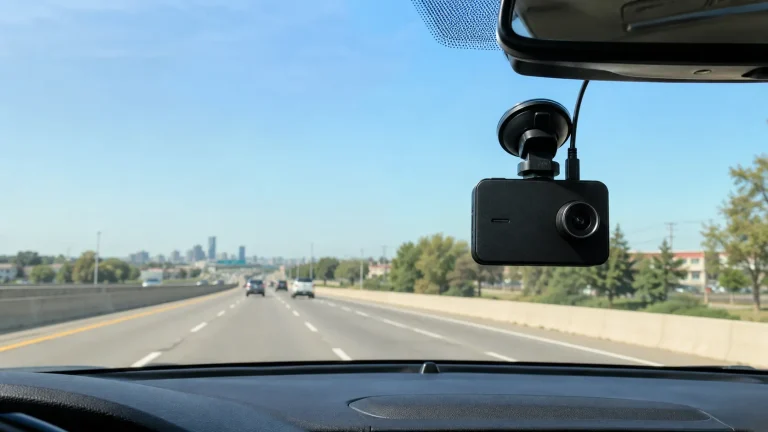
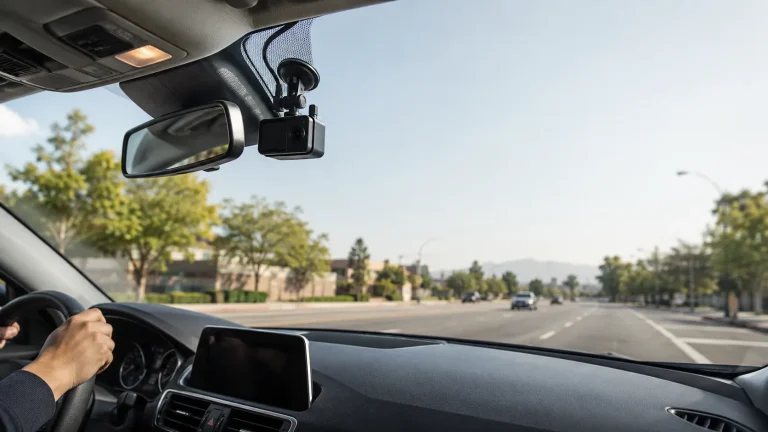
The camera should have a clear road view without reducing your own view. A common location is high on the windshield near the rearview mirror, but the legal and safe position depends on the vehicle and state.
Plan the Installation Before Ordering
Hold the camera in place before attaching it. Check the road view, driver view, mirror movement, and sensor area.
Find a safe cable path to the power socket, USB port, or hardwire connection. Keep the cable away from airbags and controls.
Follow the mount maker’s cleaning and temperature instructions. The wrong cleaner or a dirty surface may weaken the bond.
Attach the mount as instructed. Aim the lens at the road, with only a small amount of the vehicle visible.
Record a short clip. Check the date, time, sound, GPS, front image, rear image, and memory-card status.
Adhesive instructions differ by product. For example, Garmin advises choosing the position carefully before applying certain long-term adhesive mounts. See the manufacturer’s mounting instructions for one product-specific example.
A basic plug-in installation may need only simple tools. A hardwire job may require additional electrical tools and vehicle-specific knowledge. See our tools and garage gear section before starting a more involved installation.
Understand Privacy and Data Storage
A cloud-connected camera may hold video, location data, and account details. Use a unique password and two-factor authentication when available.
The FTC recommends changing default passwords, enabling security features, installing updates, and disabling connected features you do not use. Review its connected-device security advice.
Before selling the vehicle or giving the camera to another person, remove the memory card, delete saved clips, sign out of the app, and reset the device as the manufacturer directs.
Plan for Ongoing Maintenance
| Item | What to Check | Possible Problem |
|---|---|---|
| Lens | Dust, film, fingerprints | Blurry footage |
| Mount | Movement or weak adhesive | Wrong camera angle |
| Memory card | Errors and saved test clips | Missing recordings |
| Power cable | Loose or damaged connection | Camera restarts |
| Date and time | Correct recording stamp | Confusing evidence |
| App and firmware | Current supported version | Connection or security issues |
Include camera checks in your normal vehicle routine. Our maintenance and detailing section covers other simple upkeep tasks for car owners.
Dash Cam Do’s and Don’ts
- Test recordings before relying on the camera.
- Save important clips before they are overwritten.
- Check state rules and manufacturer instructions.
- Keep the lens and windshield area clean.
- Adjust settings while the vehicle is moving.
- Block your view or factory safety sensors.
- Route wires across an airbag cover.
- Assume parking mode works without proper power.
Who Benefits Most From a Dash Cam?
A dash cam may be most useful for commuters, rideshare drivers, families, road-trip drivers, street parkers, and people who spend many hours on busy roads.
It may also help an owner review an unusual road event or document visible damage. However, a recording does not guarantee that an insurer, police officer, court, or other party will interpret an event in your favor.
You may not need an expensive connected model if you only want basic front-road recording. A simple camera with reliable storage and clear controls may provide better value.
A dash cam is not a replacement for alert driving, safe following distance, insurance, or emergency equipment. Visit our safety gear guide for other practical vehicle-safety items.
Before You Buy
- Choose front, rear, cabin, or combined coverage.
- Review real footage from the exact model.
- Confirm the supported memory card and capacity.
- Check the power connection and parking-mode needs.
- Measure the mounting area and cable route.
- Confirm the camera will not block sensors or visibility.
- Review app permissions, cloud storage, GPS, and audio controls.
- Read the current warranty, return, and support terms.
- Best for: Drivers who want a simple video record of road or parking events.
- Think twice if: The camera needs unsafe placement, unsupported wiring, or an app you do not trust.
- Next step: Check your vehicle, state rules, sample footage, storage requirements, and installation plan before ordering.
Frequently Asked Questions
Choose based on real footage, not the resolution label alone. Clear daytime and nighttime samples matter most. Higher resolution may capture more detail, but it can also require more storage. Compare footage from the exact camera under normal road conditions.
Some dash cams can record while the car is off, but they need a supported parking mode and power source. This may require a hardwire kit or battery pack. Check the camera’s manual, power requirements, and low-voltage protection before using parking recording.
A dash cam may drain the vehicle battery if it stays powered while parked without suitable protection. Use the manufacturer’s approved power setup and confirm any low-voltage cutoff settings. Seek professional help when the vehicle’s electrical requirements are unclear.
No, many dash cams can use a vehicle power socket or supported USB port. Hardwiring is usually considered for cleaner cable routing or parking features. Confirm the product and vehicle requirements before connecting anything to the fuse box.
Mount it where it has a clear road view without blocking the driver, mirror, airbags, or factory sensors. A high position near the mirror often works, but the correct location depends on the vehicle and current state windshield rules.
Buy those features only when they serve a clear purpose. GPS may record location or speed, while audio may capture cabin conversations. Both can create privacy concerns. Check whether each feature can be disabled and review applicable recording-consent rules.
Check it regularly and after any warning or unusual restart. Play a recent test clip to confirm that video and sound are being saved. Follow the camera maker’s instructions for formatting, testing, and replacing the card.
Dash cam rules are not identical across all states. Windshield placement and audio recording may be treated differently. Check the current vehicle code and recording-consent law for every state where you plan to use the camera.
Conclusion
Before buying a dash cam, focus on reliable footage, safe mounting, compatible power, supported storage, and clear privacy controls. These points matter more than a long feature list.
Owners should plan for storage cards, wiring, updates, and maintenance. Drivers should protect their view and avoid adjusting the device while moving.
The main limitation is that no camera can prevent a crash or guarantee how footage will be used. Check your vehicle, current state rules, manufacturer instructions, and installation route before making your final choice.