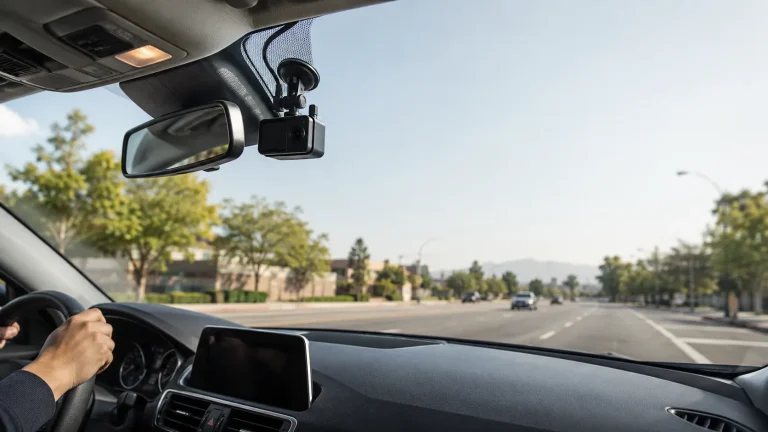
Best Budget Dash Cam 4K vs 2K: Which Should You Buy?

The best budget dash cam 4K vs 2K choice depends on what you value most. A good 2K camera usually gives better value, smoother recording, and lower storage demand. Choose 4K when you want more pixel detail and can accept a higher price, larger files, and often a lower maximum frame rate.
For most daily drivers, a well-made 2K dash cam is the smarter budget choice. It can provide clear road footage without paying mainly for resolution. A budget 4K model suits owners who want extra image detail. Neither option guarantees readable plates in every condition.
Resolution matters, but it is only one part of dash cam quality. The image sensor, lens, high dynamic range, frame rate, compression, mounting angle, and windshield condition also affect the recording.
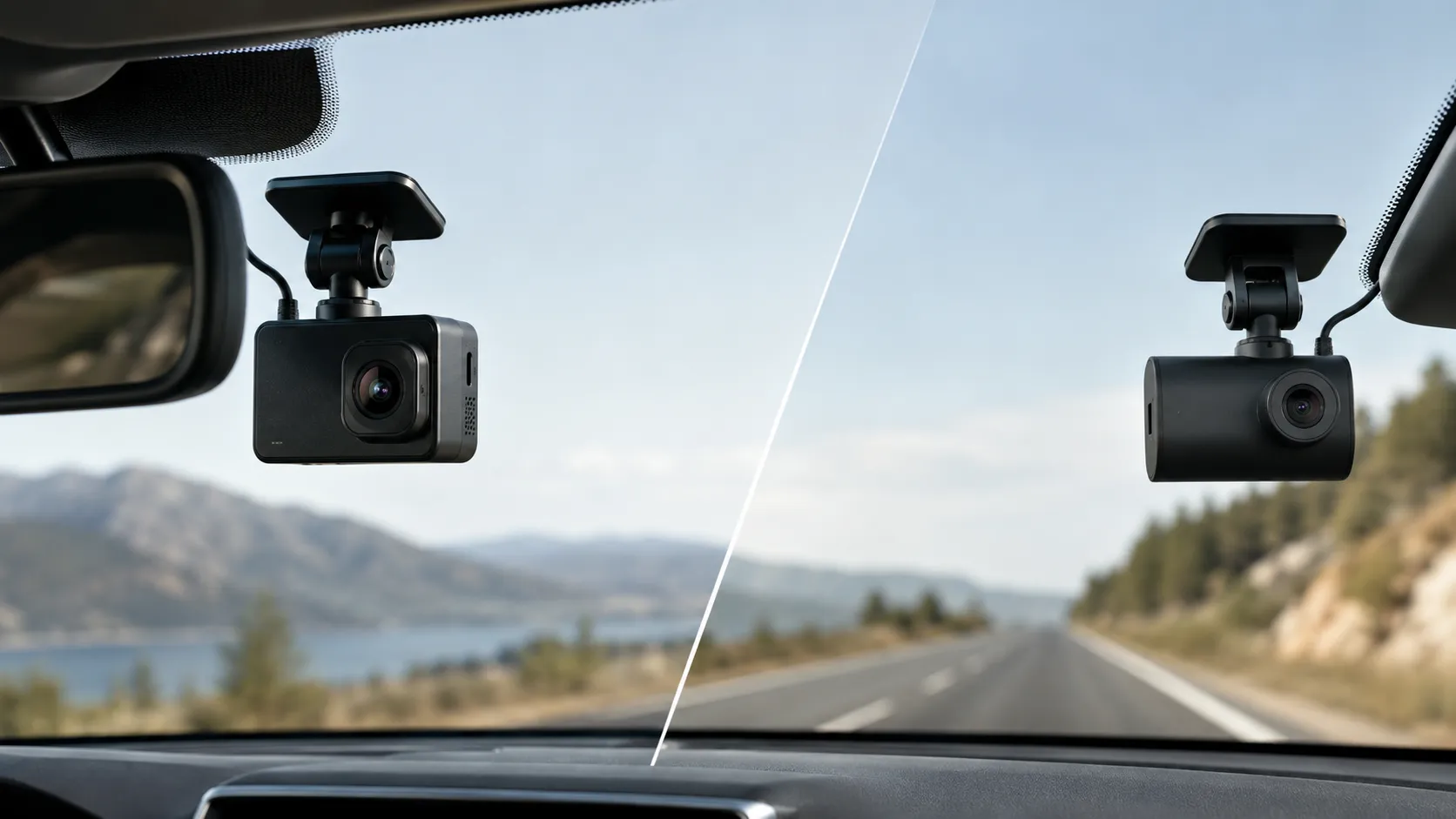
For a fair comparison, this guide uses two compact front-only cameras from the same manufacturer. The VIOFO A119 Mini 2 records in 2K, while the A119M Pro records in 4K.
Prices and specifications were checked on July 27, 2026. Prices may change through sales, bundles, and retailer promotions.
4K vs 2K: The Simple Difference
A 2K dash cam commonly records at 2560 by 1440 pixels. A 4K model commonly records at 3840 by 2160 pixels. The 4K frame contains more pixels, which can preserve more image detail when the lens, sensor, lighting, and compression are also good.
More pixels do not fix every recording problem. Fast motion, darkness, glare, rain, distance, windshield reflections, and a poor viewing angle can still hide important details.
Frame rate also matters. Frames per second tells you how many images the camera records each second. A 60-frame-per-second mode can look smoother during fast movement than a 30-frame-per-second mode.
| Feature | 2K Dash Cam | 4K Dash Cam |
|---|---|---|
| Pixel detail | Good for everyday recording | Higher potential detail |
| Typical frame rate | May offer 60 fps | Often 30 fps |
| File size | Usually smaller | Usually larger |
| Card recording time | Usually longer | Usually shorter |
| Purchase price | Often lower | Often higher |
| Best fit | Most daily drivers | Detail-focused buyers |
Best Budget 2K Pick
VIOFO A119 Mini 2
The A119 Mini 2 is a compact front-only camera with 2K recording at up to 60 frames per second. It has a Sony STARVIS 2 IMX675 sensor, GPS, dual-band Wi-Fi, voice control, a supercapacitor, and support for memory cards up to 512GB. The main limitation is that it does not record in 4K.
Check Current Price →The official VIOFO product page listed the A119 Mini 2 at $159.99 when checked. It records 2560 by 1440 video at up to 60 frames per second. High dynamic range is available in its 2K 30-frame-per-second mode.
The camera uses a 5-megapixel Sony STARVIS 2 IMX675 sensor. It has a 140-degree field of view, an F1.6 lens, built-in GPS, 2.4GHz and 5GHz Wi-Fi, and a small 1.5-inch screen.
Parking options include buffered event detection, time-lapse recording, and low-bitrate recording. A compatible hardwire kit is sold separately and is required for the supported parking setup.
Why the 2K Model Wins on Budget Value
The A119 Mini 2 costs $50 less than the compared 4K model at their manufacturer-listed prices. It also offers a 60-frame-per-second recording option, which may appeal to drivers who value smoother daytime motion.
Both cameras support cards up to 512GB. However, 2K video can use less storage than 4K video when other recording settings are similar. This can provide more recording time before older loop-recorded files are replaced.
Based on verified manufacturer specifications and current listed prices, the VIOFO A119 Mini 2 is the better budget value. It suits commuters who need reliable front recording, GPS, Wi-Fi, and parking support. Its trade-off is lower maximum resolution than the 4K option.
Best Budget 4K Pick
VIOFO A119M Pro
The A119M Pro records 4K video at 30 frames per second with high dynamic range. It uses a Sony STARVIS 2 IMX678 sensor and includes GPS, Wi-Fi 6, voice control, a supercapacitor, and support for cards up to 512GB. It costs more and lacks a 4K 60-frame-per-second mode.
Check Current Price →The official VIOFO product page listed the A119M Pro at $209.99 when checked. It records 3840 by 2160 video at 30 frames per second and supports high dynamic range at that resolution.
Its Sony STARVIS 2 IMX678 sensor has an 8-megapixel resolution and a listed 1/1.8-inch sensor size. The camera also has a 140-degree viewing angle, an F1.8 lens, GPS, Bluetooth, voice control, and dual-band Wi-Fi 6.
The A119M Pro includes a circular polarizing lens filter, while that filter is optional for the A119 Mini 2. A polarizing filter can help reduce some dashboard and windshield reflections, though results depend on its position and the lighting.
When Paying More for 4K Makes Sense
Choose the A119M Pro when you want the higher resolution and plan to zoom or crop saved video. Its extra pixels may preserve more detail when the event is well lit and within a useful distance.
The 4K camera may also appeal to buyers who want Wi-Fi 6 and the included polarizing filter. These upgrades may justify the added cost when they solve a real need.
Do not choose it only because the box says 4K. The recording still depends on light, movement, exposure, glass, focus, and compression.
Direct Specification Comparison
| Specification | A119 Mini 2 | A119M Pro |
|---|---|---|
| Listed price | $159.99 | $209.99 |
| Maximum recording | 2K at 60 fps | 4K at 30 fps |
| Image sensor | IMX675, 5MP | IMX678, 8MP |
| Field of view | 140 degrees | 140 degrees |
| Wi-Fi | Dual-band Wi-Fi 5 | Dual-band Wi-Fi 6 |
| Maximum card | 512GB | 512GB |
Both cameras are compact, front-only models. Both use a supercapacitor instead of a removable consumer battery. Both include GPS and support optional hardwiring for parking recording.
The main buying decision is simple. The A119 Mini 2 gives you a lower price and a faster maximum frame rate. The A119M Pro gives you higher resolution, a larger listed sensor, faster Wi-Fi, and an included polarizing filter.
Does 4K Always Capture Better Plates?
No. A 4K label does not guarantee a readable license plate. Plate detail can be lost through speed, headlight glare, darkness, rain, distance, angle, motion blur, overexposure, or video compression.
High dynamic range can help balance bright and dark areas. It cannot recover detail that the camera never captured.
A clean windshield and correct camera angle also matter. Mount the lens close to the glass and keep it outside the windshield-wiper gap only if the glass stays clear in that area.
Storage and Ongoing Costs
A dash cam records video repeatedly, so storage quality matters. Use only a memory-card type and capacity supported by the camera maker.
Neither compared camera includes storage as a standard listed specification. A high-endurance card, optional hardwire kit, professional installation, or replacement adhesive may raise the total cost.
Prices may change. Compare the complete package rather than the camera price alone.
More camera, storage, and in-car electronics guidance is available in our car electronics guide.
Parking Mode and Battery Use
Both compared cameras support parking recording through optional compatible hardwire equipment. The available modes include buffered event recording, time-lapse recording, and low-bitrate recording.
Parking mode can increase storage use and keep the camera powered after you leave. A correct hardwire setup should use the manufacturer-supported equipment and suitable low-voltage protection.
Check: Confirm windshield space, power requirements, USB cable routing, memory-card support, phone compatibility, and the correct hardwire kit. Limitations: Sensor housings, tinted areas, airbags, heated glass, and leased-vehicle rules may affect installation.
Owners planning a careful installation can review our tools and garage gear.
Legal and Privacy Checks
Windshield-mounting rules vary by state. The camera should never reduce the driver’s clear view.
For equipment that supports roadside preparedness beyond recording, visit our safety gear guide.
4K vs 2K Pros and Cons
- Lower purchase price
- Longer storage time
- Possible 60 fps recording
- Strong everyday value
- Higher pixel detail
- More room for cropping
- Larger sensor options
- A higher purchase budget
Which One Should You Buy?
Buy the 2K A119 Mini 2 if you want the best value for normal commuting. Its 60-frame-per-second option, GPS, dual-band Wi-Fi, parking support, and lower price create a balanced front-camera package.
Buy the 4K A119M Pro if the higher resolution is worth an extra $50 to you. It also provides Wi-Fi 6, a larger listed sensor, and an included polarizing filter.
Neither model provides rear or cabin coverage. A lower-resolution dual-camera system may be more useful than a front-only 4K model if rear incidents are your main concern.
- Choose front-only or front-and-rear coverage first.
- Decide whether 60 fps or 4K matters more.
- Add the memory card and hardwire-kit cost.
- Confirm the camera fits outside your clear view.
- Check phone, app, and Wi-Fi compatibility.
- Review parking-mode power requirements.
- Check current warranty and return terms.
- Best for: The VIOFO A119 Mini 2 is the better budget choice for most everyday drivers.
- Think twice if: You need rear coverage, cabin recording, or expect 4K to guarantee readable details.
- Next step: Compare total cost with the memory card, hardwire kit, filter, and installation included.
Frequently Asked Questions
A 4K dash cam has more pixels, but it is not always the better camera. Sensor quality, lens, high dynamic range, frame rate, compression, and mounting also matter. A strong 2K camera may provide better value and smoother motion than a cheap 4K model.
Yes, 2K is good enough for most everyday drivers. It provides more detail than standard 1080p and may support higher frame rates at a lower price. Useful footage still depends on lighting, distance, motion, glass, and camera placement.
Usually, yes. A 4K recording can create larger files than a 2K recording when compression and other settings are similar. Actual card use depends on the camera’s bitrate, codec, frame rate, audio, and recording mode.
It depends on your goal. A 60-frame-per-second mode can produce smoother motion, while 4K 30 fps provides more pixels in each frame. Neither setting guarantees readable plates during fast movement, darkness, glare, or poor weather.
The VIOFO A119 Mini 2 is the best budget 2K choice in this comparison. Its verified features include 2K recording at up to 60 fps, GPS, dual-band Wi-Fi, voice control, parking support, and storage support up to 512GB.
The VIOFO A119M Pro is the best budget 4K choice in this comparison. It records 4K at 30 fps and includes GPS, Wi-Fi 6, high dynamic range, a supercapacitor, an included polarizing filter, and storage support up to 512GB.
No, 4K does not guarantee a readable license plate. Distance, speed, camera angle, darkness, glare, rain, exposure, focus, and compression can hide details. Higher resolution only improves the potential amount of detail in a suitable scene.
Conclusion
The best budget dash cam 4K vs 2K decision comes down to value and use. For most drivers, the 2K VIOFO A119 Mini 2 offers the better balance of price, features, storage use, and smooth recording.
The 4K A119M Pro is the stronger choice when you want higher pixel detail, Wi-Fi 6, a larger listed sensor, and an included polarizing filter. The main limitation is its higher price and 30-frame-per-second maximum at 4K.
Before buying, confirm vehicle fit, current price, storage needs, parking-mode power, and safe mounting. Choose the camera that records the view you need, not simply the largest resolution number.