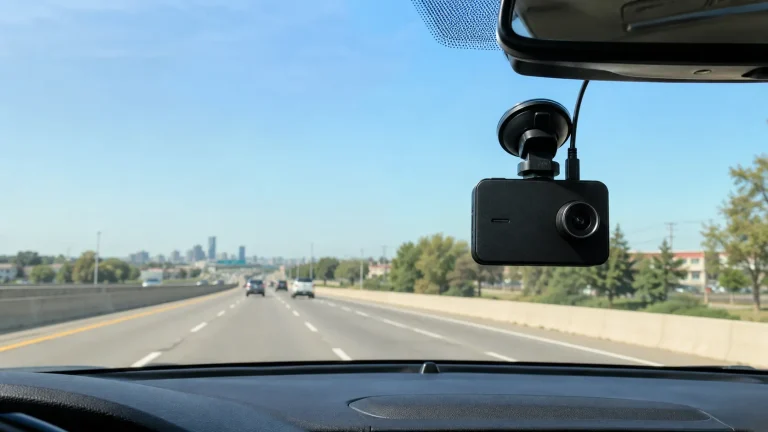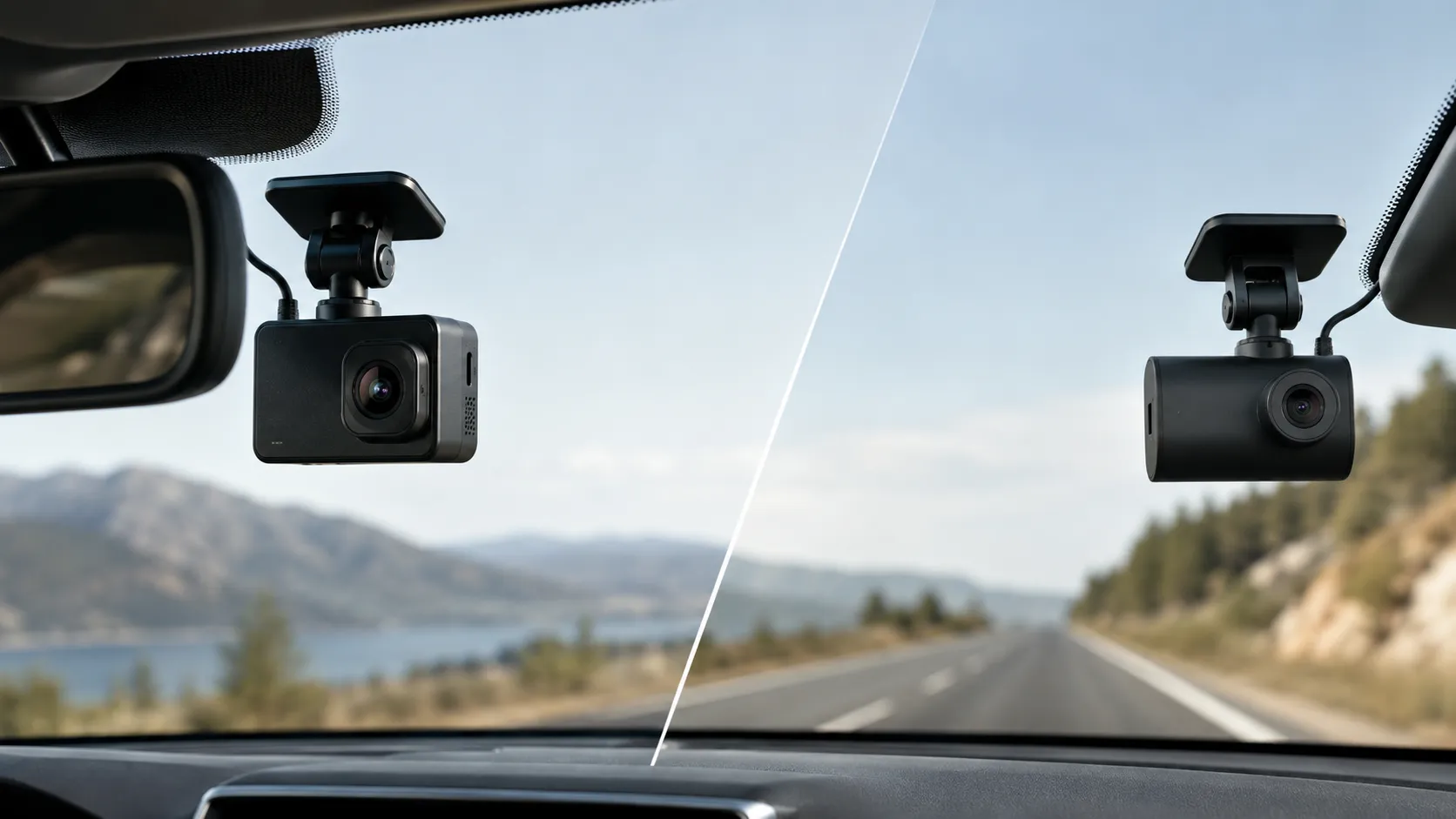
Is There a Dash Cam Without Wires? 5 Options Explained

Yes, there is a dash cam without wires, but truly wire-free models have limits. A rechargeable camera can work for short trips or temporary use. For reliable daily and parked recording, a hidden USB cable, an OBD-II power adapter, or professional hardwiring is usually more practical.
A battery-powered dash cam gives you the cleanest setup and easy transfer between cars. Its main weakness is limited recording time. A small camera with a hidden power cable is usually the better choice for daily driving, parking coverage, and less charging.
The word “wireless” causes a lot of confusion. It may describe Wi-Fi, phone pairing, cloud access, or a camera with its own battery. It does not always mean the camera can record all day without power.
For most US car owners, the best answer is not a completely wire-free camera. It is a compact dash cam with the power cable hidden along the headliner and trim. You get a clean cabin without giving up dependable recording. You can find more setup basics in our car electronics guide.
What “Wireless Dash Cam” Really Means
A wireless dash cam can mean four different things. Check the product manual before you buy, because listing titles often mix these features together.
| Dash Cam Type | Visible Wire | Best Use | Main Limit |
|---|---|---|---|
| Rechargeable battery camera | None while recording | Short or temporary trips | Needs regular charging |
| Wi-Fi dash cam | Usually yes | Phone viewing and downloads | Wi-Fi does not power it |
| OBD-II powered camera | One hidden cable | Easy constant-power setup | Vehicle compatibility varies |
| Hardwired camera | Hidden after installation | Daily and parking recording | More complex installation |
Can a Truly Wire-Free Dash Cam Work?
Yes, it can work when your needs are simple. A rechargeable camera may suit a rental car, a second vehicle, a short commute, or a trip where you cannot alter the car.
The key question is recording time. Continuous video, a screen, Wi-Fi, GPS, and night recording all use power. Battery life can also change with settings, age, and cabin temperature. Follow the maker’s charging, operating, and storage limits.
A battery camera may also miss parking events after its charge runs out. If you want coverage while the car is off, you normally need a separate battery pack or a safe connection to vehicle power.
What About an Action Camera?
An action camera can record a drive without a power cable. However, it may not act like a true dash cam. Check for automatic startup, loop recording, impact file protection, date and time stamps, and safe heat limits before using one this way.
You must also remove or secure it when parked. A visible camera may attract theft, especially when it looks expensive.
Better Ways to Get a Clean, Cable-Free Look
You do not need a battery-only camera to keep the cabin tidy. The following options hide most or all of the cable while giving the camera steady power.
1. Hide a USB or 12-Volt Cable
Run the supplied cable along the top edge of the windshield, down a safe trim path, and toward the power outlet. This is usually the least complex choice. It also makes the camera easy to remove later.
2. Use a Compatible OBD-II Power Adapter
An OBD-II adapter plugs into the vehicle’s diagnostic port. Some adapters can keep a compatible dash cam powered after shutdown and include low-voltage protection. This is still a wired setup, but the cable can stay mostly hidden.
Check the camera, adapter, and vehicle manuals first. Do not use an adapter that affects pedals, driver foot space, engine operation, or access to the diagnostic port.
3. Hardwire the Dash Cam
A hardwire kit connects the camera to suitable vehicle circuits. It gives the cleanest finished look and may support parking mode. It also adds electrical risk if the wrong fuse, ground point, or wire path is used.
4. Add a Dedicated Dash Cam Battery Pack
A separate battery pack can power parking mode without leaving the camera connected directly to the starter battery for the full parked period. It still uses wires, takes space, and needs correct charging and mounting.
Simple Hidden-Wire Installation Steps
Sit in the driver’s seat and make sure the camera does not block the road, mirrors, or vehicle sensors.
Use a lint-free cloth. Let the mounting area dry before attaching the pad or suction mount.
Follow the maker’s route. Avoid airbags, sharp edges, hot parts, pedals, and moving trim.
Use clips or safe trim gaps. Do not leave loose cable near the steering wheel or driver’s feet.
Check the camera view, date, time, card status, app connection, and startup before driving.
A plastic tool helps protect soft trim, but it does not make airbag routing safe by itself. Stop if you cannot identify the correct route. Our tools and garage gear section can help you choose basic installation tools.
Compatibility Checks Before You Buy
Check: Confirm the camera’s power input, supplied adapter, mounting method, memory-card limits, phone operating system, app support, rear-camera cable length, and parking-mode needs. Limitations: OBD-II and hardwire accessories may not suit every vehicle or camera. Follow both manuals.
Also check whether the power outlet turns off with the ignition. If it stays live, the camera may continue drawing power. A suitable low-voltage cutoff can reduce battery-drain risk, but you still need a healthy battery and a compatible setup.
US Mounting and Recording Rules
Use the smallest safe mount that gives a clear road view. If your state rule is unclear, a dashboard mount may be an option, but it must still stay secure and out of the driver’s view.
Maintenance a Wireless Setup Still Needs
Even a camera with no visible wire needs routine checks. Heat, dust, vibration, card wear, loose mounts, and missed firmware updates can affect recording.
Pros and Cons of a Dash Cam Without Wires
- Clean look with no hanging cable
- Easy to move between vehicles
- Useful for rentals and short trips
- No fuse-box work for battery models
- Shorter recording time on battery
- Frequent charging may be needed
- Parking coverage can stop early
- “Wireless” may still require power
- Confirm whether “wireless” means Wi-Fi or battery power.
- Check rated runtime under your chosen settings.
- Confirm loop recording and impact file protection.
- Check memory-card type and capacity limits.
- Review parking-mode power needs and battery protection.
- Confirm legal mounting space and audio rules.
- Check app support, firmware, warranty, and replacement parts.
Who Should Choose a Wire-Free Camera?
A rechargeable dash cam makes the most sense for short drives, temporary vehicles, rentals, classic cars, or owners who cannot alter the wiring. It also works when you are willing to charge it often and do not need long parking coverage.
Choose a hidden-wire setup if you commute every day, use parking mode, drive for rideshare work, or want the camera to start without extra steps. In my view, this is the better balance for most everyday drivers.
- Best for: Short trips, rentals, and drivers who need a removable camera.
- Think twice if: You need long recording time or dependable parking coverage.
- Next step: Check the manual for power needs, runtime, safe mounting, and vehicle compatibility.
When comparing options, search for the power method first. Then check recording features, mounting rules, and app support instead of trusting the word “wireless.”
Frequently Asked Questions
Yes. Rechargeable cameras can record without a power cable for a limited period. They work best for short or temporary use. Check the maker’s rated runtime, heat limits, charging method, and whether the camera supports loop recording and protected event clips.
Often, yes. “Wireless” may only mean the camera connects to a phone through Wi-Fi or Bluetooth. The camera may still need USB, 12-volt, OBD-II, hardwire, or battery-pack power for normal recording.
Runtime varies by model, battery age, temperature, screen use, Wi-Fi, GPS, and recording settings. Do not assume the internal battery supports a full drive. Some mainstream dash cams use their internal battery mainly to finish and save a clip after power loss.
Yes, when a compatible setup provides power. Options may include a constant-power OBD-II adapter, a dedicated dash cam battery pack, or a vehicle outlet that remains live. Use battery protection and follow both the camera and vehicle manuals.
It can draw power while the vehicle is off. A compatible adapter with low-voltage protection can reduce the risk, but it cannot fix a weak battery or a poor installation. Check the cutoff design, parking duration, and vehicle guidance.
It depends on your state. Rules may limit the mount area, device size, or windshield obstruction. Place the camera outside your main sight line and away from airbags and sensors, then check the current law where you drive.
Security depends on the camera, app, account, and cloud settings. Use a strong password, install updates, review app permissions, and turn off features you do not need. Protect clips that contain faces, voices, license plates, or location data.
Conclusion
So, is there a dash cam without wires? Yes, but a truly battery-powered model is best for short or temporary recording. Its main owner benefit is easy installation and transfer. Its main driver benefit is a clean view with no loose cable.
The biggest limit is battery runtime. For dependable daily use, a compact dash cam with a safely hidden power cable is usually the stronger choice. Confirm vehicle compatibility, current state rules, safe mounting, and maintenance needs before you install it.