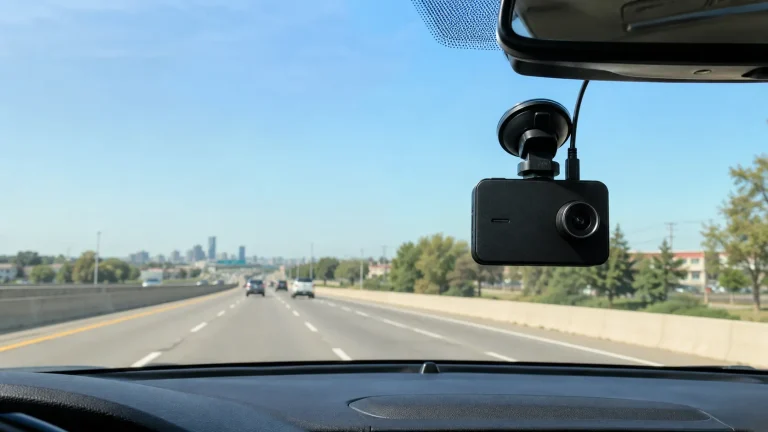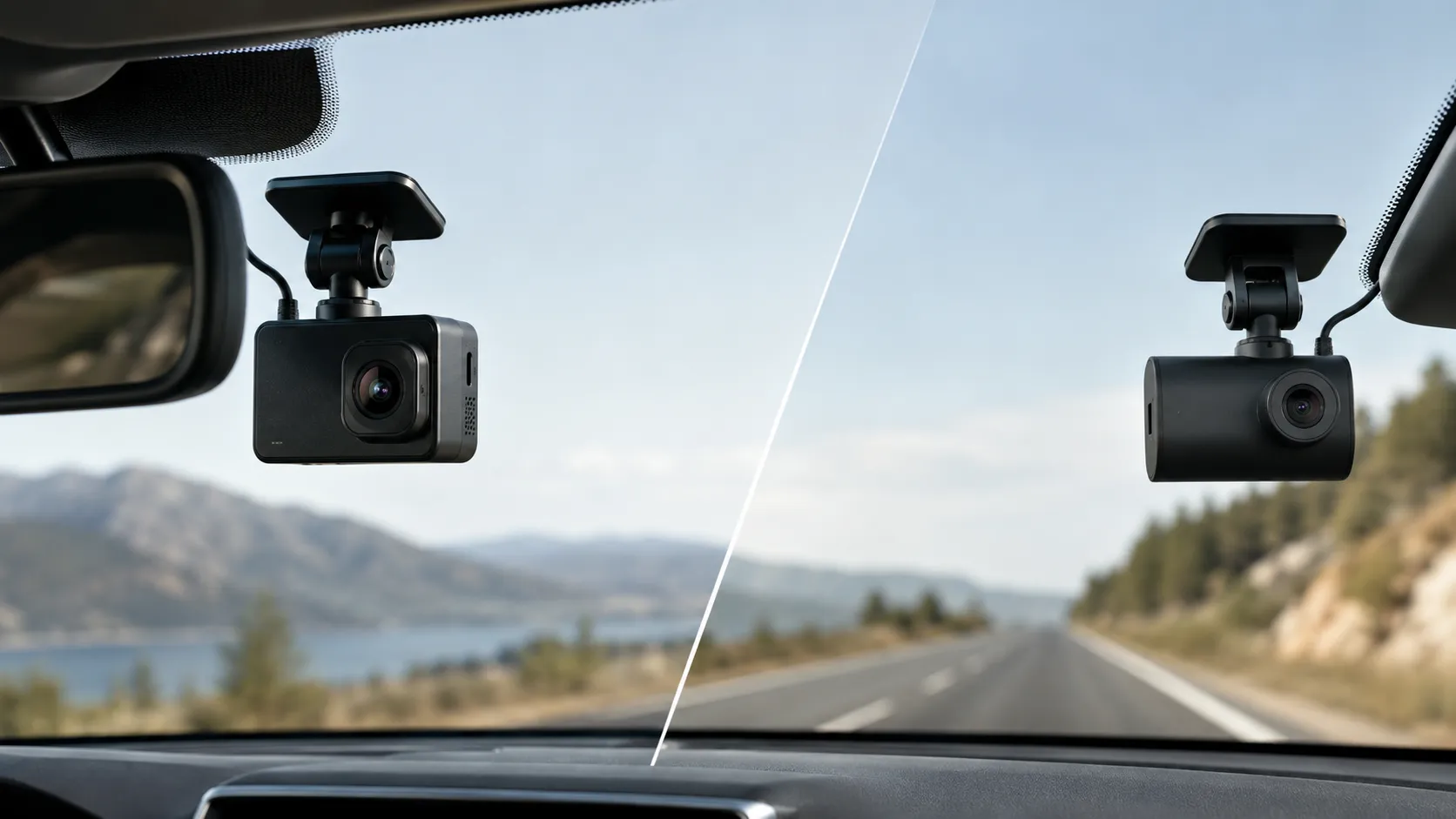
Is It Worth Getting a 4K Dash Cam? A Simple Effective Practical Guide

Yes, a 4K dash cam is worth it when you want stronger daytime detail, more room to crop footage, and clearer evidence from the front camera. It is less valuable if your budget is tight, you mostly drive short local trips, or a good 1440p camera offers better night performance, storage efficiency, and features.
A 4K dash cam is a useful upgrade for highway drivers, frequent travelers, rideshare drivers, and owners who want more detail when reviewing footage. However, resolution alone does not guarantee clear plates or better night video. Sensor quality, HDR, bitrate, lens design, storage capacity, and correct mounting also matter.
For most US car owners, the real question is not whether 4K looks sharper. It usually does. The better question is whether that extra detail will help enough to justify larger files, higher equipment costs, and extra storage needs.
In my view, a good 4K front camera can be valuable. However, I would not choose one based only on the large “4K” label printed on the box.
What Does 4K Mean on a Dash Cam?
A typical 4K dash cam records at 3840 × 2160 pixels. This gives the video more pixels than 1440p or 1080p recording.
More pixels can preserve extra detail when you pause or crop a frame. This may help when a vehicle, road sign, or license plate occupies only a small part of the image.
Garmin lists 4K recording at 3840 × 2160 pixels for its current X310. Its manual also explains that higher resolution and frame-rate settings require more memory-card space. Read the Garmin video-resolution guidance.
4K vs 1440p vs 1080p
Resolution affects detail and storage, but it is only one part of the camera system.
| Resolution | Main Strength | Best For |
|---|---|---|
| 4K | More crop detail | Highways and evidence |
| 1440p | Balanced quality | Most everyday drivers |
| 1080p | Lower storage use | Basic or budget needs |
A strong 1440p camera may be a better purchase than a weak 4K model. Compare the full camera system, not just the resolution number. Our car electronics guide covers more features to check when choosing vehicle cameras and accessories.
When Is a 4K Dash Cam Worth It?
You Drive on Highways Often
Highway traffic moves quickly, and vehicles may appear farther from the camera. The extra pixels from 4K footage give you more room to crop a frame during review.
This does not guarantee a readable plate. Distance, motion blur, sunlight, angle, speed, and dirty glass can still hide details.
You Regularly Take Long Trips
A 4K camera may be useful for road trips, interstate travel, and unfamiliar routes. Clearer footage can help show lane positions, signs, surrounding vehicles, and the sequence of an incident.
Long-distance drivers should also check card capacity. Large files may overwrite older footage sooner.
You Need More Detail After an Incident
4K video gives you more flexibility when zooming or cropping an original frame. This may help when an important object covers only a small part of the full scene.
Save important footage as soon as possible. Loop recording will eventually overwrite ordinary unlocked files.
You Want a Premium Front Camera
A 4K front camera can make sense when the rest of the system is also strong. Look for a good sensor, high dynamic range, suitable bitrate, reliable heat handling, a stable mount, and a clear lens.
When Is 4K Not Worth the Extra Cost?
You Mainly Drive Short Local Routes
A reliable 1440p or 1080p camera may be enough for low-speed local driving. Good placement and strong exposure can matter more than the highest resolution.
Your Budget Is Limited
A lower-resolution camera may leave room in your budget for a rear camera, high-endurance memory card, hardwire kit, or professional installation.
A complete front-and-rear system may offer more useful coverage than spending the full budget on one premium front camera.
You Need Strong Night Performance
4K does not automatically mean better night video. Sensor size, lens aperture, exposure, HDR, bitrate, windshield glare, and street lighting also affect the result.
Garmin explains that HDR combines exposure levels and may improve clarity in high-contrast or low-light conditions. A well-designed 1440p HDR camera may therefore outperform a poor 4K camera at night.
You Do Not Want Large Video Files
4K recording normally uses more card space than lower-resolution recording on the same camera. This can reduce the amount of footage stored before loop recording begins overwriting older files.
How Much Storage Does 4K Use?
Storage depends on bitrate, compression, frame rate, channel count, and the camera model. There is no single recording-time number for every 4K dash cam.
As one current example, Garmin estimates that its X310 records 4K30 HDR at 25 Mbps. A 128GB card holds about 9.9 hours, while a 512GB card holds about 39.6 hours. The same model records 1080p30 HDR at a lower bitrate and stores more than twice as much footage.
Review the official Garmin recording-time table for the model-specific example.
| Ownership Factor | 4K Effect | What to Check |
|---|---|---|
| Memory-card space | Fills faster | Recording-time chart |
| File transfers | Larger files | Wi-Fi speed |
| Card endurance | More writing | Approved card type |
| Cloud storage | May cost more | Subscription terms |
| Rear camera | More total data | Channel resolution |
| Parking mode | Earlier overwrite | Bitrate and capacity |
Does 4K Guarantee Readable Plates?
No. More resolution gives the camera more image information, but it cannot solve every recording problem.
A plate may still be unreadable because of:
- Fast vehicle movement
- Long recording distance
- A sharp viewing angle
- Headlight or sunlight glare
- Rain, fog, snow, or dirty glass
- Weak focus or low bitrate
- Motion blur at night
- A wide lens that makes objects smaller
Look at sample footage from the exact model. Check both moving daytime traffic and difficult nighttime scenes.
Frame Rate and HDR Trade-Offs
Some cameras offer 4K at 30 frames per second. Others offer 4K at 60 frames per second. A higher frame rate records more frames each second and may show motion more smoothly.
However, higher frame rates can increase storage use or limit other features. Some models also make you choose between maximum frame rate and HDR.
For example, VIOFO lists 4K60 recording for its A329 series, but its product information states that 4K60 does not run with HDR. Lower-frame-rate modes can support HDR. Review the exact VIOFO A329 recording combinations.
This does not make one setting universally better. Bright daytime driving may favor motion detail, while difficult light may benefit from HDR.
Check the Rear Camera Resolution
Do not assume a front-and-rear system records 4K on both channels. Many systems use 4K for the front camera and a lower resolution for the rear or cabin camera.
Nextbase states that its 622GW continues recording 4K at the front when a rear module is connected, while the rear module records at 1080p30. Review the manufacturer’s 4K and rear-camera explanation.
Before buying a multi-channel kit, check:
- Front-camera resolution
- Rear-camera resolution
- Cabin-camera resolution
- Frame rate for each channel
- Whether HDR remains active
- Maximum card capacity
- Combined recording bitrate
Features That Matter Beyond 4K
The 4K label should be one item on your checklist, not the whole checklist.
- Compare real daytime and nighttime sample footage.
- Check the sensor, HDR, bitrate, and frame rate.
- Confirm front, rear, and cabin recording combinations.
- Check the maximum supported memory-card capacity.
- Confirm whether a memory card is included.
- Review parking-mode power requirements.
- Check app, Wi-Fi, and download performance.
- Review subscription and cloud-storage terms.
- Confirm mount size and windshield placement.
- Check warranty and firmware support.
Pros and Cons of a 4K Dash Cam
- More detail for cropping
- Sharper daytime footage
- Useful for highway driving
- Better premium front-camera option
- More flexible incident review
- Larger video files
- Higher storage needs
- Often costs more
- Night quality is not guaranteed
- Rear camera may not be 4K
Who Benefits Most From 4K?
A 4K dash cam is most useful for:
- Frequent highway drivers
- Long-distance commuters
- Road-trip drivers
- Owners who often review cropped footage
- Drivers who want a premium front camera
- Commercial or rideshare drivers needing clear road footage
It may be less useful for drivers who want basic incident recording, have a limited budget, or prefer a smaller camera with lower storage use.
For emergency equipment and safe in-car setup, visit our safety gear guide. For cleaning the windshield and maintaining a clear lens area, see our car care guide.
- Best for: Drivers who want stronger front-camera detail and more room to crop important footage.
- Think twice if: You prioritize low cost, long recording time, or strong night performance over maximum resolution.
- Next step: Compare real sample footage, storage requirements, HDR, frame rate, rear-camera quality, and total ownership cost.
Frequently Asked Questions
4K gives you more pixels and more room to crop footage. That can help when a vehicle or plate is farther away. A strong 1440p camera may still be the better value when it has better HDR, a good sensor, lower storage use, and the features you need.
Not automatically. Resolution is only one part of night quality. Sensor size, lens quality, HDR, exposure, bitrate, glare, and vehicle speed also matter. A well-designed 1440p camera can look better at night than a weak 4K model.
Storage needs vary by bitrate, frame rate, compression, and the number of cameras. As one official example, Garmin estimates about 9.9 hours of 4K30 HDR footage on a 128GB card for the X310. Check the recording-time table for your exact model.
No. More resolution gives you more detail to work with, but it cannot remove every problem. Distance, angle, motion blur, glare, rain, darkness, dirty glass, and headlight exposure may still hide a plate.
It can be worth it for a clear front-road view, but a cabin camera may matter more for rideshare work. Compare the complete channel setup, interior night recording, storage, privacy controls, and parking features instead of buying only for the 4K label.
Not always. Many systems use 4K for the front camera and a lower resolution for the rear or cabin camera. Read the exact recording combinations because adding another channel may also change frame rate, HDR, or file size.
Use the card type, speed rating, and maximum capacity listed by the camera maker. A high-endurance card is a practical choice for continuous loop recording. Format it in the camera when instructed and replace it when errors or repeated corruption appear.
Conclusion
A 4K dash cam is worth getting when extra daytime detail and cropping flexibility matter to you. It is especially useful for highways, long trips, and premium front-camera recording.
The main owner trade-offs are higher purchase cost, larger files, and greater storage needs. For the driver, resolution helps with footage review but does not replace safe mounting or distraction-free use.
Before buying, compare real sample footage, HDR, sensor quality, bitrate, frame rate, card support, rear-camera resolution, and total ownership cost. A balanced 1440p system may still be the smarter choice for many everyday drivers.