What Are 5 Mistakes to Avoid When Using a Dashcam?

If you are asking what are 5 mistakes to avoid when using a dashcam, the main ones are blocking your view, using the wrong memory card, skipping recording checks, changing settings while driving, and ignoring privacy or state rules. Avoiding these errors helps your camera record useful video without creating a new safety problem.
Owners should focus on a compatible memory card, clean installation, and regular footage checks. Drivers should keep the camera out of their sight line and never operate it on the road. The main limit is simple: a dashcam can fail, miss an angle, or overwrite a file, so it should never be treated as guaranteed evidence.
A dashcam is easy to use once it is set up well. Most problems start with a rushed mount, a weak storage card, or a camera that nobody checks after installation.
The goal is not just to record every trip. The goal is to capture clear, dated, usable video while keeping your attention on driving. This guide covers the five errors that matter most for everyday US drivers.
The Five Dashcam Mistakes at a Glance
Each mistake can reduce video quality, create a driving hazard, or make an important clip hard to use.
| Mistake | Why It Matters | Better Habit |
|---|---|---|
| Blocking the driver’s view | Creates a blind spot | Mount low-impact and legal |
| Using the wrong card | Causes recording errors | Follow the camera manual |
| Never checking footage | Hides failures | Open recent clips often |
| Using controls while driving | Pulls attention from traffic | Park before changing settings |
| Ignoring privacy and laws | Creates legal or data risk | Check local rules and settings |
1. Mounting the Dashcam in the Wrong Place
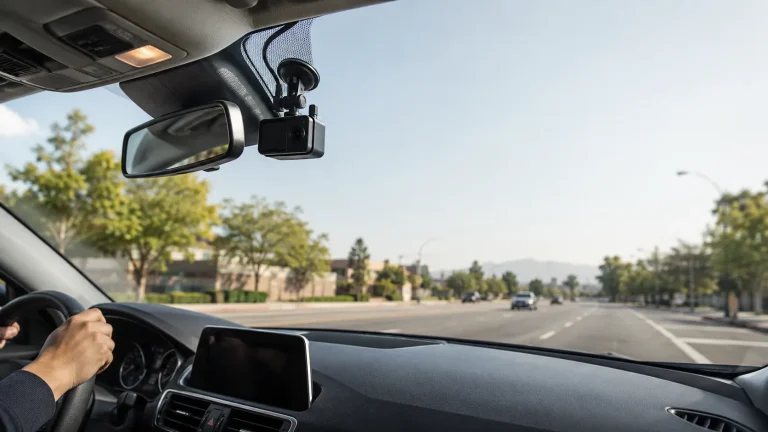
A dashcam should not block your clear view of traffic, signs, pedestrians, or cyclists. A small camera can still create a large blind spot when it sits close to your eyes.
Choose a position that gives the lens a clear road view without sitting in your main sight line. Many drivers place the unit near the rearview mirror, but the best position depends on the vehicle, camera shape, and local law.
NHTSA explains how quickly vehicle airbags deploy and why clear space around the system matters. Review the official NHTSA air bag guidance before routing cables near pillars, the dashboard, or headliner areas.
Check: Confirm the mount fits the windshield angle, does not cover an advanced driver-assistance systems camera, and can use the approved power source. Limitations: Sensor locations, airbag paths, trim clips, voltage, and power ports vary by vehicle.
2. Using an Incompatible or Worn Memory Card
Dashcams write video again and again. That workload is harder on a memory card than normal photo storage. A card with the wrong size, format, or speed rating may stop recording or show errors.
Use the exact card type listed in the dashcam manual. Do not assume that the largest card will work. Capacity limits and file systems differ between models.
A high-endurance card is often made for repeated recording, but the label alone does not prove compatibility. Check the camera maker’s approved size, speed class, and formatting steps.
Garmin’s support page explains its model-specific formatting process and deletion warning. See the official Garmin memory card guidance. For broader electronics advice, visit our car electronics guide.
3. Assuming the Camera Is Recording Correctly
A dashcam may have power but still capture poor or unusable video. The lens may be dirty. The mount may have moved. The date may be wrong. A card error may also stop new clips from saving.
Open a recent front-camera clip and, if fitted, a rear or cabin clip. Check that the file plays from start to finish. Look for a clear road view, readable timing information, stable framing, and working audio only when you intend to record it.
Do this after installation, after changing the card, after electrical work, and whenever the camera shows an alert. A simple monthly spot check is also a useful owner habit, though it is not a rule for every model.
- Confirm the camera starts with the vehicle as intended
- Open the newest video file
- Check front, rear, and cabin views
- Clean the lens with a safe cloth
- Check date, time, and time zone
- Save important clips before loop recording replaces them
Loop recording reuses storage by replacing older unsaved clips. This is useful for daily driving, but it also means you should copy an important file soon. Keep the lens and cabin glass clean with help from our car care guide.
4. Changing Settings While the Vehicle Is Moving
Do not reach for the dashcam, app, or memory card while driving. Even a short menu change can take your eyes and attention away from traffic.
Set the video resolution, sound, alerts, screen timeout, Wi-Fi, and parking features before the trip. If something needs attention on the road, pull over in a safe place and park first.
5. Ignoring Privacy, Audio, and State Rules
A dashcam can record more than the road. Some models capture cabin video, voices, location, speed, Wi-Fi data, or cloud uploads. Those features may be useful, but they also create privacy duties.
Check whether the microphone is on. Think about passengers, rideshare customers, employees, and anyone who uses the vehicle. Recording-consent and notice rules can vary by state and situation.
Business, fleet, and rideshare users should also check employer rules, platform terms, and passenger-notice duties. Do not post crash or cabin footage online without considering privacy, insurance, and legal effects.
A Safer Dashcam Setup Routine
A careful setup takes less time than fixing a missed recording later. Complete these steps while the vehicle is parked.
Check the dashcam manual and vehicle owner’s manual for power, card, sensor, airbag, and mounting limits.
Sit in the driver’s seat and confirm the camera does not reduce your clear view.
Keep cables away from airbags, steering parts, pedals, seat tracks, and sharp edges.
Choose the intended audio, time, resolution, alerts, Wi-Fi, and parking settings.
Drive only after setup is complete, then park and review a short recording from each camera.
Dashcam Do’s and Don’ts
- Check the manual before buying a card
- Test visibility from the driver’s seat
- Review recent footage on a routine
- Save important clips promptly
- Block your view or a vehicle sensor
- Route wires through airbag paths
- Change settings while moving
- Share private footage carelessly
A dashcam works best as part of a wider safety plan. It does not replace careful driving, insurance, roadside supplies, or emergency preparation. Our safety gear guide covers other items that may help during a breakdown or roadside event.
Who Should Pay Extra Attention?
Rideshare drivers should review cabin recording and passenger notice rules. Families should make sure the camera does not distract a new driver. Fleet owners should use a clear data policy. Road-trip drivers should confirm storage space and power behavior before leaving.
Owners who move one camera between vehicles must repeat the placement and compatibility checks each time. A mount that works in one windshield may block the view or a sensor in another.
- Best for: Drivers who want clear trip records and are willing to check the system.
- Think twice if: You plan to mount it quickly, ignore alerts, or operate it while driving.
- Next step: Park the vehicle, review the manuals, inspect the mount, and play the newest clip.
Frequently Asked Questions
Mount it where the lens has a clear road view but the unit does not block your sight line. Check state windshield rules, the vehicle manual, nearby driver-assistance sensors, and airbag paths. Sit in your normal driving position before fixing the mount.
Check a clip after installation, card changes, electrical work, or any camera warning. A monthly spot check is a practical habit for many owners. Open a recent file and confirm clear video, correct framing, accurate time, and sound settings.
It can if it receives power while the engine is off and the setup lacks proper battery protection. Parking mode and hardwire behavior vary by model and vehicle. Follow the camera and hardwire-kit instructions, including any low-voltage cutoff setting.
A high-endurance card is often suited to repeated video writing, but it must still match the dashcam’s supported capacity, format, and speed rating. Check the official manual or support page before buying, formatting, or replacing the card.
Audio recording rules depend on the state and the situation. Cabin recording can also affect passengers, employees, or rideshare customers. Check current state consent and notice rules, and turn off the microphone when audio is not needed.
No. Do not aim the camera, open the app, remove the card, or review footage while the vehicle is moving. Pull over in a safe legal place, park, and secure the vehicle before changing settings or handling the camera.
Protect the original file and make a backup as soon as it is safe. Do not edit or post it publicly. Follow instructions from law enforcement, your insurer, or legal counsel, and keep related front, rear, cabin, and time-stamped clips together.
Conclusion
The five biggest dashcam mistakes are poor placement, the wrong memory card, skipped recording checks, unsafe use while driving, and ignored privacy or legal rules. Owners gain more reliable records when they maintain the card and review clips. Drivers stay safer when the camera remains out of view and untouched on the road.
A dashcam still cannot guarantee that every event will be captured clearly. Before your next trip, check compatibility, current state rules, cable safety, storage health, and one recent recording.