9 Best Dual Reverse Camera Buying Guide for Safer Driving

A dual reverse camera uses two lenses to show more of the area behind a vehicle than a standard backup camera. One lens can provide a wide view for parking, while the other can focus on a closer area, such as a trailer hitch or the space directly behind the bumper.
When choosing one, we focus on image quality, viewing angle, night vision, weather resistance, and installation. The camera should produce a clear image in bright and low light, withstand rain and road debris, and work with the vehicle’s display or monitor. A reliable mounting system and simple wiring can also make installation easier.
We compared dual reverse cameras to find models that provide a clear view, hold up in daily driving, and offer useful features without unnecessary complexity.
9 Best Dual Reverse Cameras
We reviewed key features, image quality, mounting options, and user feedback to identify the best dual reverse cameras. Our list includes reliable options for improving rear visibility and recording the road behind your vehicle.
Yakry Dual RV Backup Camera
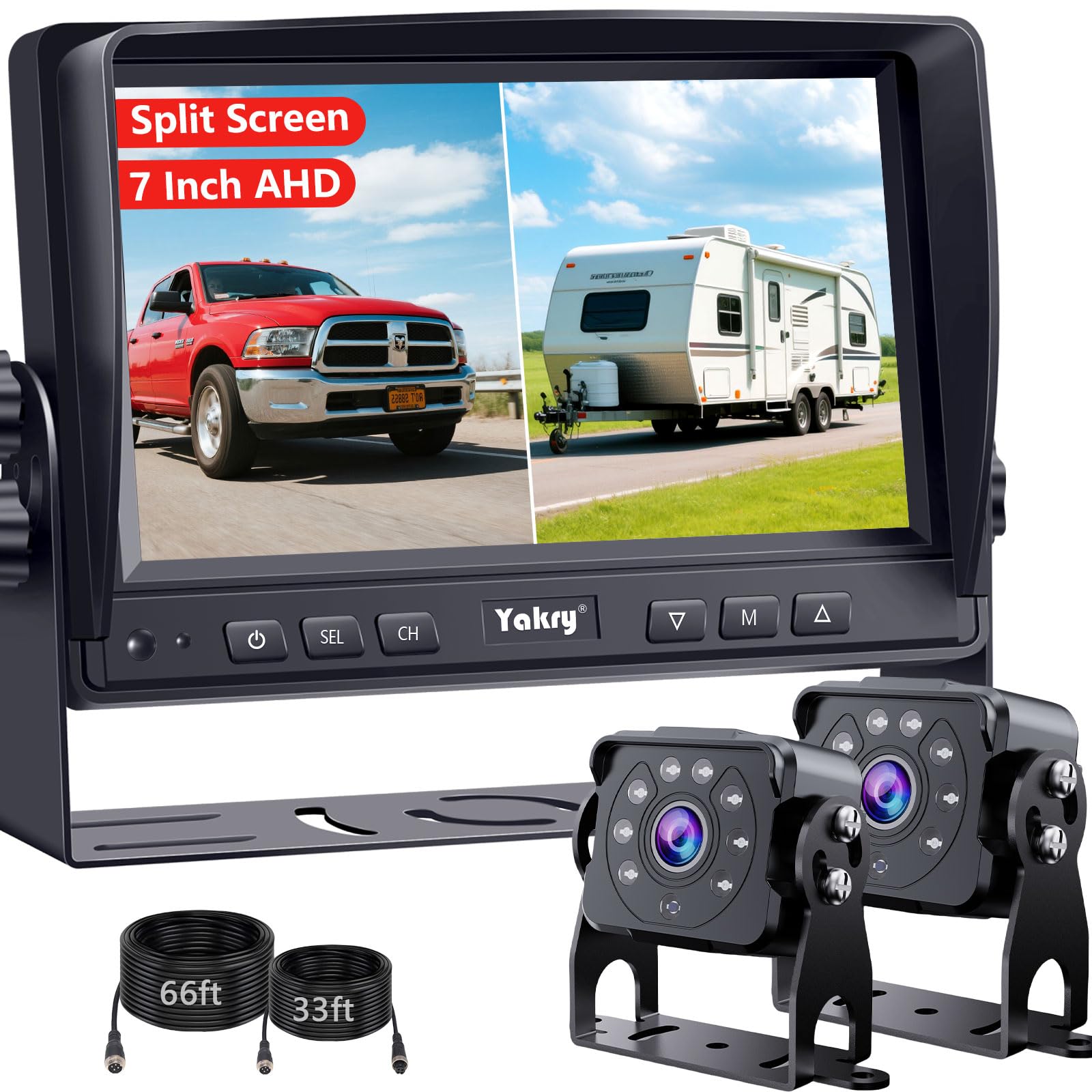
We recommend this system for truck, RV, and trailer owners who want a clear wired view from two camera angles.
Pros
- Split-screen display shows both camera feeds at once
- Clear 1080p image with useful night vision
- Sturdy, weather-resistant camera housing
Cons
- Wired installation requires routing long cables
- The 7-inch monitor takes up noticeable dashboard space
- Parking guidelines may need adjustment for each vehicle
We found the split-screen view useful when reversing a trailer or checking the area behind a large vehicle. One camera can focus on the hitch while the other shows a wider rear view, which reduces the need to switch between feeds.
The wired connection kept the image steady without the delay or signal drops we often see with wireless cameras. The picture looked clear in daylight, and the infrared night vision helped us see behind the vehicle after dark.
Installation felt manageable with the included cables and mounting brackets, but routing wires through a truck, RV, or trailer still takes time. The three cable lengths make it easier to match the system to different vehicle sizes.
The metal camera housings handled outdoor conditions well, and the wide viewing angle covered a broad area. We would choose this Yakry system for drivers who value reliable coverage more than a quick wireless setup.
Dual Electronics XCAM150 Backup Camera
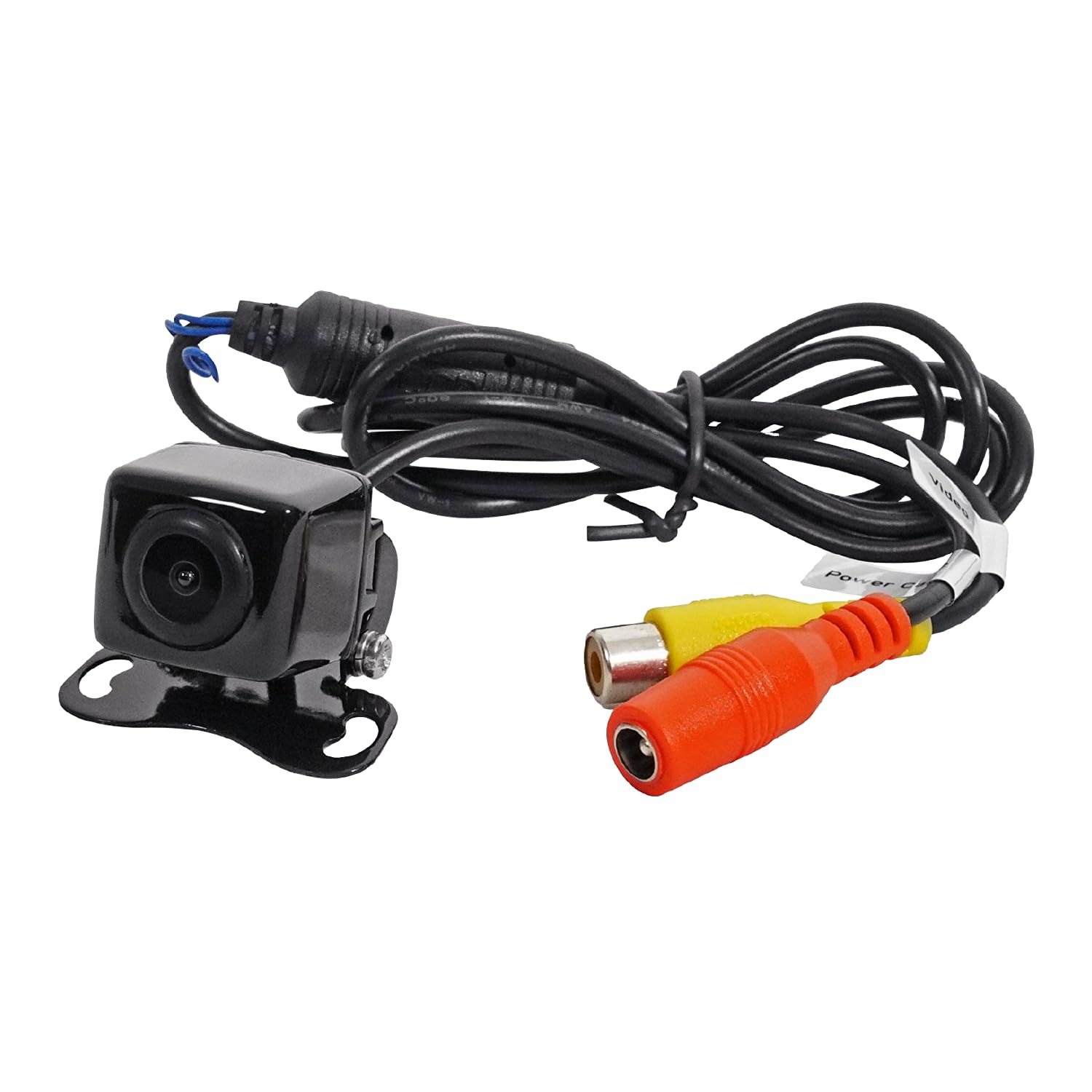
We recommend the XCAM150 for drivers who want a compact, weather-resistant camera with a simple RCA connection and useful viewing coverage.
Pros
- Compact design blends neatly near the license plate
- Wide view helps us see more while reversing
- Waterproof housing suits rain, snow, and road debris
Cons
- Low-light image quality may disappoint
- Installation still requires routing and connecting wires
- Customer feedback is limited and mixed
After using the XCAM150, we found its low-profile shape easy to position without blocking the plate. The included wiring supports a straightforward connection to compatible vehicle displays, although installation time depends on how cleanly we route the cable.
During the day, the camera provides a useful view for parking and reversing. Its wide angle helps cover areas that a narrow camera might miss, while the guide lines make distance judgment easier.
Night performance is less consistent. Some users report poor resolution and weak low-light sensitivity, so we would not choose it for drivers who regularly reverse in dark areas. The IP67 housing and warranty offer helpful protection, but image quality remains the main concern.
Rohent R4 Dual RV Backup Camera
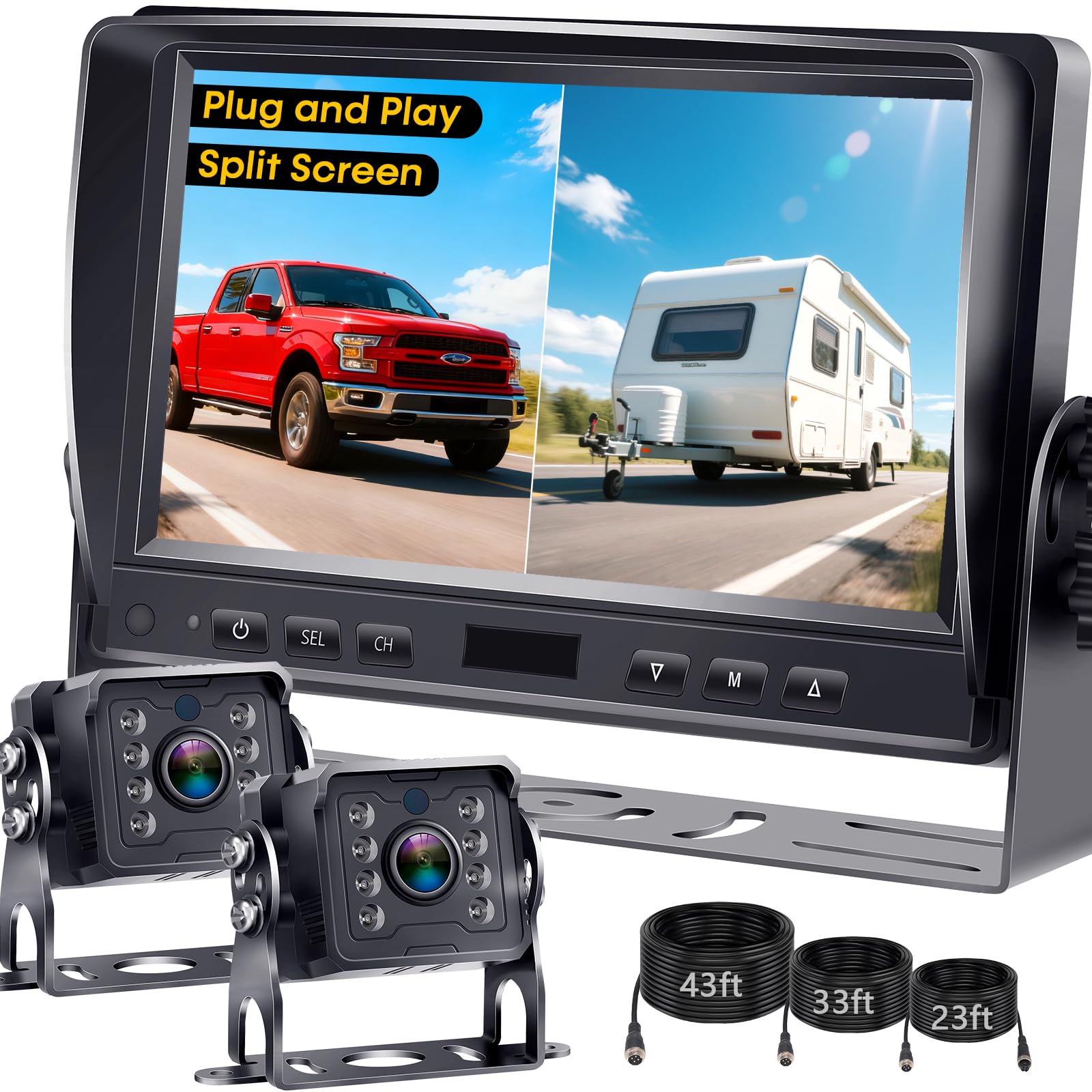
We recommend this system for RV, truck, and trailer owners who want two wired camera views and a large split-screen monitor at a reasonable price.
Pros
- Clear dual views with useful wide-angle coverage
- Long cables support larger vehicles
- Cameras handle rain, dust, and low light well
Cons
- Installation may take longer on large vehicles
- The instructions provide limited detail
- Some users report image problems after several months
We found the 7-inch monitor easy to view from the driver’s seat. The split-screen layout helped us watch the rear area while checking a second camera near the front or side. The wired connection also kept the image steady during testing.
The included cable lengths give us more flexibility for RVs, trailers, and work vehicles. Installation feels manageable for a DIY project, though routing wires through a long vehicle takes time. The adjustable parking lines and image-flip option help us match the system to different mounting positions.
Image quality looked sharp in daylight, while the infrared night view remained useful in dark areas. The wide viewing angle showed more of the vehicle’s surroundings, but the edges still looked slightly stretched.
The weather-resistant camera housings suit outdoor use, and the system works with 12- to 24-volt setups. However, we would check every connection carefully during installation. Several owners praised the easy setup and reliable picture, while others reported declining image quality after a few months, so long-term durability remains the main concern.
Kairiyard Dual RV Backup Camera
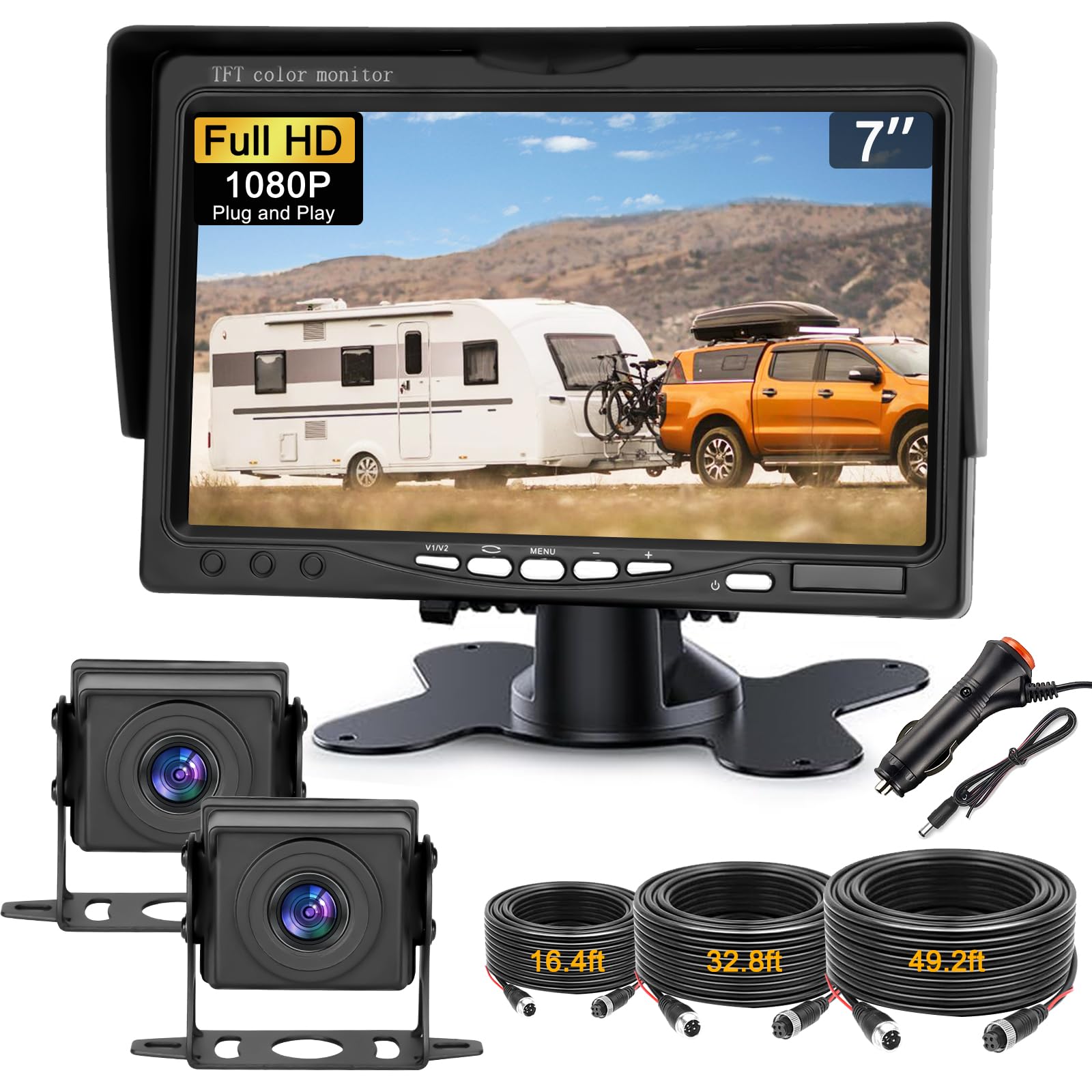
We recommend this wired dual-camera system for 12-volt vehicles when we want stable video and broad rear coverage at a reasonable price.
Pros
- Sharp 1080p images on the large 7-inch monitor
- Two cameras help cover the rear and side areas
- Wired connection avoids common wireless signal issues
Cons
- Headlights can cause strong glare at night
- Bright sunlight may wash out some details
- Installation requires routing long video cables
We found the monitor easy to read while backing a trailer. The two camera views gave us more awareness than a single rear camera, and we could switch between channels as needed.
The 150-degree viewing angle covered a wide area without noticeable fisheye distortion. Adjustable parking lines, image flip, brightness, and contrast also helped us match the system to different mounting positions.
Installation felt straightforward, especially with the included cables and instructions. We could connect the system to the reverse lights for automatic activation or use the cigarette-lighter connection for simpler power.
The sealed, IP69-rated camera housings should handle rain and road spray well. However, nighttime visibility was less useful when nearby headlights created glare, and bright daytime conditions sometimes reduced image detail. One customer also reported receiving only one camera, so we would check the package before installation.
DVKNM TZ102 Dual Reverse Camera

We recommend this wired dual-camera system for trucks, RVs, trailers, and work vehicles that need a large, clear display and simple installation.
Pros
- Sharp 7-inch 1080p monitor
- Clear night vision and weather protection
- Includes two cameras, cables, and mounting hardware
Cons
- Wired installation takes more effort than wireless systems
- Instructions may feel limited for first-time installers
- The monitor takes up more space than a small dash display
We found the 7-inch screen easy to view while reversing. The image looked sharp in daylight, and the adjustable brightness, contrast, and color helped us improve visibility in different conditions.
The two-camera setup works well for larger vehicles. We could use one camera for the rear view and another for a closer angle, such as a hitch or loading area. The remote also made it simple to switch views and flip the image.
Installation was mostly straightforward because the kit includes two 66-foot video cables, a car charger, power wiring, brackets, and adhesive. However, routing cables through a truck, van, or trailer still takes time, especially when a clean installation requires removing trim panels.
At night, the infrared lights provided a useful view behind the vehicle. The cameras also handled wet conditions well, though we would still mount them carefully to protect the cable connections. The three-year warranty adds useful coverage for a system intended for regular vehicle use.
Dual Electronics BUCAM200 Backup Camera

We recommend this camera for drivers who want a simple, wide-angle view and can handle a slightly involved installation.
Pros
- Wide viewing angle helps cover the area behind the vehicle
- Low-profile housing fits neatly on many vehicles
- Produces a usable image in low-light conditions
Cons
- Installation instructions lack useful detail
- Included video cable may not reach larger vehicles
- Image can look soft rather than sharply detailed
We found the BUCAM200 easy to mount because its compact surface-mount design does not take up much space. The 170-degree view gave us a broad look behind the vehicle, which helped when backing into narrow parking spots.
The camera produced a clear enough image for everyday reversing. Its 640-by-480 output is modest by current standards, but we could still identify nearby obstacles without trouble. The low-light performance also helped at dusk, although we would not expect exceptional night detail.
Installation took more planning than expected. The basic instructions leave out helpful wiring guidance, so we had to rely on the vehicle’s head unit manual and test the connections carefully. The RCA cable may also require an extension in longer vehicles.
Once installed, the camera worked reliably with a compatible display. We think it offers good value for drivers who prioritize a broad rear view over high-resolution video.
YEDDY Dual Reverse Camera System
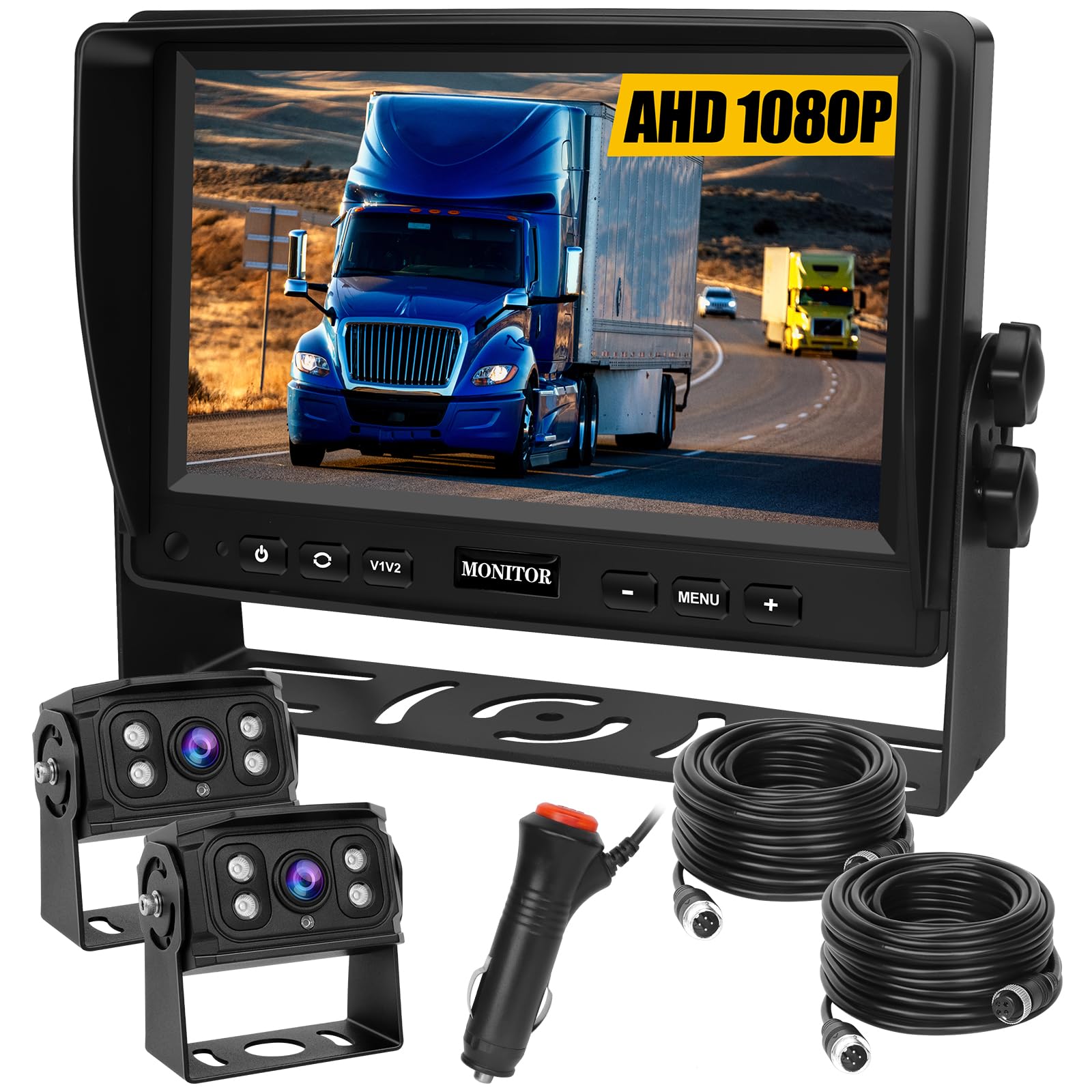
We recommend this wired camera kit for large vehicles because it offers a clear monitor, two camera inputs, and a stable connection without relying on vehicle integration.
Pros
- Clear 7-inch display with adjustable image settings
- Two cameras provide flexible front or rear coverage
- Long cables and weather-resistant cameras suit trucks and RVs
Cons
- Wired installation takes time, especially on large vehicles
- The system does not record video
- The monitor uses a cigarette-lighter power adapter
We found the 7-inch screen easy to view while reversing. The picture looked sharp in daylight, and the wide viewing angle helped us watch more of the area behind the vehicle. We could also switch between the two camera feeds.
The infrared lights improved visibility after dark. The image remained useful in low light, although night footage did not look as detailed as daytime video. We liked that the parking guidelines and image orientation could be adjusted through the menu.
Installation was simple once we chose the camera locations. The included 65-foot cables gave us enough length for a truck or RV, but routing and securing the wires required some effort. The wired connection provided steady video without the dropouts common with some wireless systems.
The cameras have an IP69K weather rating and felt suited to outdoor use. We would choose this kit for parking assistance and wider visibility, but buyers who need accident records should select a system with recording capability.
FEISIKE Dual RV Backup Camera System

We recommend this system for RVs, trailers, and trucks because its wired connection provides a steady rear view without wireless delay.
Pros
- Clear 7-inch display with useful daytime glare protection
- Dual camera inputs help cover different viewing angles
- Long cable and weather-resistant camera support flexible installation
Cons
- Wired installation requires routing a cable through the vehicle
- The system does not record driving footage
- The large monitor may take up noticeable dashboard space
We found the 7-inch screen easy to read while backing a larger vehicle. The image looked clear in daylight, and the adjustable parking lines helped us judge distance more accurately.
The wired setup kept the video feed stable, with no pairing process or noticeable signal lag. The included cable should suit many trailers and RVs, although routing it cleanly takes time and may require drilling.
At night, the camera and built-in LEDs improved visibility in dark parking areas. The wide view reduced blind spots, while the second channel allowed us to add another camera for a different angle.
The camera housing feels suited to outdoor use, and its IP69 rating offers protection from water and dust. We would choose this model for a permanent installation, but buyers who want a temporary setup may find the wiring less convenient.
ALLRUBY Dual Backup Camera Kit
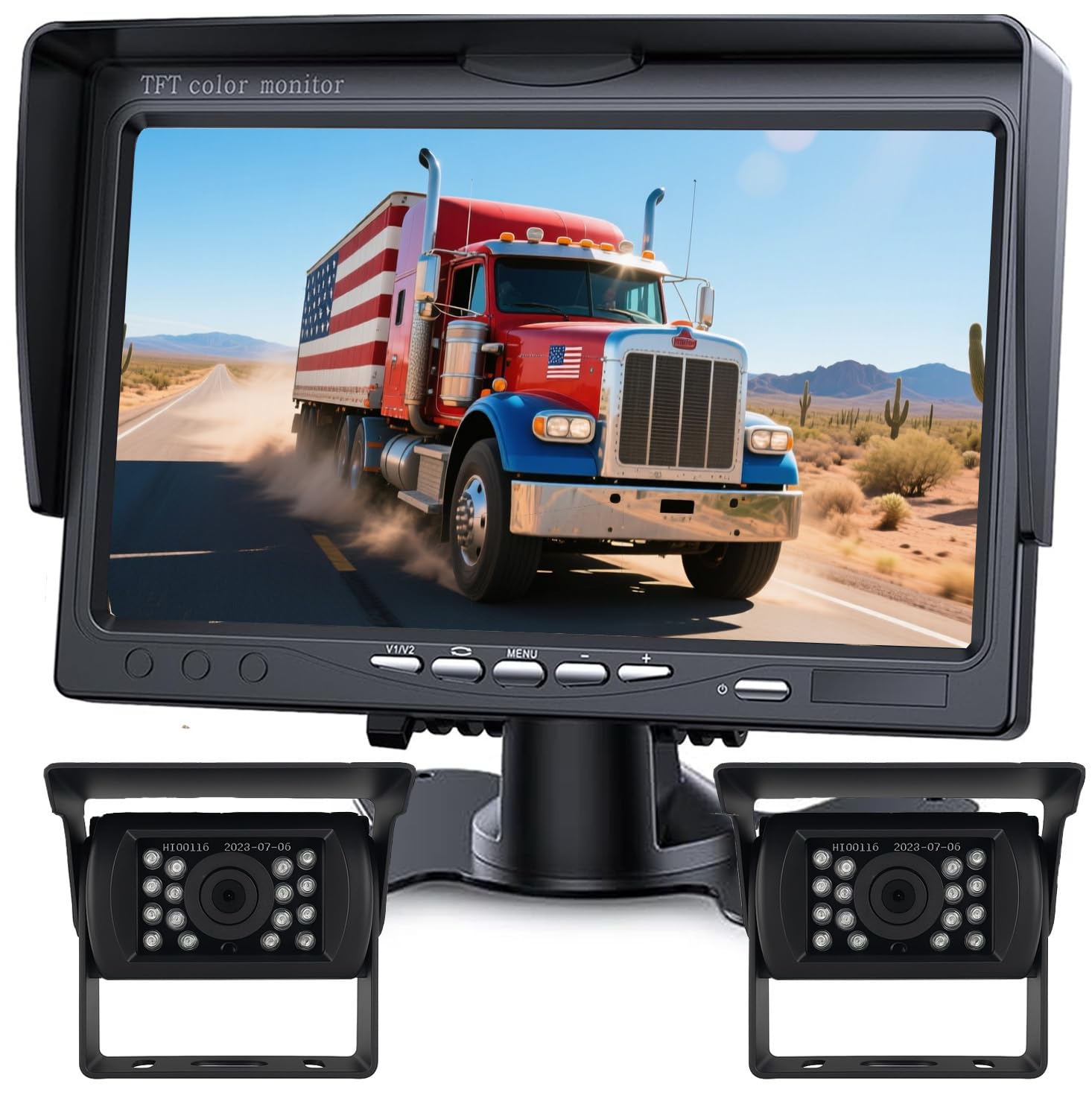
We recommend this kit for trucks, trailers, RVs, and other large vehicles that need a clear rear view from two camera angles.
Pros
- Clear 7-inch 1080p display
- Strong low-light visibility
- Simple installation with flexible wiring options
Cons
- Cable connections may need extra securing
- Remote settings can take time to learn
- Some buyers reported missing mounting hardware
We found the monitor easy to see during daytime driving, and the wide camera view helped cover areas that standard mirrors missed. The dual-camera setup also gives us more flexibility when switching between rear and close-range views.
At night, the infrared lighting provided useful detail behind the vehicle. The image remained practical in low light, though the final result can depend on camera placement and surrounding conditions.
Installation uses a plug-and-play design with a vehicle power connection or hardwiring for 9–36-volt systems. The waterproof camera housing suits outdoor use, but we would secure the cable connections carefully to prevent movement or water exposure.
The monitor supports mirror and image adjustments through the included remote. We like having control over brightness, contrast, and camera orientation, although the settings may require some trial and error.
Buying Guide
We should first check why we need a dual reverse camera. A setup with two views can show the area directly behind the vehicle and a wider angle, but both cameras must fit the vehicle and its wiring system.
| Feature | What to check |
|---|---|
| Image quality | Look for clear video in daylight and low light. |
| Viewing angle | Choose coverage that reduces blind spots without excessive distortion. |
| Night vision | Check whether the camera uses infrared lights or another low-light system. |
| Weather resistance | Choose a camera with protection against rain, dust, and road spray. |
| Screen compatibility | Confirm that the camera works with our existing display or monitor. |
| Parking guides | Check whether we can adjust or disable the guide lines. |
| Installation | Review cable length, mounting options, and power requirements. |
We should compare the camera’s resolution, frame rate, and lens quality rather than relying on one specification. A higher resolution can improve detail, but the screen must support it to show the benefit.
We should also consider how the two views appear. Some systems switch between views, while others display them at the same time. We need controls that let us select the view quickly and adjust the image for our vehicle.
Before buying, we should check the warranty, return policy, and installation instructions. A professional installation may help us avoid loose connections, water damage, and interference with existing vehicle wiring.
Editor’s picks
We recommend choosing a dual reverse camera based on image quality, viewing angle, installation method, and night performance. A split-screen display can show the rear and front views at the same time, while a switchable system may offer more control.
| Pick | Best for | Key feature |
|---|---|---|
| Best overall | Daily driving | Clear video and a wide rear view |
| Best for night use | Low-light parking | Infrared or enhanced night vision |
| Best for large vehicles | Vans and trucks | Adjustable cameras and long cables |
| Best budget option | Basic reversing help | Simple installation and reliable display |
We should look for cameras with at least 1080p resolution, waterproof housing, and a viewing angle of about 120 to 170 degrees. Parking guidelines and low-latency video also make reversing easier.
For larger vehicles, we should choose a kit with a longer cable, a larger monitor, and adjustable mounting brackets. Wireless models can simplify installation, but wired systems often provide a steadier signal.
A camera with automatic switching can show the rear view when we select reverse. If we want continuous recording, we should confirm that the system supports a memory card and includes enough storage for our driving needs.
Frequently asked questions
What is a dual reverse camera?
We use this term for a backup camera system with two camera views. One camera may show the area directly behind the vehicle, while the other can cover a wider angle, a trailer, or a separate viewing position.
Why would we need two cameras?
Dual cameras can improve visibility when parking, reversing, or towing. They may help us monitor blind spots near the rear, but we should still check mirrors and look around before moving.
Can we install a dual reverse camera on any vehicle?
Most vehicles can support one, but compatibility depends on the display, wiring, mounting space, and power system. We should check the camera’s voltage, connector type, and screen requirements before buying.
Do dual cameras work at night?
Many models use infrared lights or low-light sensors. Image quality still depends on lighting, lens condition, camera placement, and the display.
Are wireless systems better than wired systems?
Wireless models can simplify installation, while wired systems often provide a more stable connection. We should choose based on the vehicle layout, installation skill, and expected use.
What should we check during installation?
- Secure each camera firmly.
- Keep lenses clean and unobstructed.
- Protect wires from heat, water, and moving parts.
- Test both views before driving.
- Confirm that the image appears in the correct orientation.
Can we use a dual reverse camera while towing?
Some systems support a second camera mounted on a trailer or caravan. We need a compatible connection and enough cable length or wireless range for reliable operation.
Conclusion
A dual reverse camera gives us a wider view around the vehicle. One camera can show the area directly behind us, while the second can cover a wider angle or a different height.
We should choose a system that offers clear video, night visibility, weather resistance, and a reliable display. Features such as parking guides, motion alerts, and recording can also improve daily use.
Before installation, we need to check camera placement, wiring, power needs, and compatibility with the vehicle. Proper alignment matters because even a high-quality camera can leave blind spots if we mount it incorrectly.
A dual reverse camera supports safer and easier reversing, but it does not replace mirrors, careful driving, or checking the area around the vehicle.