8 Best Dual Backup Camera System Buying Guide for Safer Driving

A backup camera helps us see the area behind a vehicle when reversing, parking, or connecting a trailer. A dual backup camera system adds a second view, such as a camera aimed farther back or toward a trailer, to cover areas that one camera may miss.
The best dual backup camera systems provide clear video, a useful viewing angle, reliable night vision, and a monitor that remains easy to read in changing light. We should also check the system’s wiring, weather resistance, installation method, and compatibility with the vehicle before buying. We evaluated these features to identify the dual backup camera systems that make reversing and parking easier and safer.
8 Best Dual Backup Camera Systems
We reviewed dual backup camera systems for image quality, viewing angles, installation, and useful features. Our list highlights the best options for different vehicles, driving needs, and budgets.
Yakry Dual RV Backup Camera System
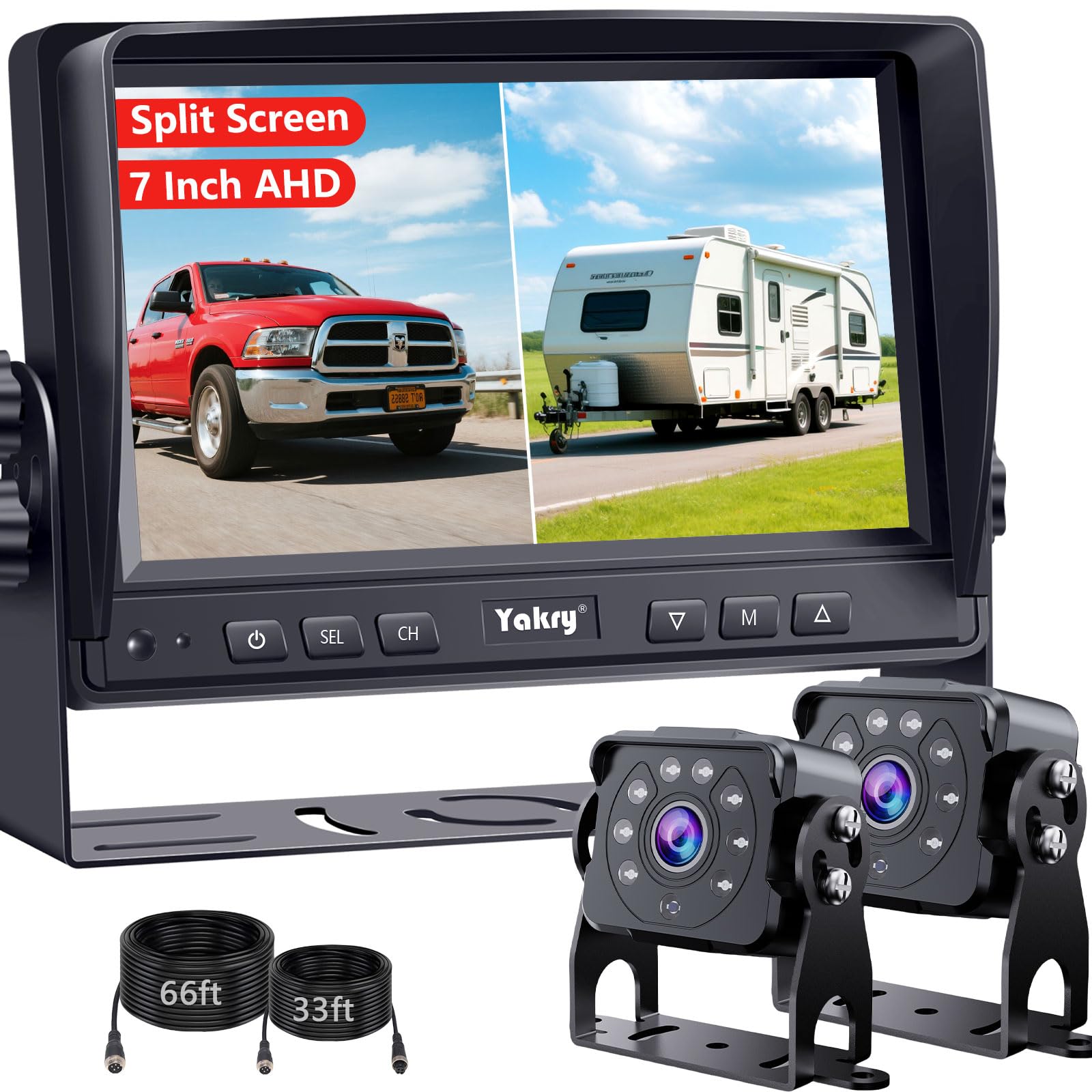
We recommend this system for truck, RV, and trailer owners who want a clear split-screen view with dependable wired video.
Pros
- Split-screen viewing helps us monitor two camera angles at once.
- The 7-inch display stays easy to see in bright conditions.
- Wired video avoids the signal delays common with wireless cameras.
Cons
- Running cables takes more effort on longer vehicles.
- The screen may feel large for smaller dashboards.
- Parking guidelines may need adjustment for the best fit.
We found the installation straightforward, especially with the included cable options and mounting brackets. The wired setup took more planning than a wireless camera, but it gave us a steady picture without noticeable lag.
The split-screen display worked well when we placed one camera near the hitch and another at the rear of a trailer. That view made lining up the hitch and checking behind the vehicle easier than using a single camera.
Image quality looked sharp during the day, and the infrared view remained useful at night. The anti-glare shade helped in direct sunlight, while the wide viewing angle covered a broad area behind the vehicle.
The metal camera housing feels suited to outdoor use, and the weather-resistant design should handle rain, dust, and routine washing. We would still protect the cable connections carefully, since exposed wiring can cause problems over time.
This system makes the most sense for larger vehicles where blind spots and trailer positioning create problems. Buyers should be comfortable routing cables through the vehicle, but the reliable connection and two-camera view make the extra installation work worthwhile.
Rohent R4 Dual RV Backup Camera System
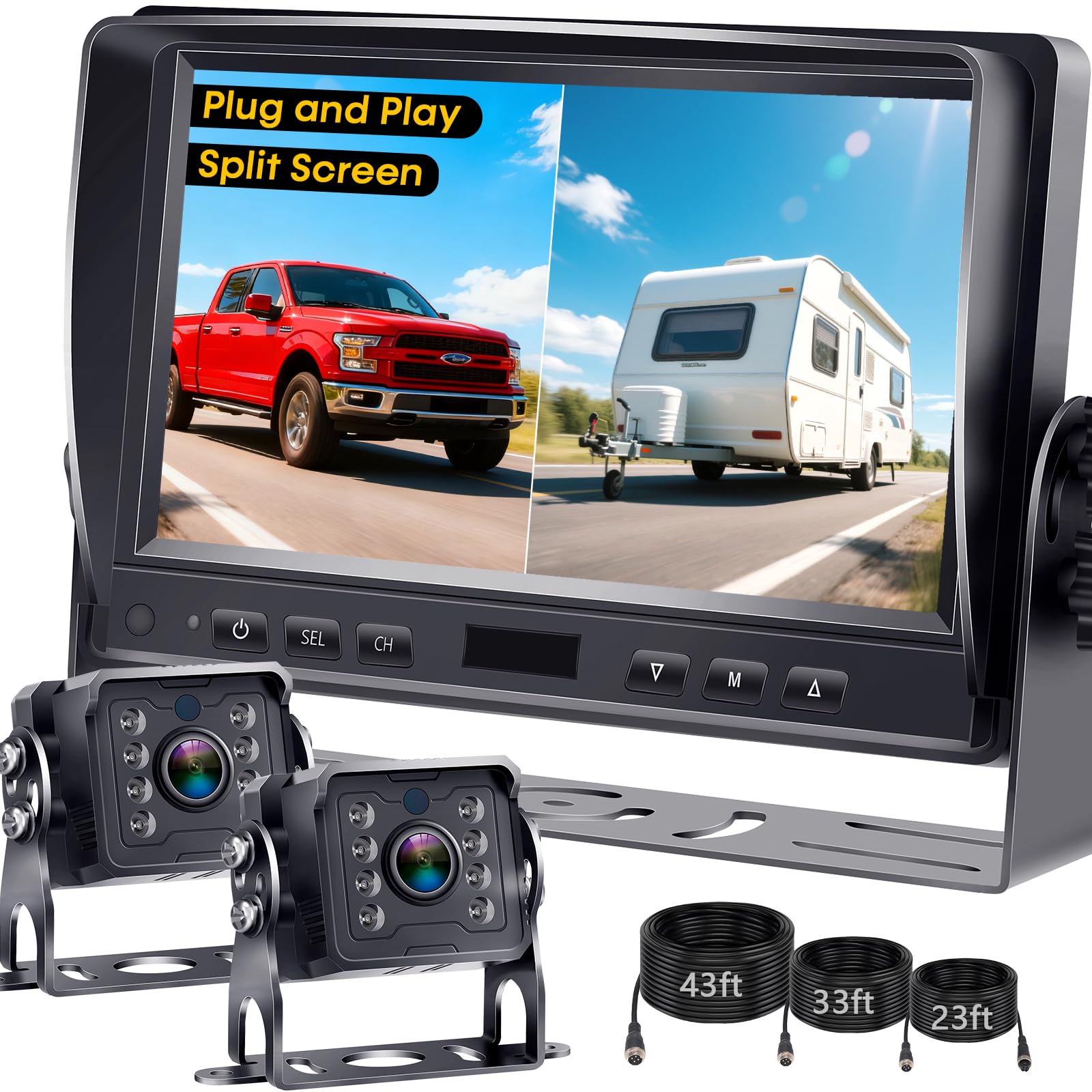
We recommend this system for RV, truck, and trailer owners who want a wired split-screen view with simple installation and dependable coverage.
Pros
- Split-screen viewing shows two camera angles at once.
- Wired connections provide a steady image without wireless lag.
- Long cables suit many RV and trailer layouts.
Cons
- Cable routing can take time on larger vehicles.
- The monitor may feel bulky on a small dashboard.
- Some users report image problems after extended use.
We found the plug-and-play setup straightforward, especially with the included cigarette-lighter adapter. The three cable lengths gave us more flexibility when planning camera placement, although routing wires through a long trailer still required patience.
The 7-inch monitor made both views easy to see while reversing and hitching. We also liked the ability to adjust the parking lines and switch the image orientation for different mounting positions.
Image quality appeared clear in daylight, and the wired connection kept the feed stable. Night vision helped in dark areas, but the view still depended on available lighting and proper camera positioning.
The weather-resistant camera housings should handle outdoor use and changing weather. However, we would check every connection carefully during installation and keep the one-year warranty information available, since some buyers have reported reliability issues over time.
Venluna Dual Magnetic Wireless Backup Camera
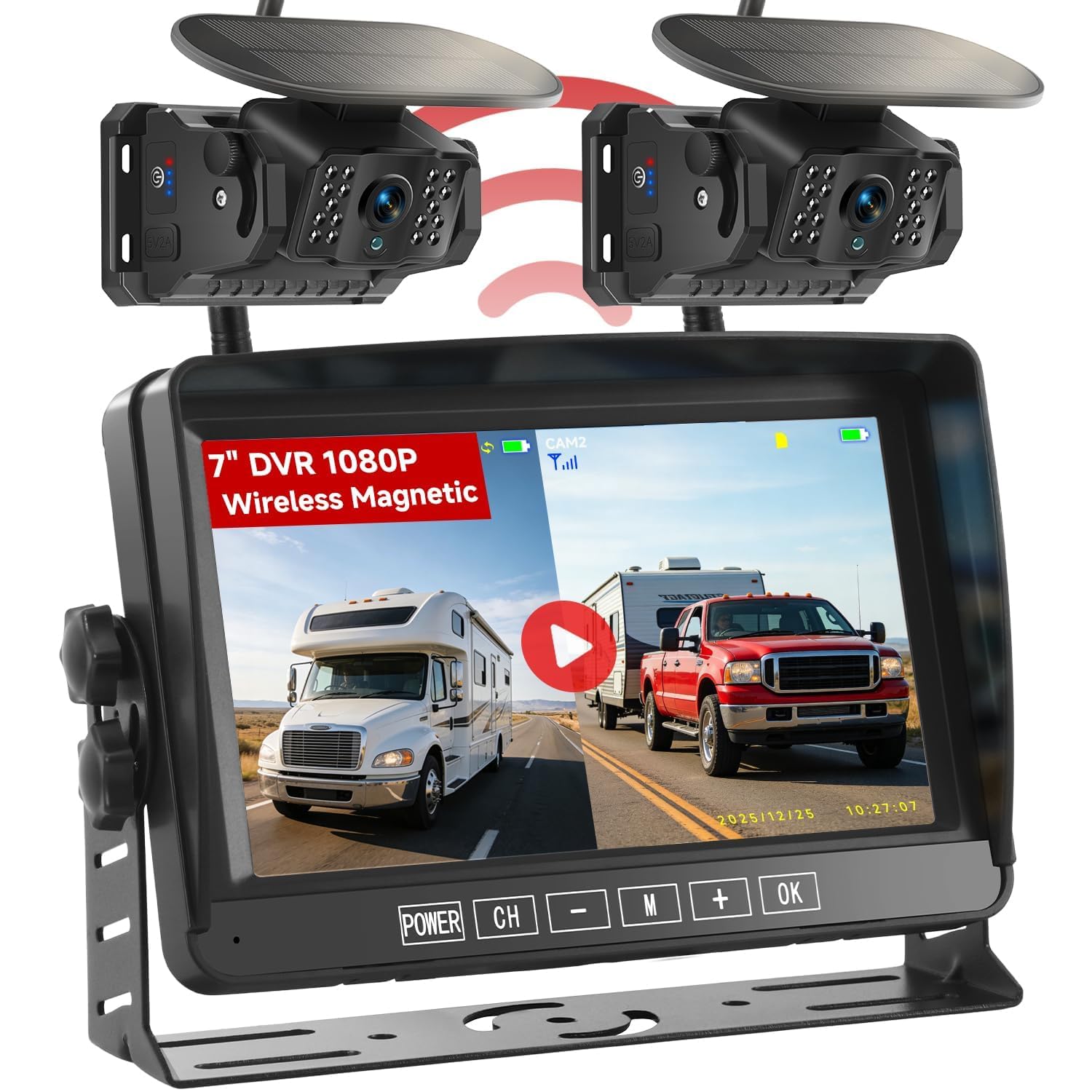
We recommend this system for truck, RV, and trailer owners who want flexible camera placement without running wires through the vehicle.
Pros
- Strong magnetic mounts make setup quick and protect metal surfaces with rubber bases.
- The 7-inch monitor shows a clear, wide view and supports up to four cameras.
- Rechargeable cameras, night vision, DVR recording, and weather protection add useful coverage.
Cons
- The cameras need charging, and the solar panels only extend battery life.
- Wireless video can show some motion lag.
- The cigarette-lighter monitor power limits outlet placement.
We found the magnetic installation especially convenient. We could place the two cameras on suitable metal surfaces without drilling or routing cables. The mounts held firmly, while the rubber bases helped reduce the risk of scratches.
The 1080p monitor gave us a broad view behind and beside the vehicle. Its 170-degree lens helped cover blind spots, and the adjustable angle made it easier to aim each camera. Night vision remained useful in dark areas, although image movement was not always perfectly smooth.
The rechargeable camera batteries worked well for extended trips, and the solar panels helped maintain power during outdoor use. We would still charge the cameras fully before leaving because solar power serves as a backup rather than the main charging method.
The built-in DVR can record from four cameras and overwrite older footage automatically. We also liked the auto-sleep feature, which reduces battery use when the monitor turns off. Overall, the Venluna Dual Magnetic Wireless Backup Camera suits buyers who value fast installation and adaptable coverage more than a fully wired system.
Pemacom Dual Wireless Backup Camera
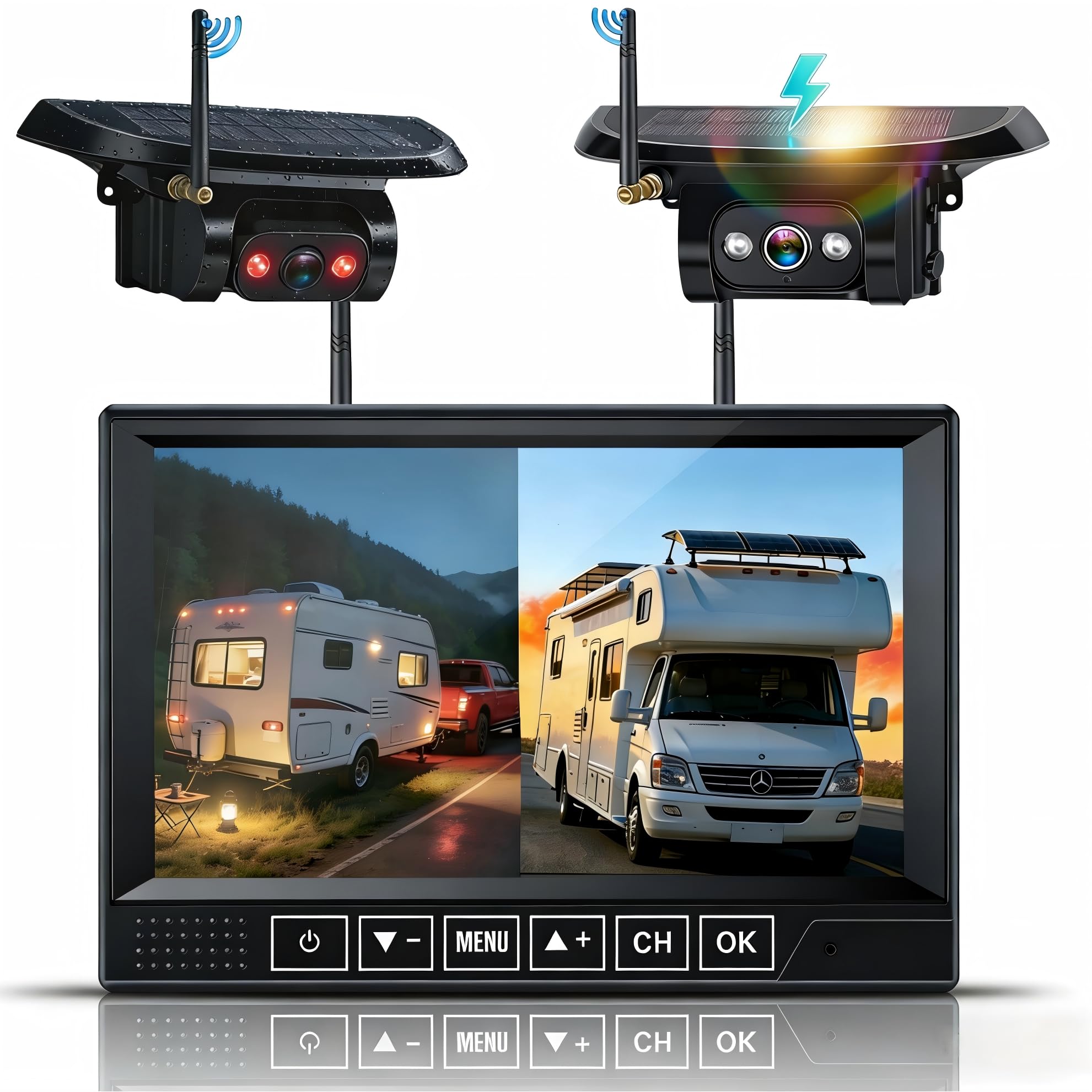
We recommend this system for RV and trailer owners who want a clear, flexible view without drilling or running long cables.
Pros
- Fast magnetic installation with no permanent changes
- Clear 1080p video and a useful 7-inch split-screen display
- Large battery supports extended trips between charges
Cons
- The magnetic mounts may need extra care on rough roads
- Solar charging works as a supplement, not a full replacement for USB-C charging
- The system may offer more features than casual drivers need
We found the setup simple. The cameras attach magnetically, while the monitor uses a suction mount. This makes the system practical for switching between an RV, trailer, truck, or other towable vehicle.
The image looked sharp during daytime driving and remained useful at night. The wide view helped us watch traffic, line up a hitch, and check areas beside the trailer. The 7-inch screen also gave us enough space to view both cameras at once.
Battery life is a strong point for camping and off-grid travel. Solar charging can help maintain power during trips, but we would still charge the cameras fully before leaving. The wireless range worked well for towing, though obstacles and vehicle design can affect the signal.
We also liked the weather-resistant design and recording function. Still, users should check the camera placement before driving on rough roads, since magnetic mounts depend on a clean, suitable mounting surface.
Kairiyard Dual RV Backup Camera System
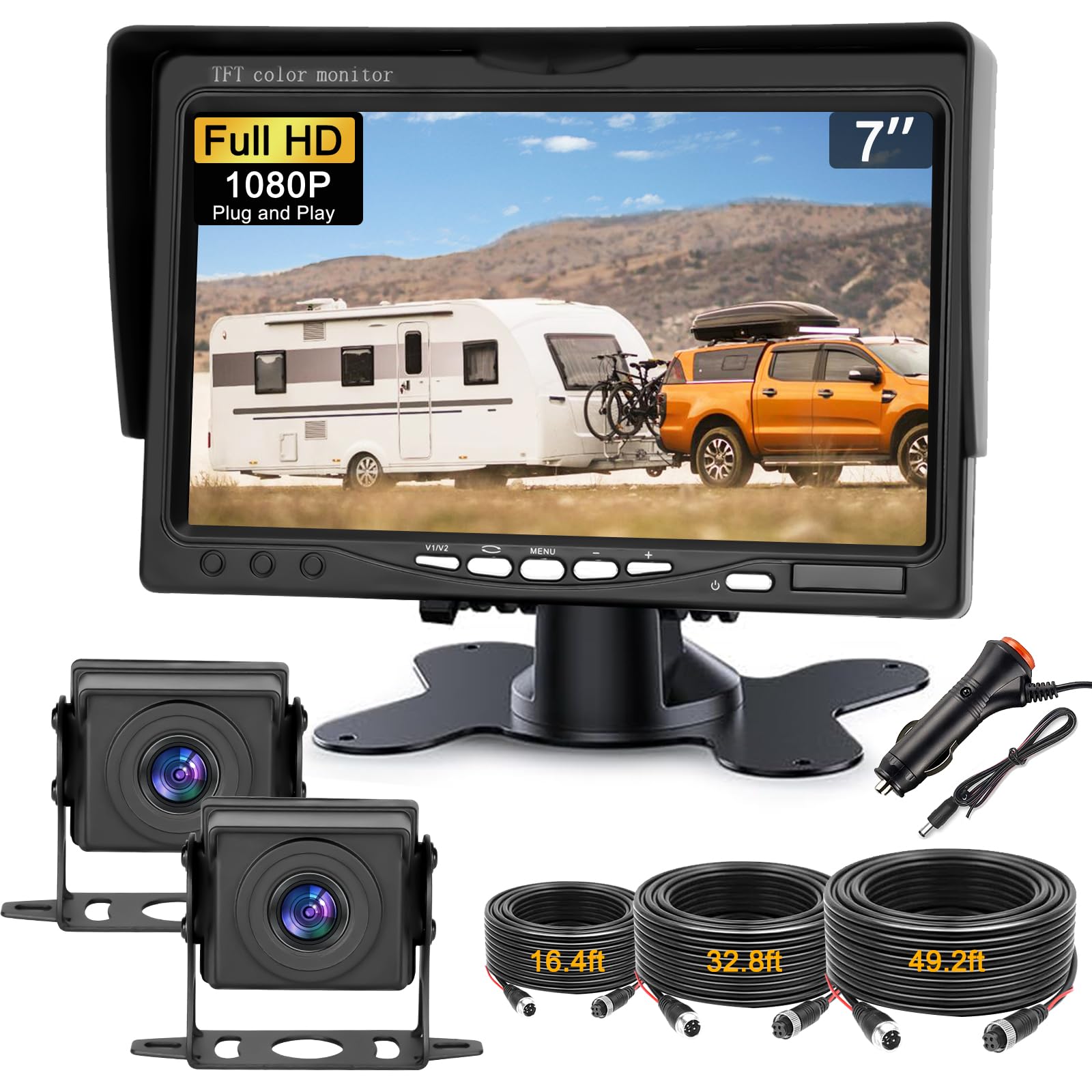
We recommend this system for drivers who want a wired dual-camera setup with a large monitor and flexible mounting options.
Pros
- Clear daytime image from both cameras
- Stable wired connection with long cable options
- Adjustable parking lines and image settings
Cons
- Headlight glare can reduce nighttime detail
- The picture may look washed out in bright sunlight
- One customer reported receiving only one camera
We found the 7-inch monitor easy to view while reversing, especially in a truck, trailer, or RV. The two camera channels let us check behind the vehicle and monitor a side or cargo area, then switch views manually when needed.
The wired connection provides a steady picture without the delays that can affect some wireless systems. The included cable lengths also give us more freedom when placing cameras on a longer vehicle.
Installation feels manageable for a DIY project. We can power the system through the reverse light for automatic activation or use the included cigarette-lighter connection. The adjustable guide lines, brightness, contrast, and image flip settings help us match the system to different vehicles.
Daytime images look clear, but bright sunlight can make the display appear slightly washed out. At night, headlights may create glare that hides some detail. The cameras have a sealed, waterproof housing, but we should still check the wiring and connections carefully during installation.
WOOCARTY 10.1-Inch Dual Backup Camera System
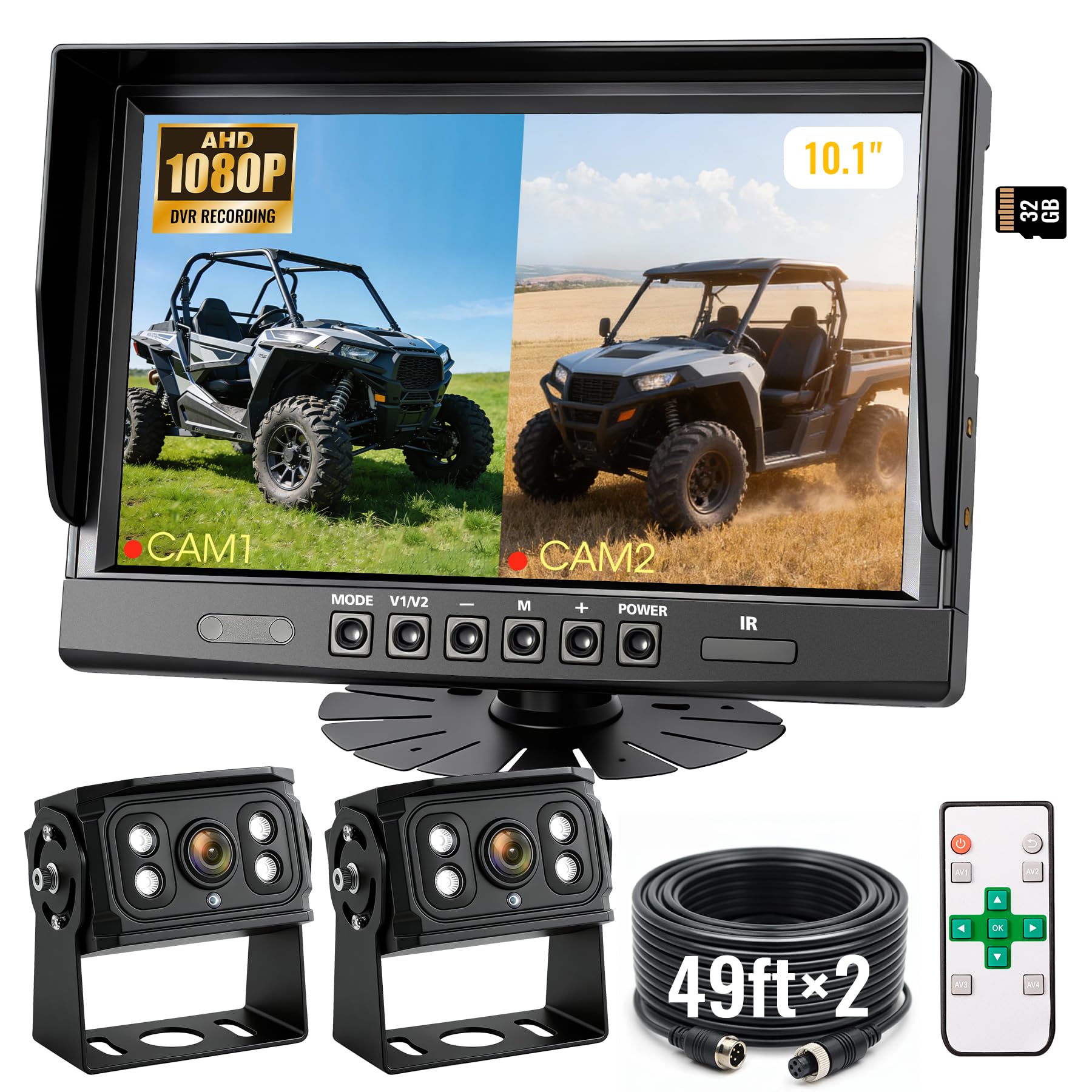
We recommend this system for drivers of RVs, trucks, tractors, and other large vehicles who want two clear rear views on one large monitor.
Pros
- Clear 1080p video with useful night vision
- Strong, weather-resistant metal cameras
- Large screen with recording and split-view options
Cons
- Wired installation takes more time than a wireless kit
- The 10.1-inch monitor may feel large in smaller cabins
- Setup may require basic vehicle wiring knowledge
We found the monitor easy to read from the driver’s seat, and the two-camera view helped cover areas a single rear camera could miss. The mirror and flip controls also made it easier to match the display to different mounting positions.
The cameras felt suited to demanding outdoor use. Their sealed housings and wide viewing angle worked well for monitoring equipment behind a tractor or trailer, while the infrared lights improved visibility in dim conditions.
Installation requires connecting power, ground, and, if desired, the reverse trigger wire. The included cables and mounting hardware simplify the process, but routing wires through a large vehicle still takes planning.
The built-in DVR records driving footage to the included 32GB card and supports larger cards. We also liked the parking guide lines, though the system may offer more features than some buyers need for basic reversing.
FEISIKE Dual RV Backup Camera System

We recommend this system for RVs, trailers, and trucks because its wired connection provides a steady rear view without wireless signal delay.
Pros
- Clear 7-inch display with a useful sun shade
- Two camera inputs support multiple viewing angles
- Long cable and plug-and-play setup simplify installation
Cons
- Installation requires routing a cable through the vehicle
- The system does not record driving footage
- The large monitor may take up noticeable dashboard space
We found the 7-inch screen easy to view while backing up, with a clear image during the day. The adjustable parking lines and image-flip options helped us match the display to our camera position.
The wired connection worked reliably, which matters on larger vehicles where wireless systems can lose signal. The included cable also gives us flexibility when mounting a camera on a trailer or truck.
At night, the camera provided a usable view in dim areas, though performance still depends on the surrounding light. Its wide viewing angle helped reduce blind spots, while the weather-resistant housing suited outdoor mounting.
We also liked the second camera input for adding another view, such as a front, side, or interior camera. However, installation still requires routing and securing the cable, and buyers who want trip recording will need a different system.
AUTO-VOX Dual Solar Backup Camera

We recommend this system for drivers who want wider rear visibility without running video cables between a vehicle and trailer.
Pros
- Two cameras provide useful coverage for a vehicle and trailer.
- The split-screen monitor shows both views clearly.
- Solar charging and wireless installation reduce setup work.
Cons
- The front or secondary view may feel too wide for some vehicles.
- Wireless connections may become unreliable over time.
- The kit lacks a dedicated wall charger.
We found the installation straightforward. The cameras can mount with adhesive or screws, and pairing them with the 7.2-inch monitor takes little effort. This setup suits RVs, trucks, campers, and trailers where wiring a rear camera would take more time.
The split-screen display helps us monitor two areas at once while towing or backing into a tight space. The 1080p image looks clear during the day, and the night view remains useful in dim parking areas. However, the wide secondary view may show more space than some drivers need.
Solar panels help reduce charging, but we would still check the battery before a long trip. The system also supports loop recording, which can document driving and parking without constant file management.
Overall, the AUTO-VOX system offers a practical wireless design and broad coverage. We would choose it for towing and camping, but buyers who need maximum long-term reliability should consider the mixed reports about connection problems and customer support.
Buying Guide
We should choose a dual backup camera system based on our vehicle, driving needs, and installation plans. First, we need to confirm that the cameras, monitor, wiring, and mounting hardware fit our vehicle.
| Feature | What to check |
|---|---|
| Camera view | Look for a wide viewing angle and clear image in low light. |
| Night vision | Check whether infrared or other low-light support suits our driving conditions. |
| Weather protection | Choose cameras with a sealed, weather-resistant design. |
| Monitor | Select a screen that is easy to read and large enough for safe viewing. |
| Image switching | Check whether we can view both cameras together or switch between them. |
| Wiring | Confirm cable length and compatibility with our vehicle’s layout. |
| Power source | Verify the system works with our vehicle’s electrical system. |
We should decide whether we need wired or wireless connections. Wired systems can provide a stable signal, while wireless systems may simplify installation but can face interference or signal limits.
Camera placement also matters. A rear-facing camera can cover the area directly behind us, while a second camera may help monitor a trailer, hitch, or wider angle. We should check the mounting options and ensure the cameras will not block lights, plates, or vehicle features.
Before buying, we should review the installation steps, included parts, warranty terms, and return policy. Systems with clear instructions and compatible mounting hardware can reduce installation time.
Editor’s picks
We selected these dual backup camera systems based on image quality, viewing range, installation needs, and useful safety features.
| Pick | Best for | Key feature |
|---|---|---|
| Best overall | Daily driving | Front and rear cameras with a clear monitor |
| Best for towing | Trailers and large vehicles | Wide-angle views and adjustable camera angles |
| Best wireless option | Simple installation | Wireless video signal with minimal wiring |
| Best value | Budget-focused buyers | Basic dual-camera coverage at a lower price |
We prefer systems with 1080p video, night vision, and a monitor that shows both camera views at once. A waterproof camera housing also helps protect the system from rain, road spray, and dirt.
For trucks and RVs, we look for a long transmission range and a camera that supports trailer use. Wired systems often provide a more stable signal, while wireless models can reduce installation time.
Before buying, we check the monitor size, power connection, mounting hardware, and camera viewing angle. These details affect compatibility and daily use.
Frequently asked questions
What is a dual backup camera system?
We use this term for a vehicle camera setup with two rear-facing cameras. One camera may show a wide view, while the other can provide a closer or lower view.
Why use two backup cameras?
Two cameras can reduce blind spots and give us more useful views while reversing. This setup may help us monitor the area behind the vehicle, the hitch, or a trailer.
Can we use the cameras with a trailer?
Yes, some systems support trailer use. We should confirm that the cameras, cables, and monitor work with our vehicle and trailer before installation.
Do both cameras display at the same time?
That depends on the system. Some monitors show a split-screen view, while others let us switch between cameras or select one automatically when we shift into reverse.
Are dual camera systems difficult to install?
Installation varies. Wired systems often require routing cables through the vehicle, while wireless systems may need less wiring but still require power connections and careful setup.
What features should we look for?
- Night vision or low-light support
- Waterproof camera housing
- A clear, compatible monitor
- Parking guide lines
- A wide viewing angle
- Reliable cable connections or wireless signal performance
Do cameras replace checking around the vehicle?
No. We should still check mirrors, look around the vehicle, and watch for people or objects before and during reversing.
Conclusion
We can use a dual backup camera system to improve rear visibility while reversing, parking, or connecting a trailer. One camera may show a wide view, while the second focuses on a closer area or the trailer hitch.
Before choosing a system, we should check camera placement, screen size, image quality, night vision, and weather resistance. The cameras should also match our vehicle and work with its existing display or wiring.
Proper installation matters. We should secure each camera, protect the wiring, and adjust the viewing angles to reduce blind spots. A dual camera system supports safer driving, but we must still check mirrors and surroundings before moving.