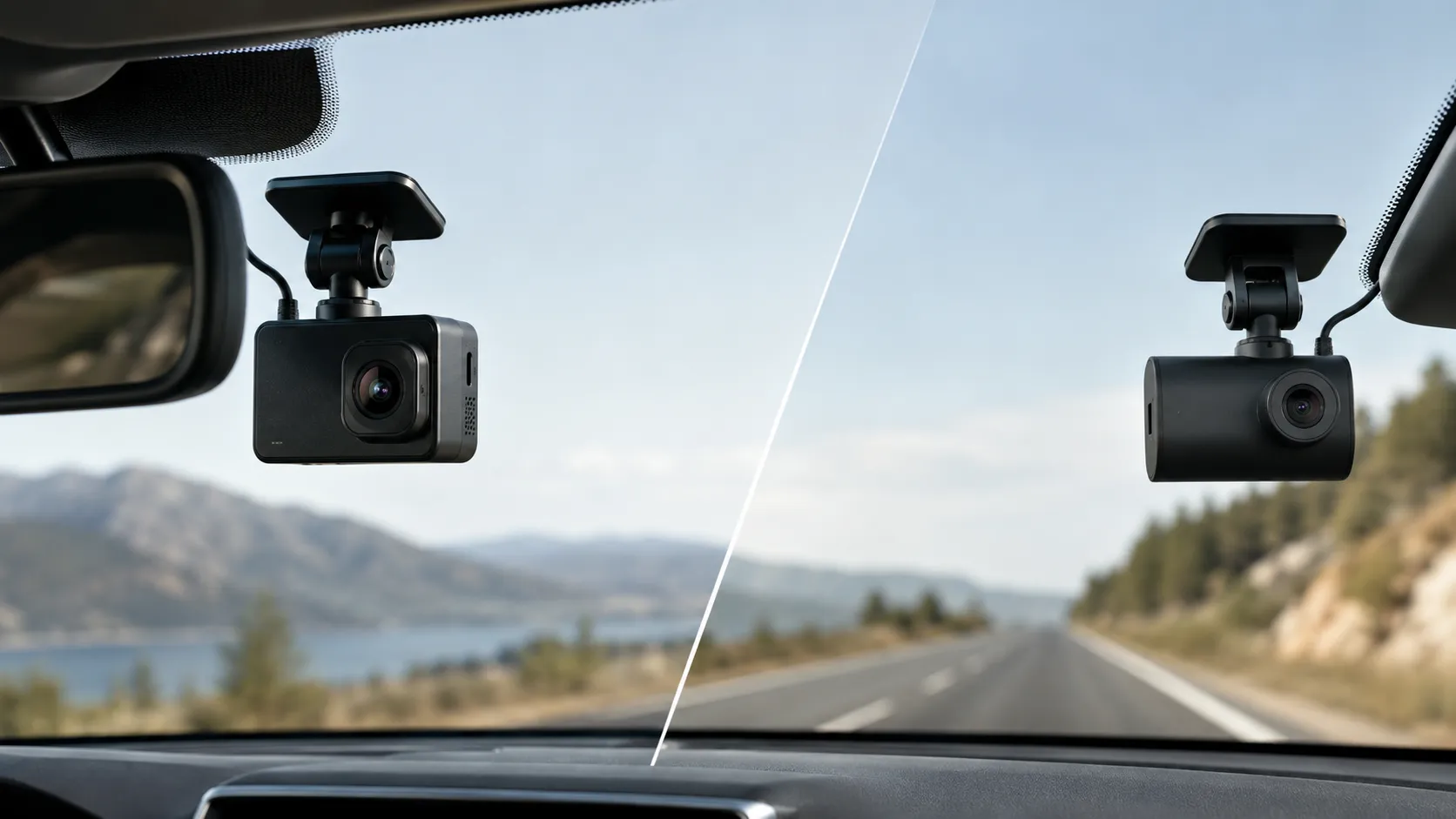
Budget Dash Cam Front Only vs Front and Rear: Best Choice

For a budget dash cam front only vs front and rear decision, choose front-only when cost, simple installation, and better front-camera value matter most. Choose front-and-rear when you want evidence from both directions, park in busy areas, or face heavy traffic. The trade-offs are higher cost, more wiring, and greater storage use.
A good front-only dash cam is the smarter budget choice for basic daily driving. A front-and-rear system is better for broader road and parking coverage. Do not sacrifice reliable recording, night quality, a safe mount, or a suitable memory card simply to add a second low-quality camera.
Both setups can be useful. The better option depends on what you need to record and how much you can spend on the complete system.
In my view, a dependable front camera is better than a weak dual-camera package. However, rear footage can be valuable when an incident begins behind your vehicle.
Front Only vs Front and Rear at a Glance
A front-only camera covers the road ahead. A front-and-rear system adds a second view through the back window.
| Feature | Front Only | Front and Rear |
|---|---|---|
| Road coverage | Front view | Front and back |
| Purchase cost | Usually lower | Usually higher |
| Installation | Simpler | More cable routing |
| Storage use | Lower | Higher |
| Parking coverage | Front area | Two directions |
| Best use | Basic road recording | Broader evidence |
The number of cameras is only one factor. You should also compare image quality, night video, storage support, mounting, parking mode, and warranty.
Our car electronics guide covers more features to check when buying vehicle cameras.
When Front Only Is the Better Choice
Your Budget Is Very Tight
A front-only model puts your full camera budget into one recording channel. That may help you choose a better front sensor, mount, processor, or memory-card package.
A poor front-and-rear kit may include two weak cameras instead of one dependable camera. Compare real sample footage rather than counting lenses.
You Mainly Want Crash Context
Many driving events begin in front of the vehicle. A front camera may show traffic lights, lane position, braking, road signs, and vehicle movement.
It will not show every part of an event. A rear impact, tailgater, or side approach may fall outside its view.
You Want Easy Installation
A front camera needs one mount and a shorter power-cable route. A plug-in setup may be installed without running a long cable through the cabin.
This makes a front-only camera easier to move between vehicles. It may also reduce labor cost when you choose professional installation.
You Want Longer Recording Time
One camera creates less video data than two similar channels. This usually lets the same memory card hold more driving time before loop recording replaces older files.
Nextbase publishes shorter estimated recording times for front-and-rear configurations than front-only setups using comparable card sizes. Review the official Nextbase recording-time and setup guide.
Where Front Only Falls Short
The main limit is simple: it cannot record what happens behind the vehicle.
A front camera may miss:
- A rear-end impact
- A vehicle following too closely
- Damage near the rear bumper
- A parking incident behind the car
- A vehicle that approaches from the rear
- Events hidden from the front lens
A front recording may still show your vehicle moving after a rear impact. However, it may not show the other vehicle before contact.
When Front and Rear Is Better
You Drive in Heavy Traffic
A rear camera adds context behind your vehicle. It may record a tailgater, rear impact, unsafe following distance, or another vehicle changing lanes.
The rear video can support the front footage by showing what happened before and after an incident.
You Park on Busy Streets
A two-camera system can watch more of the area around a parked vehicle. This may help when damage occurs near the front or rear bumper.
Parking coverage still depends on the power system, recording mode, camera angle, lighting, and whether the impact falls inside either lens.
You Drive for Work
Delivery, commercial, and rideshare drivers may benefit from wider coverage. A rear-window camera records the road behind the vehicle.
A cabin camera serves a different purpose. It records passengers and part of the interior. Rideshare drivers should decide whether rear-road or cabin coverage matters more.
You Want More Complete Incident Context
Two views may show how vehicles approached, moved, and separated. This can help when the front footage alone leaves important questions.
A dual-camera setup still does not provide complete 360-degree coverage. Side impacts and events outside both camera angles may remain unseen.
Does a Rear Camera Reduce Video Quality?
It can on some budget systems. Adding another camera increases the amount of video the processor and memory card must handle.
Depending on the model, a dual-channel setup may change:
- Front-camera frame rate
- Front or rear resolution
- Available bitrate
- High dynamic range options
- Maximum recording quality
- Memory-card recording time
For example, BlackVue lists one-channel and two-channel versions of its DR590X series with different recording combinations. Its one-channel mode can record the front camera at a higher frame rate, while the two-channel setup records both cameras together at a lower frame rate. Check the official BlackVue channel specifications.
Storage Differences
A front-and-rear system creates two video streams. This fills the memory card faster than a comparable front-only setup.
Recording time depends on:
- Front and rear resolution
- Video bitrate
- Frames per second
- Compression format
- Memory-card capacity
- Parking-mode settings
- Protected file volume
| Ownership Factor | Front Only | Front and Rear |
|---|---|---|
| Video streams | One | Two |
| Card space | Lasts longer | Fills faster |
| File review | Simpler | More files |
| Cable length | Shorter | Longer |
| Mount checks | One camera | Two cameras |
| Replacement parts | Fewer | More possible parts |
Garmin recommends memory cards designed for continuous dashcam recording. It notes that dashcam-ready cards are made for repeated writing, temperature changes, and vehicle vibration. Review the Garmin memory-card guidance.
Installation Differences
A front-only camera usually needs a short cable from the windshield to the power source. A rear camera needs another mount and a long cable through the cabin.
The rear cable may need to pass:
- Along the headliner
- Past door frames
- Near A-, B-, or C-pillar trim
- Through the cargo area
- Into a hatch or liftgate
- Near moving hinges and rubber boots
Nextbase states that its professional installation service can mount and hardwire supported cameras, including rear camera modules, across many vehicle types. See the Nextbase professional-installation overview.
NHTSA explains that airbags deploy very quickly. Review the official NHTSA airbag guidance and your vehicle manual before moving trim.
Our tools and garage gear section covers basic trim and installation equipment. Professional help is safer when the cable route is unclear.
Parking Mode Differences
A front-only parking system watches one direction. A dual-camera system can add rear coverage when both cameras remain active.
Do not assume the rear camera always records while parked. Some systems let the owner disable rear parking recording to reduce power or storage use.
Parking mode may require:
- A compatible hardwire kit
- An onboard diagnostics power cable
- A dedicated dashcam battery
- Low-voltage battery protection
- Correct timer settings
- Safe fuse and ground connections
A second camera can increase total power use. Check the exact manufacturer figures and battery-protection settings before leaving the system active for long periods.
Hidden Costs of Two Cameras
A front-and-rear package may cost more than the camera box suggests.
Possible extra costs include:
- A larger high-endurance memory card
- Professional installation labor
- A hardwire kit
- A longer replacement cable
- A rear-camera mount
- A dashcam battery pack
- Extra installation clips
- Replacement adhesive pads
A front-only model may leave more budget for better night video, a stronger mount, or reliable storage.
A dual system may deliver better total value when rear coverage matters enough to justify those extras.
Which Setup Fits Your Driving?
Choose Front Only When:
- Your budget is very limited.
- You want basic road evidence.
- You prefer simple installation.
- You move the camera between vehicles.
- You want longer card recording time.
- You rarely park in exposed areas.
Choose Front and Rear When:
- You drive in heavy traffic.
- You often park on busy streets.
- You want rear-impact footage.
- You drive long highway routes.
- You use the vehicle for work.
- You want broader parking coverage.
Pros and Cons
- Lower total cost
- Simpler installation
- Less storage use
- Fewer cables and parts
- Better value for one camera
- No rear-road footage
- Limited parking coverage
- May miss a rear impact
- Less event context
- No tailgater view
- Records two directions
- Better rear-impact context
- Broader parking coverage
- Useful in heavy traffic
- Better for frequent drivers
- Higher total cost
- More installation work
- Uses more storage
- More files to review
- May change video settings
Budget Dash Cam Buying Checklist
- Decide which directions you need to record.
- Watch real front and rear sample footage.
- Check night video from both cameras.
- Confirm each channel’s resolution and frame rate.
- Check maximum memory-card capacity.
- Compare front-only and dual recording times.
- Review rear-cable length and vehicle fit.
- Confirm parking-mode power requirements.
- Check app, firmware, and warranty support.
- Plan safe mounting and cable routes.
For more safe-installation information, visit our safety gear guide.
- Best for front only: Drivers who want dependable basic road recording at the lowest practical total cost.
- Best for front and rear: Drivers who need wider evidence coverage and can manage more wiring, storage, and cost.
- Next step: Compare real footage, channel specifications, memory-card needs, and installation requirements before choosing.
Frequently Asked Questions
Yes, a front-only dash cam can be enough for basic road recording and a tight budget. It covers the direction where many driving events begin. It will not show a rear impact, tailgater, or parking event behind the vehicle.
It is often worth it when you park on busy streets, drive in heavy traffic, or want evidence from both directions. The trade-offs are a higher purchase price, more installation work, and shorter recording time on the same memory card.
Sometimes. The effect depends on the exact system. Some dual-channel cameras change the front frame rate, bitrate, or recording options when the rear camera is connected. Check the manufacturer’s front-and-rear recording specifications before buying.
A larger high-endurance card is often helpful because two cameras create more data than one. Recording time still depends on resolution, bitrate, frame rate, and the model. Use only a card that meets the camera maker’s requirements.
It can be harder than a front-only camera because the cable must run through the cabin. Hatchbacks, SUVs, and vehicles with liftgates may need more careful routing. Avoid airbags, moving hinges, and damaged trim.
Many systems can, but parking mode may need a compatible hardwire kit, OBD power cable, or dash cam battery. Check whether both cameras record in parking mode and whether the system includes low-voltage battery protection.
A front-and-rear setup gives better road coverage, but a cabin camera may be more useful than a rear-window camera for passenger events. Compare two-channel and three-channel systems, privacy controls, night recording, storage needs, and local audio rules.
Conclusion
For a limited budget, a front-only dash cam is often the best value. It costs less, is easier to install, and uses less storage.
A front-and-rear system is the better choice when rear impacts, tailgating, busy parking areas, or wider incident coverage are major concerns.
Do not choose by camera count alone. Compare real footage, front and rear specifications, storage needs, parking-mode power, and safe installation before buying.
