What Is a Dual Camera System for a Car? Features and Benefits

A dual camera system for a car uses two cameras to record different views while you drive or park. Most systems capture the road ahead and the area behind your vehicle, while some record the cabin instead.
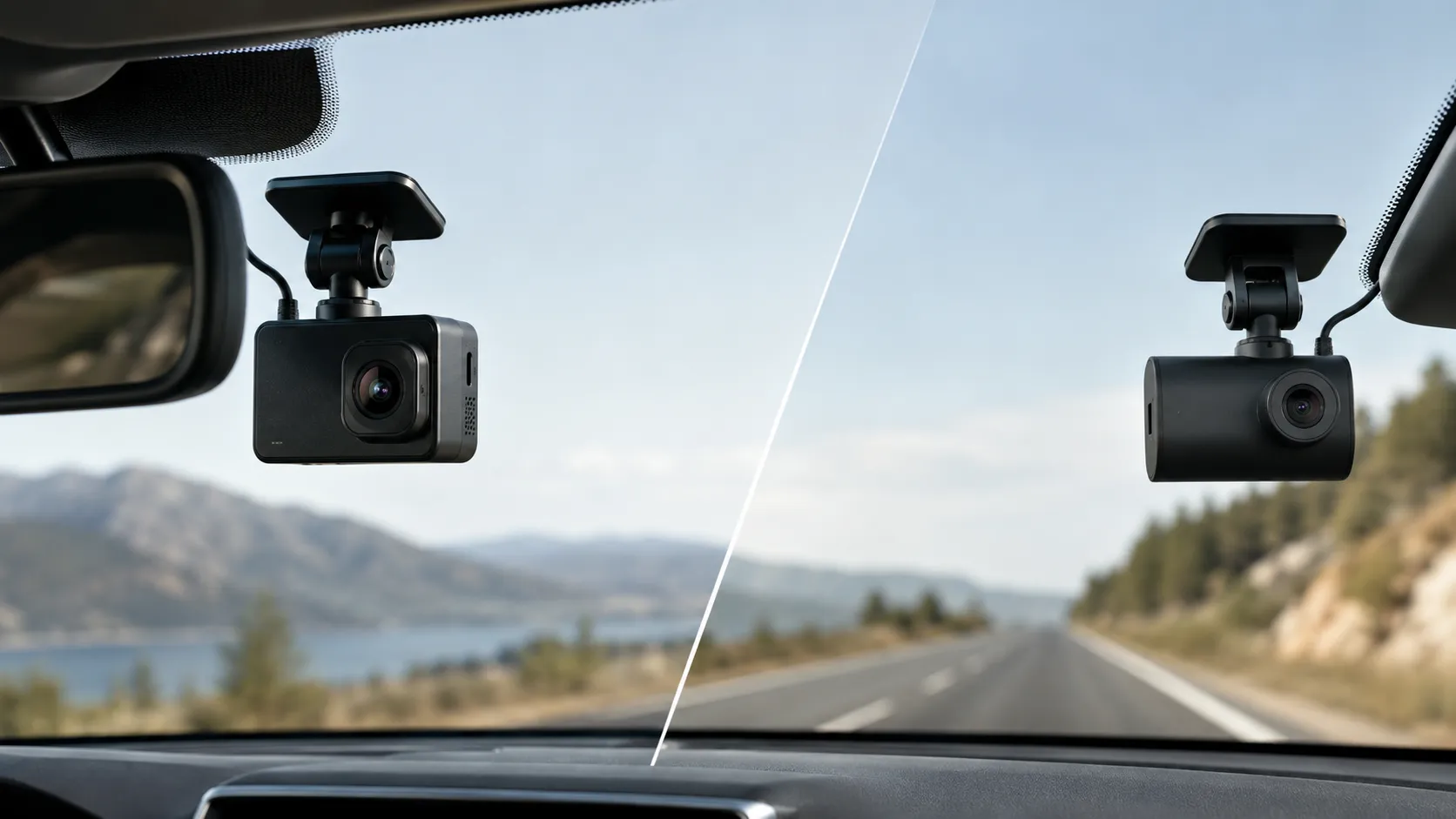
A dual camera system records two views at the same time, giving you more complete video evidence than a front-facing camera alone. I’ll explain how these systems work, where each camera fits, and which features matter when you choose one.
Key Takeaways
- Dual camera systems record two views.
- Common setups cover the front and rear.
- Features like night vision and parking mode affect usefulness.
Core Components And Camera Placement
I view a dual camera system as three connected parts: a front-facing camera, a rear-facing camera, and a display or control unit. Correct placement matters because each camera must capture a clear view without blocking the driver’s sight.
Front-Facing Camera
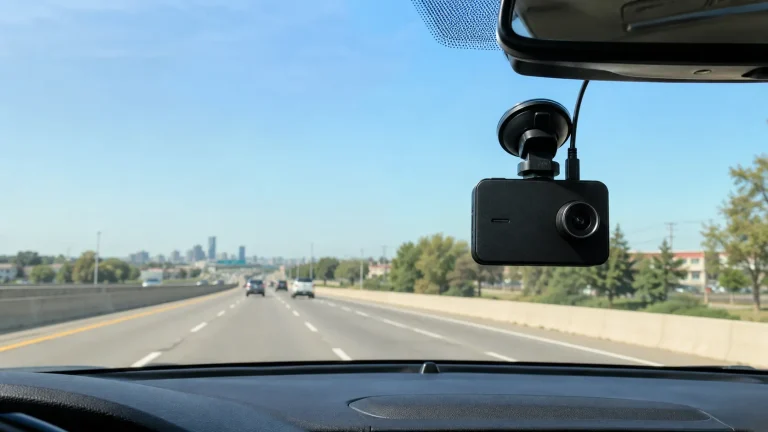
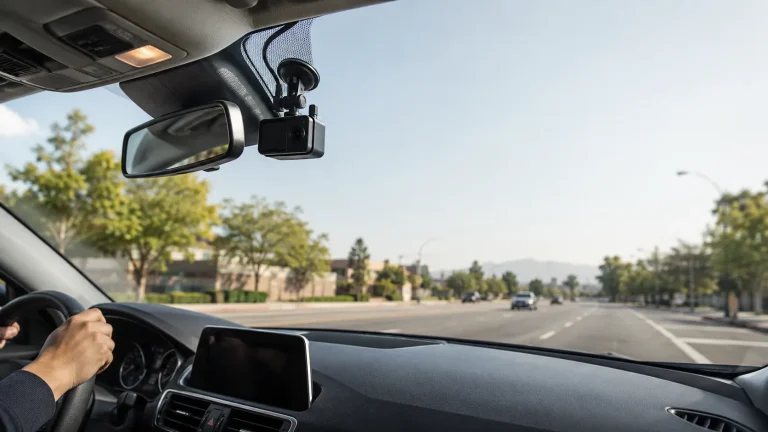
I mount the front-facing camera near the top center of the windshield, usually behind the rearview mirror. This position gives it a balanced view of the road and keeps the device from distracting me while I drive.
The lens should face straight ahead, with the horizon near the middle of the image. I make sure the camera records the road, traffic signals, and nearby vehicles without aiming too high at the sky or too low at the hood. A wide viewing angle, often between 120 and 170 degrees, can cover several lanes, but a very wide angle may make distant objects look smaller.
I also keep the lens clear of window tint, stickers, and windshield wipers. A stable mount prevents shaking and helps preserve readable video during sudden stops or impacts.
Rear-Facing Camera
I place the rear-facing camera near the top center of the rear windshield. This position gives me a clear view behind the car while reducing obstruction from the trunk or rear seats.
I run the camera cable along the vehicle’s trim so it does not hang near the driver or interfere with airbags. The cable must reach the front unit without sharp bends or loose sections. I check the image after installation because rear windows often have defroster lines, tint, or wiper limits that affect visibility.
The camera should show the lane behind me and nearby traffic. I avoid placing it too low, where the seat backs or trunk can block the view. I also clean both sides of the glass before testing the recording.
Display And Control Unit
I use the display and control unit to view live footage, adjust settings, and review saved clips. Some systems place the screen in the front camera, while others use a separate control box or connect to a phone through an app.
Important controls include recording status, camera selection, memory-card access, and date and time settings. I set the time correctly because footage may serve as evidence after a collision. Many systems use loop recording, which replaces older unprotected clips when the memory card fills.
I also check whether the unit includes impact detection, parking mode, or a built-in screen. A hardwire kit may support parking recording, but installation must use the correct fuse and protect the vehicle’s battery.
How Dual-Camera Systems Work
A dual-camera system uses one camera to record the road ahead and another to record the area behind the car. I can view both feeds, while the system processes, timestamps, and stores the video for later use.
Video Capture And Processing
The front camera usually mounts near the rearview mirror and records the road through the windshield. The rear camera mounts on the back window, trunk area, or license plate frame and records traffic behind the car. Some systems also include a cabin-facing camera, but that is not standard on every model.
Each camera uses a wide-angle lens and an image sensor to capture video. The main unit processes both feeds at the same time, often combining them into separate files or a split-screen display. Video quality depends on resolution, lens quality, lighting, and features such as HDR or infrared night vision.
Real-Time Driver Visibility
I can use the system’s display to see the front and rear camera views while driving or when parked. This helps me check traffic behind the car, monitor a trailer, or improve visibility while reversing if the system supports that function.
Many dual-camera systems connect to a phone through Wi-Fi or an app. I can then view live footage, change settings, download clips, or check the camera angle without removing the memory card. The display should not distract me, so I should adjust the camera before driving and follow local screen-use laws.
Recording And Storage
The system normally records in a continuous loop. When the memory card fills, it deletes the oldest unlocked clips and saves newer footage. I can choose recording lengths, such as one, three, or five minutes, depending on the model.
An impact sensor can detect sudden braking or a collision and mark the related files as protected. Parking mode may record motion or impacts while the car is parked, but it often requires a hardwire kit or another constant power source. I should use a compatible, high-endurance microSD card and format it as the manufacturer recommends.
Key Uses And Benefits
I use a dual camera system to record two areas at once, such as the road ahead and the space behind or inside the car. This setup helps with parking, provides useful evidence after a crash, and gives me a wider view of nearby traffic.
Parking And Reversing Assistance
A rear-facing camera shows the area behind my car while I reverse. It helps me spot posts, walls, low objects, and people who may not appear clearly in the mirrors.
Many systems display the rear view on an in-car screen and add guide lines to help me judge the car’s path. These tools support careful parking, but I still need to check my mirrors and look around before moving.
Some dual camera systems also record while the car remains parked. With a suitable parking mode and power connection, the cameras can capture movement or an impact near the vehicle. I should check the system’s power requirements and local privacy rules before using this feature.
Collision Evidence And Security
The front and rear cameras can record the moments before and after a collision. This footage may show traffic signals, lane positions, vehicle movement, and the actions of other drivers. A time and date stamp can make the recording easier to review.
I can use the video when speaking with an insurer, police officer, or another driver. It does not automatically prove fault, and image quality, camera position, and local laws can affect its value.
The system can also record attempted theft, vandalism, or a hit-and-run while my car is parked. I should use a high-endurance memory card and review recordings regularly to ensure the camera keeps saving files.
Improved Blind-Spot Awareness
A second camera can show the rear, side, or cabin area that I cannot see well through the windshield. A rear-facing view helps me monitor vehicles that approach from behind, especially when I change lanes or merge.
The camera does not replace proper mirror adjustment or a direct shoulder check. A wide lens may also make vehicles look farther away than they are, so I need to judge distance carefully.
Some systems offer a live rear view or a split-screen display. I should choose a camera with clear video, a suitable viewing angle, and good low-light performance. Camera placement matters because a blocked lens, tinted glass, or poor mounting position can reduce visibility.
Types Of Dual-Camera Setups
I can group dual-camera systems by their purpose, camera location, and connection method. The main choices include driving-recording systems, parking camera kits, and wired or wireless designs.
Dual Dash Cam Systems
A dual dash cam records the road in front of the car and the area behind it. The front camera usually mounts near the windshield, while the smaller rear camera mounts on the back window or near the license plate. Both cameras record at the same time.
I would choose this setup for everyday driving because it can capture events such as sudden braking, rear-end crashes, and unsafe lane changes. Many models include loop recording, a G-sensor, night recording, and a parking mode. A memory card stores the video, and the camera overwrites older files when the card fills.
Front and rear video quality may differ. The front camera often has a higher resolution, while the rear camera may record at 1080p. I would also check the viewing angles, low-light performance, heat resistance, and whether the system supports a hardwire kit.
Front-And-Rear Parking Camera Kits
A front-and-rear parking camera kit helps me see nearby obstacles while I park or reverse. The front camera may sit in the grille or bumper, while the rear camera usually mounts above the license plate. A display shows the camera feed when I select reverse or activate the system.
These kits focus on live viewing rather than continuous evidence recording. Some include parking lines, distance markers, wide-angle lenses, or a split-screen view. The parking lines may require adjustment because their accuracy depends on the camera’s position and the car’s steering angle.
I would check whether the kit works with my vehicle’s display and reverse-light wiring. Some systems need professional installation, especially when the camera cable must pass through the cabin and tailgate. A weather-resistant rear camera is important for long-term use.
Wireless And Wired Configurations
A wired system sends power and video through physical cables. It usually provides a stable connection and avoids wireless interference, but installation takes more time. I may need to hide cables along the headliner, door seals, or trim panels.
A wireless system may use a transmitter and receiver to send rear-camera video to the front unit. This can simplify installation, but the signal may weaken in larger vehicles or face interference from other electronics. Wireless cameras still need power, so they are not completely cable-free.
I would select a wired setup for consistent recording and a wireless setup when easier installation matters more. Before buying, I would confirm the cable length, power source, connector type, and compatibility with my car’s screen or head unit.
Installation And Selection Considerations
I choose a dual camera system by checking its viewing angle, video detail, low-light performance, weather protection, and installation needs. I also confirm that the system fits my car, budget, storage setup, and local recording rules.
Field Of View And Image Quality
I look for a front camera with a viewing angle wide enough to capture nearby lanes without making objects appear too distorted. A rear camera should show the area behind the car clearly, including license plates and traffic approaching from either side.
Resolution matters: 4K front video can show more detail than 1080p, but it uses more storage and may cost more. A 1080p rear camera can provide useful coverage when it has a good image sensor and a suitable lens.
I also check whether both cameras record at the same time. Some systems reduce the rear camera’s resolution when the front camera records at its highest setting. A high-endurance microSD card helps prevent recording errors during continuous use.
Night Vision And Weather Resistance
I check sample footage recorded at night before choosing a system. A camera with a strong image sensor can capture clearer details in low light, while infrared lights mainly help interior cameras. Headlights, glare, and dark roads can still reduce image quality.
The rear camera needs protection from rain, dust, and car washes if I mount it outside. I look for an appropriate IP rating, such as IP67, and confirm the product supports the temperatures common in my area.
I also check whether the camera uses wide dynamic range or a similar feature. This helps balance bright headlights with darker areas, but it cannot remove every reflection or glare problem.
Professional Versus DIY Installation
I can install many systems myself by mounting the front camera, routing the rear cable along the headliner, and connecting power through the vehicle’s 12-volt socket. I keep cables away from airbags, pedals, and moving trim panels.
A professional installation makes more sense when I need a concealed power connection, parking mode, or an exterior rear camera. Parking mode often requires a hardwire kit that connects to the fuse box and uses low-voltage protection to reduce battery drain.
Before installation, I confirm the camera’s mounting position does not block my view. I also check local laws about recording audio, people, and public areas.
Frequently asked questions
What is a dual camera system for a car?
I use the term dual camera system for a setup with two cameras that record at the same time. One camera usually faces the road ahead, while the second records the rear of the car or the cabin.
What does the second camera record?
The answer depends on the model. A rear camera records traffic behind the vehicle, while an interior camera records passengers and activity inside the cabin. Some systems let me choose between these options.
Is a dual camera system better than a front-only dash cam?
It gives me wider coverage. Front footage can show traffic signals, road conditions, and impacts ahead, while rear or interior footage can provide useful evidence during collisions, disputes, or security incidents.
Do I need a dual camera system?
I may benefit from one if I often drive in busy areas, park in public places, carry passengers, or use my car for work. A front-only camera may meet my needs if I mainly want basic road coverage.
What features should I check?
- Video quality: 1080p or higher for clearer details
- Night vision: Helps record in low-light conditions
- Loop recording: Replaces older files when storage fills
- Parking mode: Monitors some activity while the car is parked
- Memory card support: Stores footage from both cameras
Does it need professional installation?
I can install many systems myself, but a professional installation can hide cables and connect parking-mode power safely.
Conclusion
I view a dual camera system as a practical way to record both the road ahead and the area behind the car. The front camera captures traffic, signs, and hazards, while the rear camera records events that may happen behind the vehicle.
This added coverage can provide useful video evidence after a collision, disputed incident, or unexpected event. Many systems save footage to a memory card and may also support parking mode when the car is parked.
Before buying one, I would check the front and rear video quality, night performance, viewing angle, storage needs, and installation method. I would also confirm whether the system includes useful features such as GPS, impact detection, or a parking mode.
A dual camera system does not replace careful driving, and its recording may not cover every angle around the car. I would use it as a supporting safety and documentation tool, while following local rules about recording and privacy.