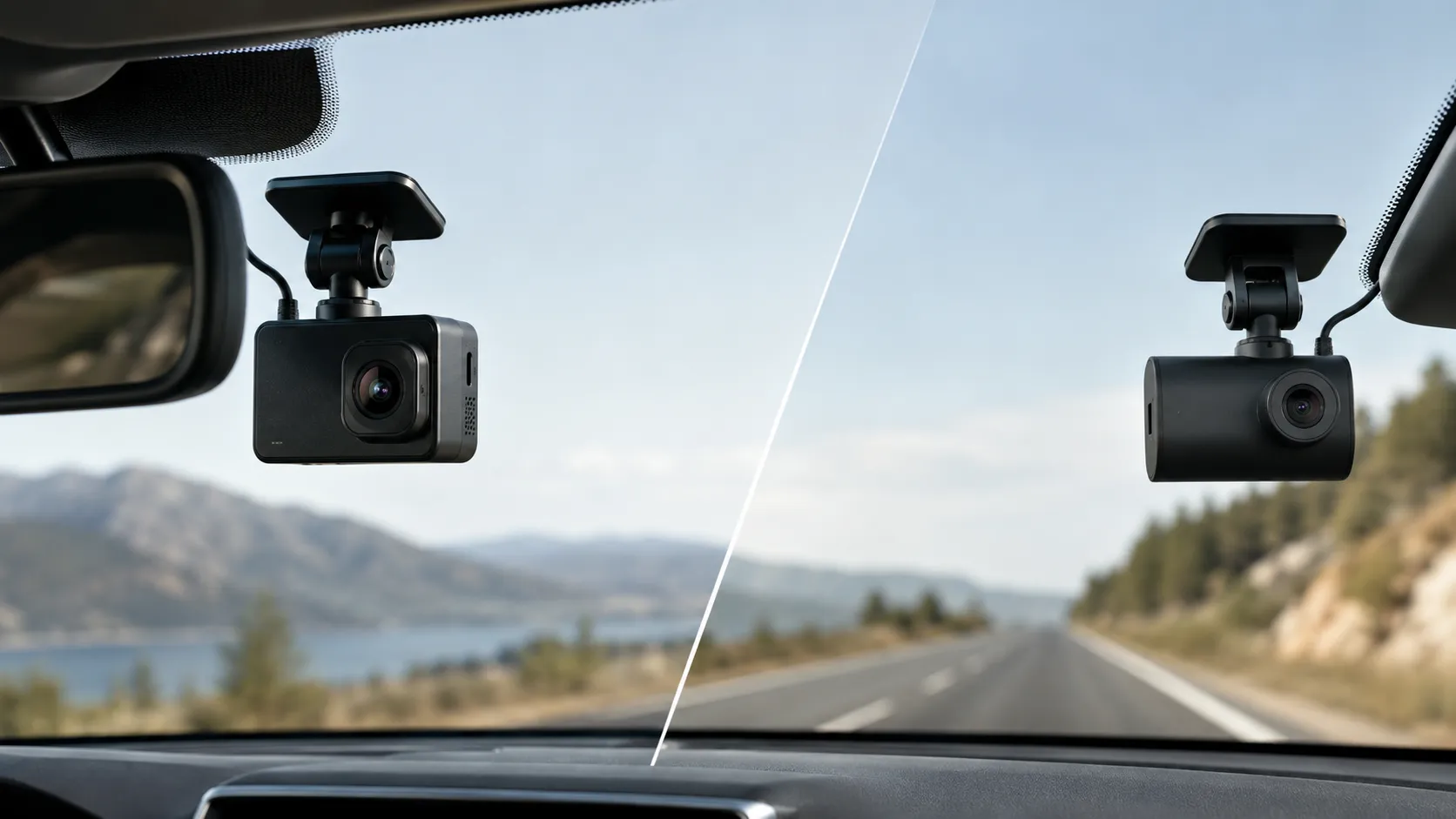
Budget Dash Cam With Parking Mode vs Without: Which Wins?

The choice of a budget dash cam with parking mode vs without depends on where you park and how you power it. Parking mode adds parked-event recording but may need extra wiring and battery protection. A camera without it is simpler to set up and uses no parked power after it shuts down.
Choose parking mode if your car often sits on the street or in busy public lots. Choose a basic driving-only camera if you park securely and want the easiest setup. The main parking-mode limits are battery use, extra accessories, storage wear, and model-specific recording behavior.
Parking mode sounds like an easy upgrade. Yet the feature can mean very different things on different budget cameras.
One model may save video only after an impact. Another may watch for motion. Some need a hardwire kit, while others can use an always-on outlet, an OBD-II cable, or a separate battery pack.
In my view, the feature is worth paying for only when you understand how it gets power and what it records. The parking-mode label alone does not tell you enough.
What Parking Mode Actually Does
Normal dash cam recording happens while the vehicle is running. Parking mode tries to record selected events after you switch the vehicle off.
Depending on the model, parked recording may use:
- Impact detection: Saves footage when the camera senses a bump.
- Motion detection: Records when movement appears near the vehicle.
- Time-lapse recording: Records at a reduced frame rate over time.
- Energy-saving mode: Sleeps until an impact or supported trigger wakes it.
These modes are not equal. Motion recording may create many files in a busy area. Impact-only recording may miss events that do not create a strong enough shock.
Parking Mode vs No Parking Mode
The biggest difference is what happens after the ignition turns off. The table below shows the practical trade-offs.
| Feature | With Parking Mode | Without Parking Mode |
|---|---|---|
| Driving recording | Yes, if supported normally | Yes |
| Parked-event recording | Possible with correct power | No after shutdown |
| Installation | May need extra wiring | Usually simple plug-in |
| Battery demand | Uses power while parked | None after power stops |
| Storage use | More possible recordings | Driving files only |
| Best use | Street and public parking | Driving evidence |
A camera without parking mode can still record your full drive. It may also lock a driving file after a detected impact, depending on the model.
What it cannot do is watch the car after power stops. If another vehicle damages your parked car, there will be no dash cam footage from that period.
The Hidden Setup Difference
A basic camera often plugs into a switched 12-volt outlet. It starts with the car and shuts down when the outlet loses power.
Parking mode needs power after the engine stops. Supported options may include:
- A model-specific hardwire kit
- An always-on 12-volt outlet
- A compatible OBD-II power cable
- A dedicated dash cam battery pack
Not every option works with every camera. A cable may power the unit but fail to activate its true parking mode.
Check: Confirm the exact dash cam model, power connector, parking-mode cable, vehicle voltage, outlet behavior, fuse type, mounting space, and battery-protection method. Limitations: Older cars, hybrids, electric vehicles, start-stop systems, leased vehicles, and complex electrical systems may need special guidance.
Garmin states that some of its parking features require a compatible constant-power or parking-mode cable. It also warns that third-party cables may provide power without enabling the intended parked-recording feature.
That is why you should check the official accessory list before buying. Our car electronics guide can also help you compare camera power, storage, and installation needs.
Battery Risk Is the Main Trade-Off
A dash cam without parking mode normally stops using vehicle power when its outlet shuts off. Parking mode keeps drawing power from the starter battery or another power source.
Many supported systems use one or both of these safeguards:
- Low-voltage cutoff: Shuts the camera down when voltage falls to a set level.
- Timer cutoff: Ends parked recording after a selected time.
These controls reduce risk, but they do not guarantee that the car will always start. Battery age, condition, temperature, trip length, other electrical loads, and parking time also matter.
Garmin notes that battery age and temperature can reduce the effectiveness of parking-mode battery protection. Its vehicle-battery guidance also explains that parking mode is not always a low-power feature.
Recording More Does Not Mean Recording Everything
Parking mode has blind spots. A budget camera cannot guarantee that it will capture every event.
The camera may miss an incident when:
- The impact is too light to trigger recording
- Motion happens outside the camera’s view
- The event occurs after the cutoff stops power
- The memory card has an error
- The camera has overheated or shut down
- The sensitivity setting is too low
A high sensitivity setting can create a different problem. Wind, doors closing, passing traffic, rain, or movement near the car may trigger unwanted files.
Parked footage is useful evidence, but it is not complete vehicle security. It does not replace secure parking, good lighting, alarms, insurance, or normal care.
Compare the Real Ownership Work
Parking mode adds more than one menu setting. It can change installation, battery checks, file management, and long-term maintenance.
| Owner Task | With Parking Mode | Without Parking Mode |
|---|---|---|
| Power setup | Confirm constant power | Use switched outlet |
| Battery checks | More important | Normal vehicle care |
| File review | More event files | Driving files only |
| Memory-card wear | May increase | Usually lower |
| Moving between cars | May be harder | Usually easier |
| Troubleshooting | More power variables | Simpler power path |
Our car care guide covers battery and general maintenance checks. Those checks become more important when an accessory draws power after shutdown.
Installation Can Erase the Budget Advantage
A parking-mode camera may look inexpensive until you add the required power accessory. You may also need fuse taps, trim tools, a battery pack, or professional installation.
This does not make parking mode a bad value. It means you should compare the full setup rather than the camera price alone.
A driving-only camera usually has fewer installation risks. You still need to secure the cable and keep the camera outside the driver’s main view.
Useful trim and electrical equipment can be reviewed in our tools and garage gear section.
Driver Experience Is Mostly the Same
During normal driving, two similar cameras may behave in much the same way. Parking mode does not automatically improve video detail, night recording, sound, GPS, or app quality.
For the driver, the important checks remain:
- The camera does not block the road view
- The screen and alerts are not distracting
- The cable stays away from controls
- The date and time remain correct
- The camera starts recording before each trip
Privacy and File Control
Parking mode may record people, license plates, homes, voices, and locations while you are away. A connected camera may also use an app, Wi-Fi, GPS, or cloud storage.
Rules for windshield placement, audio recording, and use of footage can vary by state and situation. Check current state rules before installing the camera or enabling audio.
Who Should Choose Parking Mode?
Parking mode is most useful when the risk continues after you leave the car.
- You park on the street often
- You use crowded public lots
- You have had parking damage
- You can install safe constant power
- You will maintain the battery and card
- You park in a secure garage
- You only need driving footage
- The car sits unused for days
- The starter battery is weak
- You want an easy portable setup
Rideshare drivers, commuters, apartment residents, and city drivers may gain more from parking recording. A garage-kept weekend car may gain very little.
What to Check Before Buying
- Confirm what the advertised parking mode records
- Check whether a separate cable is required
- Look for low-voltage and timer protection
- Confirm the cable fits your exact camera
- Check front, rear, and cabin recording needs
- Review supported memory-card requirements
- Plan an airbag-safe cable route
- Decide whether you will review parked files
Do not buy based on the words “parking mode” alone. Look for a clear manual that explains the trigger, power source, cutoff behavior, recording type, and supported accessories.
- Best for: A budget dash cam with parking mode suits drivers who regularly park in exposed or busy areas.
- Think twice if: You have a weak battery, leave the car unused, or do not want extra installation work.
- Next step: Compare the complete power setup and official parking-mode instructions before choosing a camera.
Frequently Asked Questions
Parking mode can be worth it if you often use street parking or busy public lots. It adds less value when the car stays in a secure garage. Check the required power cable, battery protection, recording type, and full setup cost before deciding.
Many dash cams need a compatible hardwire kit, but not all do. Some supported models can use an always-on outlet, an OBD-II cable, or a separate battery pack. Check the official instructions for the exact camera.
Yes, parking mode uses power while the engine is off. A low-voltage cutoff or timer can reduce the risk. Battery age, temperature, condition, parking time, short trips, and other electrical loads can still lead to a weak battery.
The camera normally stops recording when its power source switches off. It can still record your trips and may save driving incidents, depending on the model. It will not capture events that happen after it shuts down.
Not always. Recording may stop because of a timer, low-voltage cutoff, full or faulty memory card, temperature limit, power loss, or camera setting. The available recording time depends on the camera, power source, battery condition, and selected mode.
Neither mode is always better. Motion detection may capture activity before contact but can create many unwanted files. Impact detection uses less recording time but may miss an event that does not trigger the sensor strongly enough.
Most supported cameras let you disable parked recording in the menu or app. The exact steps vary by model. You may also disconnect its constant-power source, but follow the manufacturer’s instructions before changing any wiring.
Conclusion
A budget dash cam with parking mode is the better choice when parked-event recording solves a real problem for you. It can help document damage while the car is unattended.
A model without parking mode is simpler, easier to move, and less demanding on the battery. Its main limit is that recording ends when power stops.
Compare the camera’s normal video quality first. Then confirm its parking trigger, compatible power cable, battery protection, storage needs, safe mounting, and current local rules before buying.